Texas-Style Smoked Beef Brisket Recipe, Easy American Dinner in 13 Hours
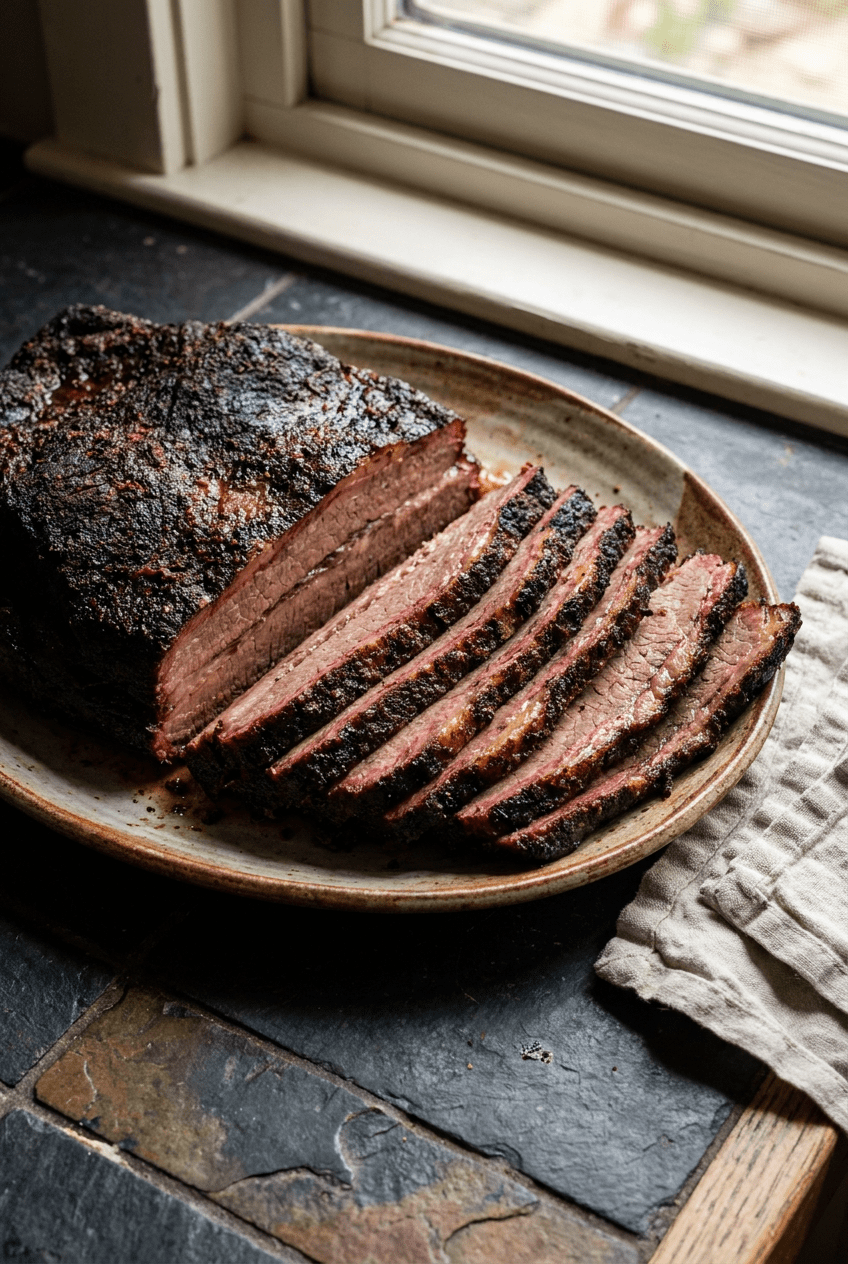
Table of Contents
- Texas-Style Smoked Beef Brisket Recipe: Juicy, smoky, and bark-crusted brisket that rivals the best Texas barbecue joints
- Why You Will Love This Texas-Style Smoked Beef Brisket Recipe
- Your Simple Ingredients for the Perfect Texas-Style Smoked Beef Brisket
- How to Make Perfect Texas-Style Smoked Beef Brisket
- Pro Tips and Easy Variations for Your Texas-Style Smoked Beef Brisket
- Serving Suggestions for a Perfect American Dinner
- Nutrition Information
- Storage and Make-Ahead Instructions
- Your Texas-Style Smoked Beef Brisket Questions Answered
- More Incredible American Recipes to Try
- The Story Behind This Recipe
- Pin This Recipe for Later
Texas-Style Smoked Beef Brisket Recipe: Juicy, smoky, and bark-crusted brisket that rivals the best Texas barbecue joints
If you have ever dreamed of making a true texas-style smoked beef brisket recipe at home, this is the one that tastes like it came straight from a legendary Texas pit. I still remember my first trip to Lockhart, standing in line before dawn, the air thick with post oak smoke and the quiet hum of dedicated pitmasters. That first slice, with its jet-black bark giving way to a ribbon of rendered fat and impossibly tender meat, changed everything for me. I came home obsessed, determined to recreate that same depth of flavor and texture in my own backyard. After many smokes, some frustrating failures, and plenty of joyful successes, this recipe is the one I return to again and again. It is a labor of love, yes, but every hour of gentle smoke rewards you with something truly special, a brisket that pulls apart with the slightest tug and tastes deeply, purely of beef and smoke.
What sets this homemade Texas-Style Smoked Beef Brisket apart is its absolute commitment to simplicity. There is no injection, no binder, no complicated rub with a dozen spices. Just salt, pepper, smoke, and time. The magic lies in the technique: a low and slow smoke over clean-burning oak, a patient wrap in pink butcher paper at just the right moment, and a long rest that lets the juices settle back into every fiber. This is the way the old-school Texas joints do it, and it is the way you will get that coveted black bark that crunches slightly before giving way to velvety meat. It is a true artisanal experience, and once you taste it, you will understand why Texans guard their brisket secrets so fiercely. Before you begin, know that this recipe asks for your full attention and a full day, but the result is a home kitchen triumph that rivals anything you can buy. And if you are looking for a completely different but equally rewarding cooking project, you might enjoy our fluffy Japanese souffle pancakes, another dish where patience and precision pay off in the most delightful way.
This recipe is for anyone who wants to experience authentic Central Texas barbecue without leaving home. It is perfect for a long summer Saturday when you can tend the smoker and sip a cold drink as the smoke curls upward. It is also a showstopper for holiday gatherings, game day feasts, or any occasion that calls for feeding a crowd something unforgettable. The first slice off the flat, glistening and peppery, is a moment of pure triumph. Do not be intimidated by the long cook time or the brisket’s size. With the right guidance, even a first-time smoker can produce a brisket that will have everyone asking for the recipe. I will walk you through every step, from trimming the packer cut to knowing exactly when it is done, so you can feel confident and supported the entire way. This is more than a recipe, it is a hands-on lesson in the beautiful, smoky soul of Texas barbecue, and I am so glad you are here to learn it.
Why You Will Love This Texas-Style Smoked Beef Brisket Recipe
- The most authentic bark you can get at home. A thick, peppery, jet-black crust forms naturally over many hours of clean smoke, without needing a sugary rub. That bark is where the deep, smoky flavor lives, and this method preserves it beautifully.
- Only three ingredients, plus smoke. Nothing but salt, pepper, and a whole packer brisket stand between you and legendary barbecue. The purity of flavor lets the quality of the beef and the smoke shine through exactly like the best Texas joints.
- Butcher paper wrap keeps the bark intact. Unlike foil, pink butcher paper breathes, so the surface stays firm and crunchy while the interior continues to steam tender. You get the best of both worlds, a crisp exterior and a moist, pull-apart inside.
- Predictable, reliable results with dual-probe thermometers. By monitoring both the smoker temperature and the internal meat temperature, you eliminate guesswork and ensure that the brisket reaches that perfect 200 to 203°F window where collagen melts completely.
- That legendary long rest is built in. You will rest the brisket for at least an hour, sometimes three, which means you can finish cooking well before serving time and hold it safely until everyone is ready to eat. The rest is when the magic happens, the juices redistribute and the texture becomes impossibly tender.
- A genuine Texas experience in your own backyard. Every step from trimming the fat cap to slicing against the grain teaches you the craft. You will feel a true sense of accomplishment when you lay those perfect slices on a cutting board, and the whole neighborhood will follow the smell.
Your Simple Ingredients for the Perfect Texas-Style Smoked Beef Brisket
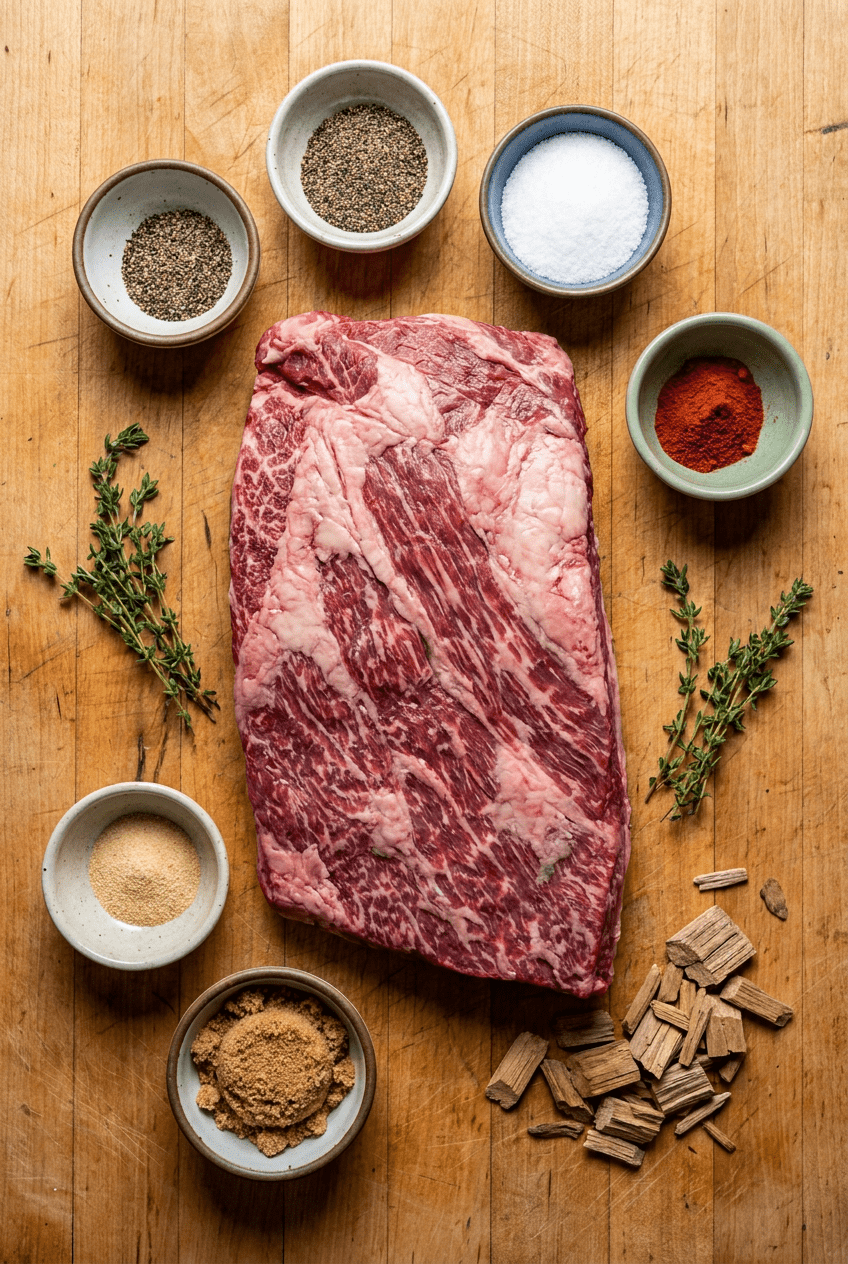
Brisket & Rub
- 1 whole beef brisket (packer cut, 12 to 14 lbs), untrimmed, prime grade preferred
- 1/4 cup kosher salt, Diamond Crystal brand recommended
- 1/4 cup coarse ground black pepper, 16-mesh or butcher grind
Wood & Spritz
- 4 to 6 chunks post oak or white oak wood, soaked in water for 30 minutes if using charcoal
- as needed apple cider vinegar, for spritzing (optional)
Ingredient Notes
Whole packer brisket. This is the entire untrimmed breast muscle, consisting of two distinct parts: the flat, which is leaner and more uniform, and the point, which is fattier and incredibly marbled. Buying a packer cut is essential for true Texas-style brisket because the fat from the point bastes the flat as it renders, contributing to juiciness. Prime grade has the most intramuscular marbling and will give you the most forgiving and luscious result. If you can only find Choice grade, look for the most flexible brisket in the meat case, as a supple brisket indicates more fat content. Wagyu brisket is a luxury option, but the Prime grade is already fantastic.
Kosher salt. Diamond Crystal kosher salt has a light, flaky structure that sticks beautifully to the meat and dissolves at just the right rate, drawing out moisture and forming a perfect pellicle. If you use Morton kosher salt, which is denser, reduce the volume to about 3 tablespoons, or the brisket may end up too salty. The salt is not just seasoning; it starts to break down the outer muscle proteins, helping create that legendary bark and deepening the beefy flavor.
Coarse ground black pepper. 16-mesh or butcher grind pepper is coarser than standard pre-ground pepper and gives you those big, crunchy peppery bites that define Texas barbecue. The sharp, woody heat of the pepper cuts through the richness of the fat and complements the smoke without overwhelming the beef. Do not substitute finely ground pepper, or you will lose the textural contrast that makes the bark so special.
Post oak or white oak wood. Oak is the traditional wood of Central Texas, burning clean and steady with a medium smoke intensity that never turns acrid. Post oak has a slightly milder, sweeter character, while white oak is a bit stronger, both work beautifully. If you are using a charcoal smoker, soaking the chunks for 30 minutes helps them smolder rather than flame up. For a pellet smoker, use 100% oak pellets for the closest flavor. Avoid mesquite or hickory here unless you want a much more aggressive smoke profile, which is not traditional.
Apple cider vinegar spritz. This is optional but helpful for adding a touch of tang and moisture to the surface as the bark develops. The light misting cools the meat slightly, extending the time in the smoke zone and helping to set a deeper bark. Spritz only when you see dry spots on the surface, usually every hour after the first three hours.
How to Make Perfect Texas-Style Smoked Beef Brisket
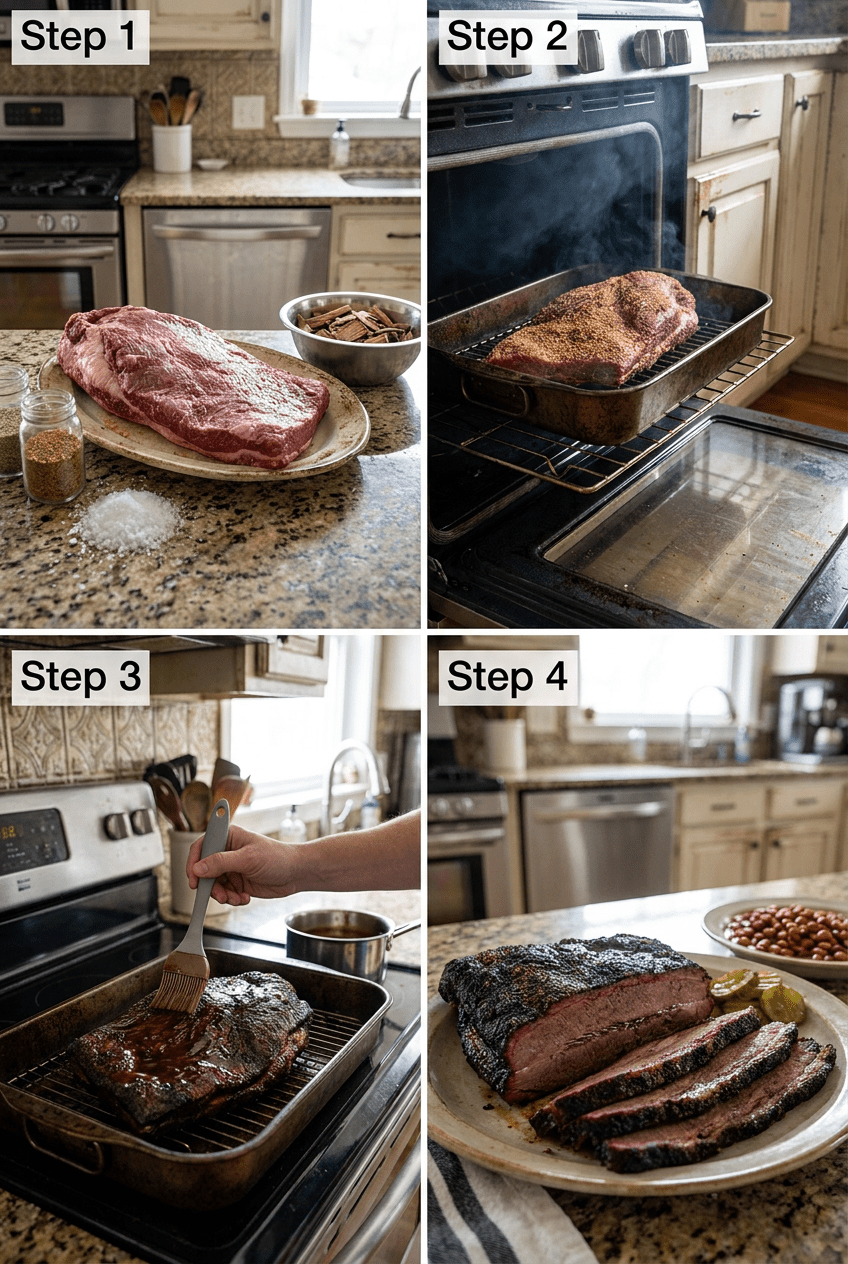
Phase 1: Preparation and Seasoning
Step 1: Trim the Brisket
Using a sharp, semi-flexible boning knife, place the cold brisket on a large cutting board. You want to trim the fat cap down to a uniform 1/4-inch thickness all over the top. Remove any hard, waxy fat that will not render during cooking. On the flat side, there is often a thin layer of meat and silvery membrane that can burn or dry out, carefully slice that off to create a smooth, aerodynamic shape. The most important cut is the large pocket of deckle fat between the point and flat; dig in and carve out as much of that hard fat as you can, as it never renders and can cause the flat to cook unevenly. Pro tip: Score the remaining fat cap gently in a crosshatch pattern, just slicing through the fat but not into the meat. This allows the salt and pepper to penetrate and helps the fat render into the meat as it cooks.
Step 2: Season Generously
Combine the kosher salt and coarse black pepper in a small bowl. Work with the brisket straight from the refrigerator so the surface is still cool and slightly tacky. Apply a heavy, even coat of the rub all over every surface, including the sides and any crevices. Press it firmly into the meat with your hands until it adheres and the brisket looks like it is wearing a thick, speckled coat. Do not worry about over-seasoning, this cut is massive and needs a bold hand. Let the brisket sit at room temperature for one full hour before it goes onto the smoker. Pro tip: No binder is necessary. The natural moisture of the meat will grab the rub and form a gorgeous pellicle as it sits.
Phase 2: The Long Smoke
Step 3: Preheat Smoker to 225°F
Fire up your smoker with clean burning oak wood and bring it to a steady 225°F (107°C). Aim for thin, almost blue smoke that smells sweet and woody, not thick white billowing smoke, which will deposit a bitter creosote layer on the meat. Place a water pan directly under the grate if your smoker allows it, as the added humidity helps keep the meat surface moist longer, encouraging deeper smoke absorption. Pro tip: Use a digital ambient probe to verify your smoker’s built-in thermometer; lid gauges are often inaccurate, and a 20-degree difference can dramatically change cooking time.
Step 4: Smoke the Brisket Unwrapped
Place the brisket on the grate with the fat cap facing up if you are using an offset smoker where heat comes from the top, or fat side down in a vertical smoker where heat rises from below to protect the meat. Insert a leave-in meat probe into the thickest part of the flat, staying away from fat pockets. Close the lid and do not open it for at least three hours. After that point, you can spritz lightly with apple cider vinegar if the surface looks dry. Smoke the brisket until the internal temperature reaches 150 to 160°F and a dark, firm bark has set, this usually takes 5 to 6 hours. Pro tip: Every time you open the lid, you lose heat and smoke, adding about 15 minutes to the cook. Trust the process and peek only when absolutely necessary. While the brisket smokes, you could prepare a sweet side like our blueberry lemon ricotta pancakes as an unexpected but delightful treat for your guests once the main event is over.
Step 5: Wrap in Butcher Paper and Finish
Tear off a long sheet of pink butcher paper, about 4 feet in length. Remove the brisket once it has a deep mahogany bark and place it in the center of the paper. Wrap it tightly like a burrito, folding the sides over and tucking them underneath, ensuring no loose flaps. Return the wrapped brisket to the smoker and increase the temperature to 250°F (121°C). Continue cooking until the flat probes with absolutely no resistance, like inserting a thermometer into room-temperature butter, typically at an internal temperature between 200 and 203°F. This second phase can take another 5 to 7 hours. Pro tip: Butcher paper is key; it allows steam to escape slowly, which means the bark stays set and does not become soggy, unlike foil which can braise the surface. The USDA safe minimum internal temperature for beef is 145°F, but brisket must be cooked much higher for the collagen in the connective tissue to melt into gelatin and yield that signature tenderness.
Phase 3: Rest and Slice
Step 6: Rest in a Cooler then Slice Against the Grain
Remove the wrapped brisket and place it directly into a clean, empty cooler, or wrap it in a few old towels and set it in a warm spot. The rest must be at least 1 hour, and ideally 2 to 3 hours. The internal temperature will slowly decline, but the hold time allows the muscle fibers to relax and reabsorb the melted fat and juices. After resting, unwrap the brisket and separate the point from the flat by slicing through the natural fat seam. Slice the flat against the grain into pencil-thick slices, about a quarter inch each. Rotate the point 90 degrees and slice it against its own grain, which runs in a different direction, or cube it for burnt ends. Pro tip: Look at the muscle fibers before you cut. Always slice perpendicular to the lines of the grain, or the meat will feel tough regardless of how perfectly you cooked it.
Pro Tips and Easy Variations for Your Texas-Style Smoked Beef Brisket
Pro Tips
- Buy USDA Prime grade. The extra marbling melts throughout the long cook, basting the meat from within and making it nearly impossible to dry out. The difference in texture and richness between Prime and Choice is more noticeable in brisket than almost any other cut.
- Invest in a dual-probe wireless thermometer. One probe clips to the grate for accurate smoker temp, the other goes deep into the flat. Knowing your real pit temperature and meat temperature without opening the lid prevents the pitmaster jitters that lead to constant peeking and temperature drops.
- Give the rest its full due. The 1-hour minimum rest is non-negotiable; the sweet spot is 2 to 3 hours. The result is a brisket that is still steaming hot when you slice it and far juicier than one cut too soon. You will see the juice pooling on the board instead of running out and leaving the meat dry.
- Trim while cold. A brisket straight from the refrigerator is much firmer and easier to handle. The fat cap will cut cleanly without smearing, and you will have more control over the thickness.
- Watch the smoke color, not just the temperature. Thin, blue smoke is what you want. If the smoke is thick and white, your fire needs more air. Adjust your vents until the smoke clears; your brisket will taste sweet and smoky rather than acrid.
- Feel the meat, do not just trust the number. The probe thermometer might read 203°F but the flat can still have resistance. The real test is how effortlessly the probe slides in. Trust that feel over the exact temperature every time.
Delicious Variations
- Pellet smoker adaptation. Use 100% oak pellets and set your grill to 225°F. The set-and-forget nature works wonders, but still wrap in butcher paper at the stall and rely on a secondary thermometer because pellet grill sensors can drift over long cooks.
- Spiced rub twist. Add 2 tablespoons of garlic powder, 1 tablespoon of paprika, and 1 teaspoon of cayenne pepper to the salt and pepper rub. This brings a gentle warmth and extra savory depth without masking the beef, closer to a Texas competition-style rub.
- Fat side down in vertical smokers. In a bullet or kamado-style smoker where the heat comes from directly below, cook fat side down so the layer of fat shields the meat from the harsh radiant heat, keeping the flat from drying out.
- Unwrapped bark lover’s brisket. Skip the butcher paper entirely and ride out the stall at a steady 225°F. This produces an even thicker, crunchier bark, but it can extend the cook by up to 3 hours and requires more vigilant spritzing to prevent the flat from drying. Reserve this method for Prime grade briskets with plenty of fat.
If you love the slow, patient approach of this brisket, you might also enjoy the aromatic depth of our Moroccan chicken tagine, another one-pot wonder that rewards time and care.
Serving Suggestions for a Perfect American Dinner
When the brisket is off the smoker and perfectly rested, you want sides that honor its Texas roots. Pile your slices high on a platter with a stack of soft, classic white bread on the side, because in Texas, barbecue is always served with plain white bread. Add a bowl of crisp, cold dill pickle spears and a few thick slices of raw white onion to cut through the richness. For the full experience, pair the brisket with a tangy, vinegar-based coleslaw that adds crunch and acidity, a creamy old-fashioned potato salad with plenty of mustard, and a pot of slow-simmered pinto beans flavored with a little of the brisket drippings. To drink, you cannot go wrong with an ice-cold Dr Pepper, sweet tea, or a crisp Texas lager like a Shiner Bock, which has just enough malt to stand up to the smoky beef.
This dish is a natural centerpiece for large gatherings. It feeds a dozen people generously, and because it rests so well, you can time it to be ready hours before guests arrive. Slice only what you need and leave the rest whole, wrapped, to preserve moisture. For a backyard party, set up a make-your-own brisket sandwich station with sliced white bread, pickles, onions, pickled jalapeños, and a simple mop sauce on the side so everyone can build their plate just how they like it. The vinegar-based mop sauce, thinned with a little of the brisket’s natural juices, keeps everything tangy and bright without overwhelming the meat.
Nutrition Information
(Approximate per serving, 12 servings total) Calories: 350, Fat: 24g, Carbohydrates: 0g, Protein: 30g, Fiber: 0g, Sodium: 480mg. Nutritional values are estimates only.
Storage and Make-Ahead Instructions
- Refrigerator: Store leftover sliced brisket in an airtight container for up to 5 days. To keep the meat from drying out, lay the slices in a single layer with a drizzle of beef broth or accumulated juices, then press a piece of parchment directly on the surface before sealing the lid.
- Freezer: Freeze sliced brisket for up to 3 months, preferably vacuum-sealed to prevent freezer burn. If you do not have a vacuum sealer, wrap the slices tightly in plastic wrap, then a layer of foil, and place in a freezer bag with the air squeezed out. Thaw overnight in the refrigerator.
- Reheating: Gently reheat brisket in a steamer basket over simmering water, or wrap loosely in foil with a splash of beef broth and warm in a 300°F oven until just heated through, about 15 to 20 minutes. Avoid the microwave, which can make the meat tough and dry.
- Make-Ahead: You can season the brisket the night before, wrap it tightly, and refrigerate. Let it come to room temperature for an hour before smoking. The cooked brisket also holds beautifully in a cooler for up to 4 hours, so you can finish cooking well ahead of serving time.
Your Texas-Style Smoked Beef Brisket Questions Answered
Why did my brisket turn out dry even though I followed the recipe?
Dry brisket is almost always undercooked brisket. The collagen and connective tissue that makes the meat tough only begins to melt into gelatin above 190°F and really transforms between 200 and 205°F. Pulling the brisket out when it hits 195°F before it probes like soft butter leaves those tissues intact, so the meat seems dry and chewy. Next time, cook until the flat offers zero resistance to a probe, and be sure to rest it thoroughly so the juices settle.
Can I make Texas-Style Smoked Beef Brisket without a smoker?
You can approximate the results on a gas grill by setting up indirect heat with a wood chip box and aiming for a steady 225°F, but the flavor and bark will not be the same. A pellet smoker or even a charcoal kettle with a slow n’ sear insert are both excellent smoker alternatives. The key is consistent low temperature and clean smoke, so whatever setup you use, prioritize airflow and a water pan for humidity.
Is the Texas crutch (wrapping) really necessary?
Strictly speaking, no. You can cook the brisket entirely unwrapped, and you will get an even thicker bark. However, wrapping in butcher paper helps power through the stall that often hits around 150 to 160°F without sacrificing the bark like foil does. It also protects the flat from drying out during the final push to tenderness. For a first-time cook, I recommend wrapping for the most reliable result, then try unwrapped later when you have a better feel for your smoker.
What is the best wood for Texas-Style Smoked Beef Brisket?
Post oak is the gold standard in Central Texas, with a clean, mellow smoke that enhances beef without overpowering it. White oak is a close second and easier to find in many areas. Pecan is a slightly sweeter option that also works well. Avoid mesquite unless you love a very strong, almost bitter smoke, and use hickory sparingly if at all, as it can dominate.
How do I know when the brisket is done if the temperatures are different in the point and flat?
Always go by the flat. The point is much fattier and will be probe-tender earlier and at a lower internal temperature, but the leaner flat is the true test. Insert your probe into the thickest part of the flat, and when it slides in with the consistency of warm butter, the entire brisket is ready. The exact temperature may read anywhere from 200 to 210°F depending on the brisket, so feel is more important than the number.
Can I use a smaller brisket for this recipe?
You can, but a smaller brisket, under 10 pounds, is often just the flat separated from the point, and it will cook faster and dry out more easily. The packer cut’s intact fat from the point naturally bastes the flat as it renders. If you must use a smaller flat, consider wrapping it earlier, around 140°F, and adding a little beef broth or tallow into the wrap to help keep it moist.
How can I make this brisket spicier?
Add 1 to 2 teaspoons of cayenne pepper or chipotle powder to your salt and pepper rub. You can also sprinkle on a little extra coarse black pepper right before wrapping for a more aggressive peppery crust. Serve with a spicy jalapeño-based barbecue sauce on the side for an extra kick without altering the traditional bark.
What if I don’t have pink butcher paper?
You can substitute heavy-duty aluminum foil, but the bark will soften because foil traps steam. If using foil, open the wrap for the last 30 minutes of cooking to re-crisp the surface. Parchment paper is not a good alternative because it can burn at 250°F over several hours. It is worth sourcing a roll of pink butcher paper for the truly authentic texture.
Should I flip the brisket during cooking?
In most smokers, flipping is unnecessary if the heat source is correctly shielded. In an offset smoker, the fat cap up allows the rendered fat to flow down through the meat. In a vertical smoker, fat cap down protects the flat from rising heat. Flipping can disturb the bark and cause temperature swings, so let it ride in one position for the best bark formation.
More Incredible American Recipes to Try
If you loved the deep, time-honored satisfaction of this Texas-Style Smoked Beef Brisket, I have a few more American comfort classics that belong in your recipe collection. When you are ready for another slow-cooked masterpiece that fills the house with irresistible aromas, our Moroccan chicken tagine brings a completely different but equally soul-warming warmth. For mornings that deserve something special, our fluffy Japanese souffle pancakes feel like a cloud on the plate and make any breakfast feel like an occasion. And if you find yourself with leftover buttermilk or fresh blueberries, the blueberry lemon ricotta pancakes are bursting with bright flavor and tender crumb, the perfect sweet counterpoint to a hearty barbecue meal.
These recipes share a common thread: they reward patience and good ingredients with extraordinary results. Whether you are smoking a brisket all day, simmering a tagine till tender, or carefully whipping egg whites for towering pancakes, the process becomes part of the joy. I think you will find that the same slow
Texas-Style Smoked Beef Brisket
Ingredients
Method
- Using a sharp knife, trim the fat cap to 1/4-inch thickness, removing any hard fat. Trim the thin layer of meat and fat from the flat side to create a uniform shape. Remove the large pocket of deckle fat between the point and flat.
- Combine salt and pepper. Apply an even, heavy coat all over the brisket, pressing it into the meat. Let sit at room temperature for 1 hour before smoking.
- Heat your smoker to 225°F (107°C) with clean burning oak wood. Aim for thin, blue smoke, not thick white smoke.
- Place brisket fat side up (or down depending on smoker) on the grate. Insert a meat thermometer into the thickest part of the flat. Smoke for 5–6 hours, or until internal temperature reaches 150–160°F and a dark bark forms. Spritz with apple cider vinegar every hour if desired.
- Lay out a large sheet of pink butcher paper. Remove brisket, place in center, and wrap tightly like a burrito. Return to smoker and increase heat to 250°F (121°C). Cook until internal temp reaches 200–203°F in the flat, about another 5–7 hours. (USDA safe minimum internal temperature for beef is 145°F; brisket is cooked higher for tenderness.)
- Remove brisket, still wrapped, and place in a cool (empty) cooler or wrapped in towels for at least 1 hour, up to 3 hours. Unwrap, separate the point from the flat. Slice the flat against the grain into pencil-thick slices. Chop or slice the point.
Disclosure: This post may contain affiliate links. If you purchase through our links we may earn a small commission at no extra cost to you.
If you made this Texas-Style Smoked Beef Brisket, please leave a comment below and let me know how it turned out.