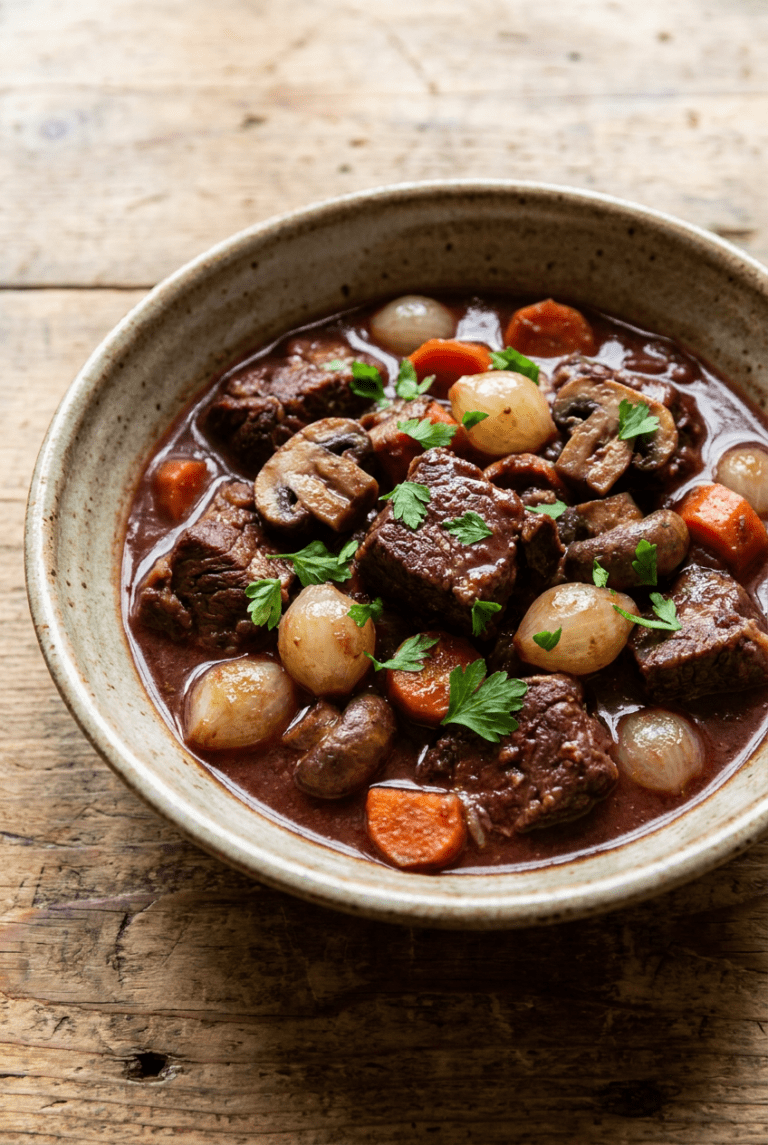
Hearty Classic Beef Stew Recipe, Easy American Dinner in 3 Hours
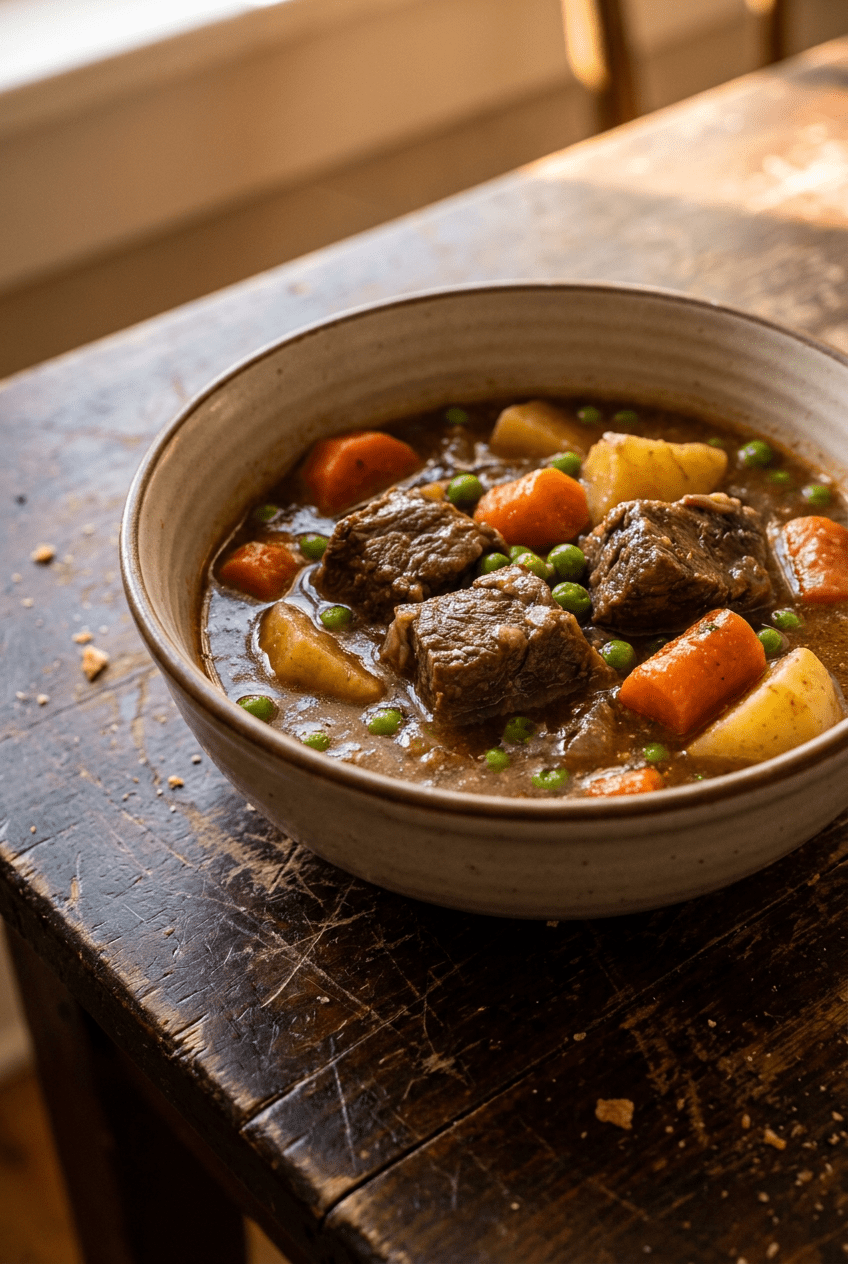
Table of Contents
- Hearty Classic Beef Stew Recipe: A soul warming, fork tender beef stew loaded with vegetables in a rich, savory broth perfect for chilly evenings
- Why You Will Love This Hearty Classic Beef Stew Recipe
- Your Simple Ingredients for the Perfect Hearty Classic Beef Stew
- How to Make Perfect Hearty Classic Beef Stew
- Pro Tips and Easy Variations for Your Hearty Classic Beef Stew
- Serving Suggestions
- Nutrition Information
- Storage and Make Ahead Instructions
- Your Hearty Classic Beef Stew Questions Answered
- More Incredible American Recipes to Try
- The Story Behind This Recipe
- Pin This Recipe for Later
Hearty Classic Beef Stew Recipe: A Soul Warming, Fork Tender Beef Stew Loaded with Vegetables in a Rich, Savory Broth Perfect for Chilly Evenings
This hearty classic beef stew recipe has been my anchor on countless cold evenings. I still remember the first time I made it, the kitchen windows fogging up while the wind rattled outside. The smell of seared beef, thyme, and red wine filled every corner of the house. It was the kind of dinner that made everyone slow down, pull up a chair, and linger at the table long after the bowls were empty. That is exactly what a good stew should do: wrap you in warmth and turn an ordinary weeknight into something a little more special. If you enjoy cozy weekend cooking projects that fill the house with incredible aromas, you might also love my fluffy Japanese souffle pancakes for a sweet morning treat when the weather turns chilly.
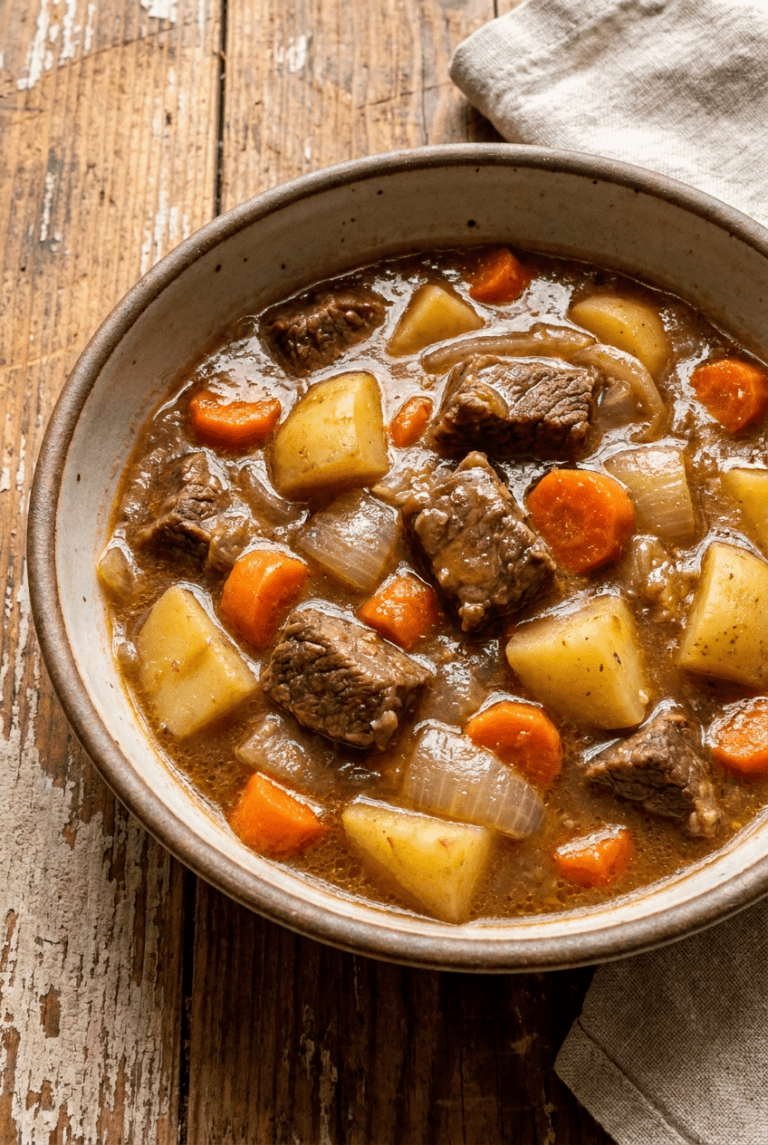
What makes this version stand out is the careful layering of flavor at every single step. We take the time to deeply brown the beef, caramelize tomato paste, and deglaze with a generous pour of dry red wine. Those simple actions build a broth that tastes like it simmered all day, even though most of the cooking is hands off. The vegetables are added later so they keep their shape and texture, not turn to mush. Every spoonful gives you tender pieces of chuck roast, soft carrots and potatoes, and a gravy that is rich without being heavy. This is the best hearty classic beef stew recipe I have ever made, and I am confident it will become your go to as well.
This dish is for anyone who craves a deeply satisfying meal that requires little fuss once the pot is on the stove. It is perfect for a lazy Sunday supper, a make ahead dinner for busy weeknights, or serving a crowd during the holidays. You can easily double the recipe for a large gathering, or freeze half for a future night when you need comfort without the work. Whether you are a seasoned home cook or just starting to explore how to make hearty classic beef stew, the detailed steps and pro tips below will guide you to a flawless result every time.
Why You Will Love This Hearty Classic Beef Stew Recipe
- Deeply developed flavor without all day cooking. By browning the meat in batches, caramelizing the tomato paste, and reducing the wine, you create layers of richness that usually take hours. This stew tastes like it simmered for an entire afternoon.
- Perfectly tender beef every single time. Using well marbled chuck and simmering it low and slow breaks down the connective tissue into gelatin, giving you fork tender meat that practically melts on your tongue. The gentle heat ensures nothing becomes dry or tough.
- Vegetables that hold their shape and texture. Adding carrots, celery, and potatoes later in the cooking process means they stay pleasantly firm, not mushy. You will actually taste the sweet earthiness of each vegetable in every bite.
- An incredibly versatile and forgiving recipe. You can adapt this hearty classic beef stew recipe to what you have on hand. Swap in parsnips, use stout instead of wine, or even make it entirely in a slow cooker. The base method works every time.
- Make ahead magic. This stew tastes even better the next day, making it ideal for meal prep or entertaining. A night in the fridge lets the flavors meld together into something truly remarkable.
- A one pot wonder. Everything comes together in a single Dutch oven, which means less cleanup and more time enjoying the evening. The pot goes from stovetop to oven to table with rustic charm.
Your Simple Ingredients for the Perfect Hearty Classic Beef Stew
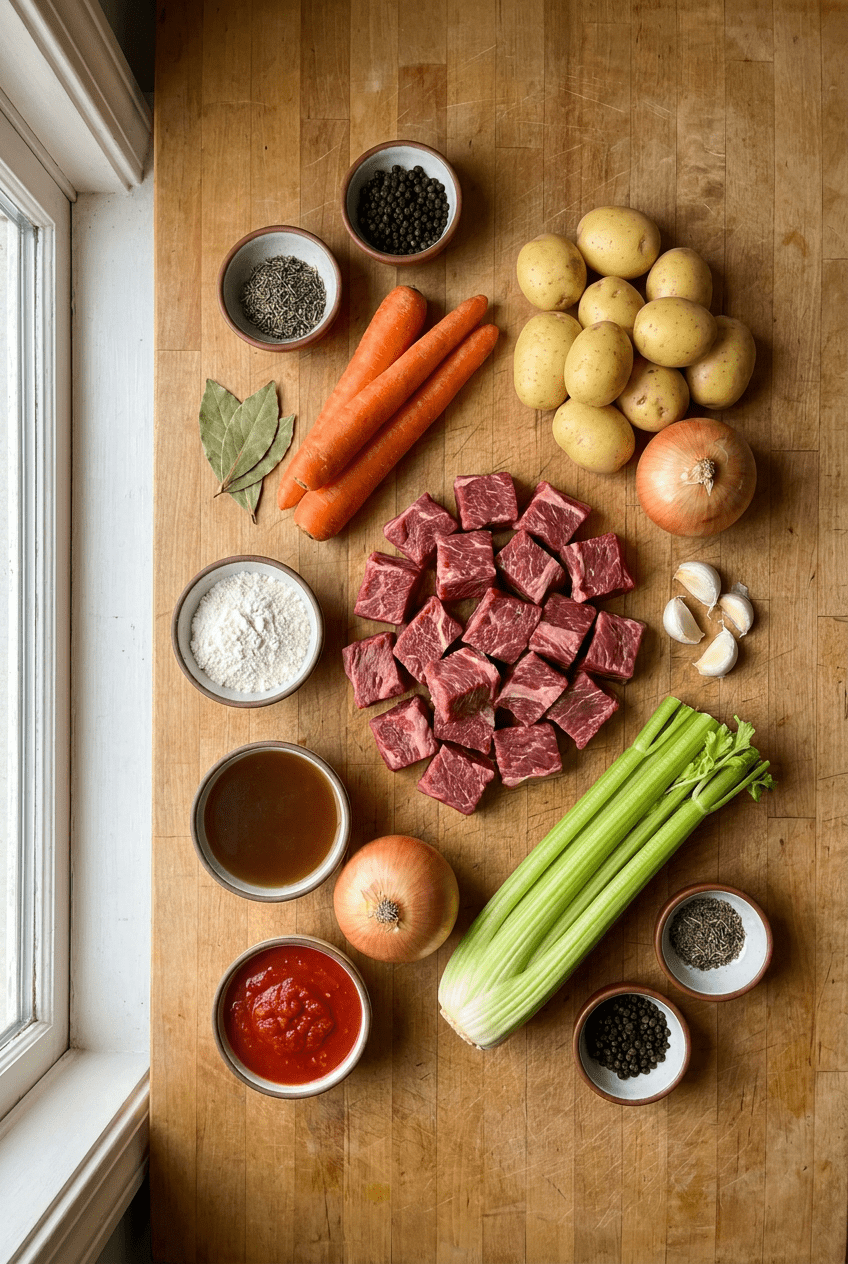
Main Ingredients
- 2 lbs beef chuck, cut into 1.5 inch cubes
- 3 tbsp olive oil, divided
- 1 large yellow onion, diced
- 3 cloves garlic, minced
- 3 medium carrots, peeled and cut into 1 inch chunks
- 3 stalks celery, cut into 1 inch pieces
- 1 lb Yukon Gold potatoes, scrubbed and quartered
- 2 tbsp tomato paste
- 1 cup dry red wine, like Cabernet Sauvignon
- 4 cups low sodium beef broth
- 2 cups water
- 2 sprigs fresh thyme, or 1 tsp dried
- 2 bay leaves
- 2 tbsp all purpose flour, or gluten free blend
- 1 cup frozen peas, thawed
- 2 tbsp fresh parsley, chopped, for garnish
- to taste salt and black pepper
Ingredient Notes
Beef chuck. This cut comes from the shoulder and has generous marbling that slowly renders into the stew, creating incredibly succulent meat. Look for a piece with even fat distribution and avoid pre cut stew meat, which often contains leaner, less flavorful scraps. If you cannot find chuck, brisket or bottom round are good alternatives, but skip lean sirloin or tenderloin as they will dry out.
Dry red wine. The wine adds brightness and a subtle fruity backbone that balances the richness of the beef. A Cabernet Sauvignon works beautifully, but any dry red you enjoy drinking will be fine. The alcohol cooks off during the reduction, leaving behind concentrated flavor. If you prefer not to use wine, substitute an equal amount of additional beef broth and add a tablespoon of balsamic vinegar for depth.
Yukon Gold potatoes. Their buttery texture and thin skins mean they hold together well during the long simmer while still becoming wonderfully creamy inside. You do not need to peel them, just a good scrub. Red potatoes or even unpeeled Russets work in a pinch, though Russets break down a bit more and help thicken the stew naturally.
Tomato paste. This concentrated ingredient is essential for building umami. Cooking it in the hot pot until it darkens and caramelizes deepens its sweetness and adds a savory backbone to the broth. Do not rush this step; those two minutes transform the final flavor. Tube tomato paste is handy because you can measure exactly what you need.
Low sodium beef broth. Using low sodium broth lets you control the salt level as the stew reduces and intensifies. If you only have regular broth, simply hold back on added salt until the very end. Homemade beef stock will make this stew exceptional, but a good quality store bought brand works very well.
Fresh thyme and bay leaves. These aromatics infuse the liquid with an earthy, slightly floral note that ties everything together. If using dried thyme, remember it is more potent, so a teaspoon is plenty. Remove the bay leaves and spent thyme stems before serving to avoid any bitter, woody bits.
How to Make Perfect Hearty Classic Beef Stew
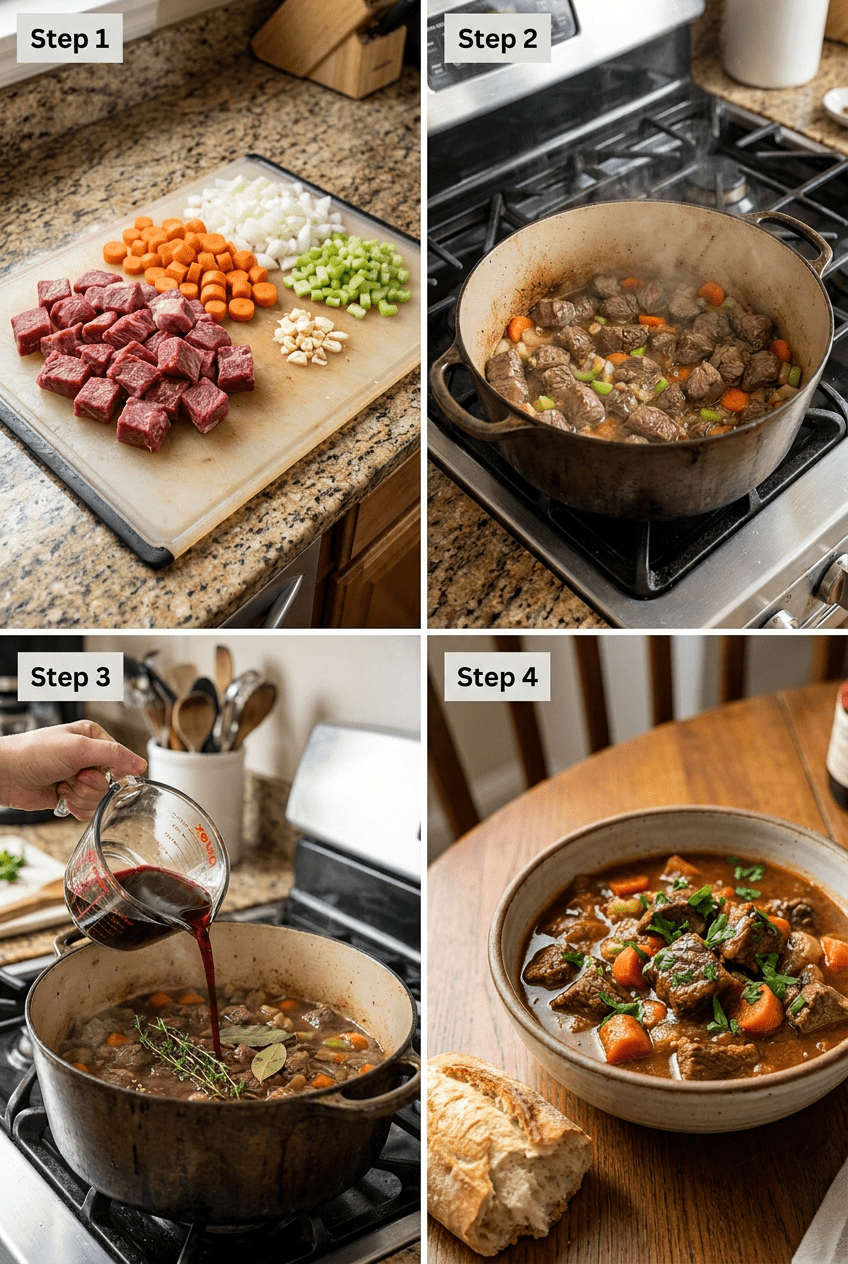
Phase 1: Build the Foundation
Brown the beef. Pat the beef cubes absolutely dry with paper towels, then season them generously with salt and black pepper. In a large Dutch oven, heat 2 tablespoons of the olive oil over medium high heat. Working in batches to avoid crowding the pot, sear the cubes on all sides until a deep brown crust forms, about 3 to 4 minutes per batch. Listen for a loud sizzle and watch for the meat to release easily from the pan when it is ready. Transfer each batch to a plate and set aside. This step is nonnegotiable for the deepest flavor; the browned bits on the bottom of the pot are where all the magic begins.
Sauté the aromatics. Reduce the heat to medium and add the remaining tablespoon of olive oil along with the diced onion. Cook, stirring occasionally, until the onion turns translucent and soft, about 5 minutes. Add the minced garlic and cook for 1 minute, just until fragrant. Then stir in the tomato paste. Keep stirring for a full 2 minutes as the paste darkens slightly and smells sweet and concentrated. This brief caramelization is similar to the careful layering you find in a Moroccan chicken tagine, where each ingredient gets its moment to shine.
Deglaze with wine. Pour in the dry red wine, using a wooden spoon to scrape up every bit of the brown fond stuck to the bottom of the pot. Bring the liquid to a simmer and let it cook until reduced by half, about 4 to 5 minutes. You will notice the raw alcohol smell disappears and the mixture thickens slightly. All those savory scraps dissolve into the liquid, creating the first layer of a profoundly flavorful broth.
Phase 2: Simmer Low and Slow
Create the stew base. Sprinkle the flour over the onion mixture and stir it in, cooking for 1 minute to remove the raw flour taste. Then gradually whisk in the beef broth and water, stirring constantly to keep the liquid smooth and free of lumps. Bring everything to a gentle simmer, and you will see the broth thicken just a bit. Return the browned beef and any juices collected on the plate to the pot, along with the thyme sprigs and bay leaves.
The long simmer. Increase the heat to bring the stew to a gentle boil, then reduce it to low. Cover the pot with the lid slightly askew so steam can escape, which helps the flavors concentrate. Simmer for 1 hour and 30 minutes, stirring every now and then to prevent sticking. The beef should be starting to soften but not yet completely tender. For food safety, confirm the meat has reached an internal temperature of at least 145°F (63°C) at this stage, though it will climb much higher as it finishes cooking.
Phase 3: Finish with Vegetables
Add the root vegetables. Nestle the carrots, celery, and quartered Yukon Gold potatoes into the stew. Keep the heat low and the lid partially covering the pot. Let everything continue simmering for another 40 to 45 minutes. You will know it is ready when a fork slides easily through a carrot and the beef is melt in your mouth tender. The broth will have thickened naturally from the potato starch and reduced collagen.
The final touches. Fish out the thyme stems and bay leaves. Stir in the thawed peas and let them warm through for about 2 minutes. Taste the stew and adjust the salt and pepper as needed. Ladle generous portions into deep bowls, scatter fresh parsley over the top, and serve immediately while the kitchen still holds that beautiful savory steam.
Pro Tips and Easy Variations for Your Hearty Classic Beef Stew
Pro Tips
- Dry the beef thoroughly before searing. Any surface moisture turns into steam, which prevents browning. Pat each cube with paper towels and let them sit at room temperature for 15 minutes while you prep other ingredients. A well browned crust is the single most important flavor step in this entire recipe.
- Do not crowd the pot in batches. Placing too many pieces in the Dutch oven at once drops the pan temperature and causes the meat to release liquid. Give each cube at least a half inch of space, and let each batch develop a dark, crusty exterior. The patience pays off in the final stew.
- Scrape up the fond completely. Those sticky brown bits are concentrated flavor. When you add the wine, use a flat edged wooden spoon to loosen every speck. If the fond is particularly stubborn, a splash of broth helps lift it as you stir.
- Simmer with the lid slightly open. Completely covering the pot traps too much steam and dilutes the broth. A tilted lid allows just enough evaporation to concentrate the liquid into a velvety gravy. Check occasionally to make sure the liquid level stays just above the solids, adding a little water if needed.
- Add root vegetables later. Tossing everything in at the start would leave you with mushy, discolored carrots and disintegrated potatoes. The method of staggering the addition gives you distinct, perfectly cooked vegetables and tender beef in the same bowl. This is the hallmark of homemade hearty classic beef stew from scratch.
- Let it rest overnight for deeper flavor. Stew is famously better the next day. After cooling, refrigerate it and simply reheat over low heat when ready to serve. The flavors meld and the broth takes on an even silkier consistency. It is my favorite make ahead trick.
Delicious Variations
- Stout beer beef stew. Replace the red wine with a full bodied dark beer like stout or porter. The malty, slightly bitter notes pair beautifully with the rich beef and add a deep, earthy character. Reduce the beer just as you would the wine.
- Root vegetable medley. Add a chopped parsnip or turnip along with the carrots for an extra layer of earthy sweetness. Their natural sugars caramelize softly in the broth and provide a lovely contrast to the savory beef.
- Gluten free option. Use a good quality all purpose gluten free flour blend instead of wheat flour for the dusting, or omit the flour entirely and thicken the finished stew with a cornstarch slurry (1 tablespoon cornstarch mixed with 2 tablespoons cold water stirred in during the last 10 minutes). No one will miss the gluten.
- Herb packed finish. Stir in a handful of chopped fresh rosemary and thyme leaves right before serving for a brighter, more aromatic lift. The fresh herbs cut through the richness and add a pop of green.
For a completely different kind of comfort food, you might enjoy my blueberry lemon ricotta pancakes when you want something sweet and fluffy to start the day.
Serving Suggestions for a Perfect Dinner
This hearty classic beef stew is a complete meal in a bowl, but the right accompaniments make it feel even more special. A loaf of crusty sourdough bread with a thick, crunchy crust is essential for sopping up every last bit of the savory broth. For a truly classic pairing, ladle the stew over a mound of fluffy mashed potatoes, which catch the gravy and add another layer of creamy comfort. A simple green salad dressed with a sharp vinaigrette cuts through the richness and brightens the whole plate. For drinks, a glass of the same dry red wine you cooked with is a natural choice, or for a nonalcoholic option, a mug of robust black tea sits beautifully alongside a bowl of steaming stew.
This recipe shines on weekend nights when the family gathers around the table and on holiday occasions when you want something hands off. It is easily doubled or tripled in a large stockpot for a crowd; just make sure to brown the meat in smaller batches to keep the heat high. Serve the stew in deep, prewarmed bowls so it stays hot longer, and set out a bowl of fresh parsley and some flaky salt so everyone can finish their portion to taste. Whether you call it a casual weeknight rescue or the centerpiece of a cozy dinner party, this dish delivers.
Nutrition Information
(Approximate per serving, 6 servings total) Calories: 450, Fat: 18g, Carbohydrates: 28g, Protein: 38g, Fiber: 5g, Sugar: 7g, Sodium: 520mg. Nutritional values are estimates only.
Storage and Make Ahead Instructions
- Refrigerator. Cool the stew to room temperature, then transfer it to an airtight container. It keeps for up to 4 days in the fridge. The flavor deepens overnight, making this an ideal make ahead meal. The potatoes and carrots will soften slightly but remain pleasantly textured.
- Freezer. For longer storage, portion the stew into freezer safe containers or heavy duty bags, leaving a little space for expansion. It freezes beautifully for up to 3 months. Thaw overnight in the refrigerator before reheating. The potatoes might become a bit grainy after freezing; if that bothers you, you can freeze the stew without potatoes and add freshly cooked ones when serving.
- Reheating. Warm the stew gently on the stovetop over medium low heat, stirring occasionally, until bubbling and heated through. If the gravy has thickened too much, add a splash of broth or water. Microwave in 2 minute bursts, stirring between each, for a quick single serving option.
- Make ahead. The entire dish can be made 1 or 2 days in advance and kept in the refrigerator. You can also prep the vegetables and trim the beef the night before, storing them separately in the fridge. Wait to add the peas until just before serving so they stay bright green.
Your Hearty Classic Beef Stew Questions Answered
Can I make this hearty classic beef stew in a slow cooker?
Yes, and it turns out wonderfully. First sear the beef and sauté the aromatics on the stovetop as directed, then transfer everything to a slow cooker along with the broth, water, thyme, and bay leaves. Cook on low for 6 to 8 hours or on high for 4 to 5 hours. Add the potatoes, carrots, and celery during the last 2 hours on low or 1 hour on high, and stir in the peas at the very end.
What is the best cut of beef for stew?
Beef chuck is my top choice because its abundant marbling slowly melts into the stew, keeping the meat incredibly tender and flavorful. Brisket and bottom round are also good options. Avoid lean cuts like sirloin or round steak, which tend to become dry and tough during long cooking.
Can I use water instead of wine?
You can, but you will miss some depth. Substitute the wine with an equal amount of additional beef broth plus 1 tablespoon of balsamic vinegar or a squeeze of lemon juice to mimic the acidity. The stew will still be delicious, just a bit less complex.
How do I thicken the stew if it is too thin?
If after adding the vegetables the broth still seems thinner than you like, mix 1 tablespoon of cornstarch with 2 tablespoons of cold water and stir it into the simmering stew. Let it cook for about 10 minutes, and the liquid will thicken into a silky gravy without altering the flavor.
Can I skip browning the beef?
Strongly not recommended. Browning creates the deep, savory crust that forms the foundation of this entire dish. Without that step, the stew will taste flat and the meat will have a gray, unappealing color. Trust me, those few extra minutes are worth it.
How do I know when the beef is fully cooked and tender?
The beef is ready when a fork or the tip of a knife slides in with almost no resistance. The internal temperature will be well above 160°F, but tenderness is the real indicator, not just temperature. If it still feels firm, continue simmering and check again in 15 minute intervals.
What can I substitute for potatoes?
You can use peeled and cubed sweet potatoes, which become sweet and creamy, or try chunks of turnip or parsnip for a lower carb option. Keep in mind that sweet potatoes cook a little faster, so add them about 25 minutes before the end of cooking instead of 40.
Can I freeze this stew with the potatoes and peas already in it?
Yes, but the texture of the potatoes may change slightly, becoming grainier after thawing. The peas hold up well. For the best texture, you can freeze the stew base and add freshly boiled potatoes and peas when reheating. Either way, the flavor remains excellent.
My stew tastes bland. How can I fix it?
First, make sure you have added enough salt, as it unlocks all the other flavors. A splash of red wine vinegar or a small squeeze of lemon juice added just before serving can brighten the broth instantly. Often, the stew simply needs another 10 minutes of simmering with the lid off to concentrate the flavors.
More Incredible American Recipes to Try
If this easy hearty classic beef stew recipe won you over, there are plenty of other American comfort food favorites I think you will love. A rich and creamy chicken pot pie with a flaky, golden crust delivers that same soul warming satisfaction in a different form. Or perhaps a classic meatloaf glazed with tangy ketchup and served alongside buttery mashed potatoes; it is nostalgia on a plate and just as simple to pull together on a weeknight. For a weekend project that feels both familiar and impressive, a slow cooked pot roast with root vegetables offers similar deep flavors and hands off ease.
When you are in the mood for something a bit different, my blueberry lemon ricotta pancakes make a bright and fluffy brunch centerpiece that balances sweet and tart just right. And if you have ever wanted to explore a dish that layers spices in the most incredible way, the Moroccan chicken tagine is a wonderful next step. Each of these recipes shares the same heart of a comforting, home cooked meal, no matter where they come from.
The Story Behind This Hearty Classic Beef Stew
Beef stew has graced American tables for generations, a practical dish born from the need to transform tough, inexpensive cuts of meat into nourishing family meals. Early New England settlers simmered beef with root vegetables in heavy iron pots hung over open hearths, letting the fire do the work while they tended to other chores. As the country expanded westward, chuck wagon cooks on cattle drives perfected the technique of long, slow cooking to feed hungry ranch hands with whatever ingredients were on hand. The stew became a symbol of resourcefulness and warmth, a meal that required patience but little else.
This particular version stays true to those roots while embracing small refinements that elevate the final bowl. I learned to cook stew from my grandmother, who never measured a thing and always insisted on browning the meat “until it looks right.” She would set the pot on the back burner after lunch and let it bubble away all afternoon, filling the house with a promise of comfort. I have added the wine deglazing and the tomato paste step over the years, but the spirit of her recipe remains. Every time I make it, I think of her kitchen and that unrushed, generous approach to feeding the people you love.
Pin This Hearty Classic Beef Stew Recipe for Later
Love this recipe? Save it to your favorite Pinterest board so you can find it again easily. Share it with friends and family who would enjoy making it too.
I truly hope this hearty classic beef stew becomes a staple in your kitchen the way it has in mine. There is something so rewarding about setting
Hearty Classic Beef Stew
Ingredients
Method
- Pat beef dry with paper towels and season generously with salt and pepper. Heat 2 tbsp olive oil in a large Dutch oven over medium-high heat. Working in batches, sear beef cubes until deeply browned on all sides, about 3-4 minutes per batch. Transfer to a plate.
- Reduce heat to medium. Add remaining 1 tbsp oil and onion. Cook until softened, 5 minutes. Add garlic, cook 1 minute. Stir in tomato paste and cook, stirring constantly, for 2 minutes until it darkens slightly.
- Pour in red wine, scraping up browned bits from the bottom of the pot with a wooden spoon. Bring to a simmer and cook until liquid is reduced by half, about 4-5 minutes.
- Sprinkle flour over the onion mixture, stir and cook for 1 minute. Gradually whisk in beef broth and water. Bring to a simmer, stirring until slightly thickened. Return beef and any accumulated juices to the pot. Add thyme sprigs and bay leaves.
- Bring stew to a gentle boil, then reduce heat to low. Cover partially with a lid and simmer for 1.5 hours, or until beef is almost tender, stirring occasionally. Ensure beef reaches an internal temperature of at least 145°F (63°C) for safety.
- Add carrots, celery, and potatoes. Continue simmering, covered partially, for another 40-45 minutes, or until vegetables are fork-tender and beef is melt-in-the-mouth.
- Discard thyme stems and bay leaves. Stir in peas and cook just until heated through, about 2 minutes. Taste and adjust seasoning. Ladle into bowls, garnish with parsley, and serve hot.
Disclosure: This post may contain affiliate links. If you purchase through our links we may earn a small commission at no extra cost to you.
If you made this Hearty Classic Beef Stew, please leave a comment below and let me know how it turned out.