Red Wine–Braised Beef Short Ribs Recipe, Easy American Dinner in 5 Hours
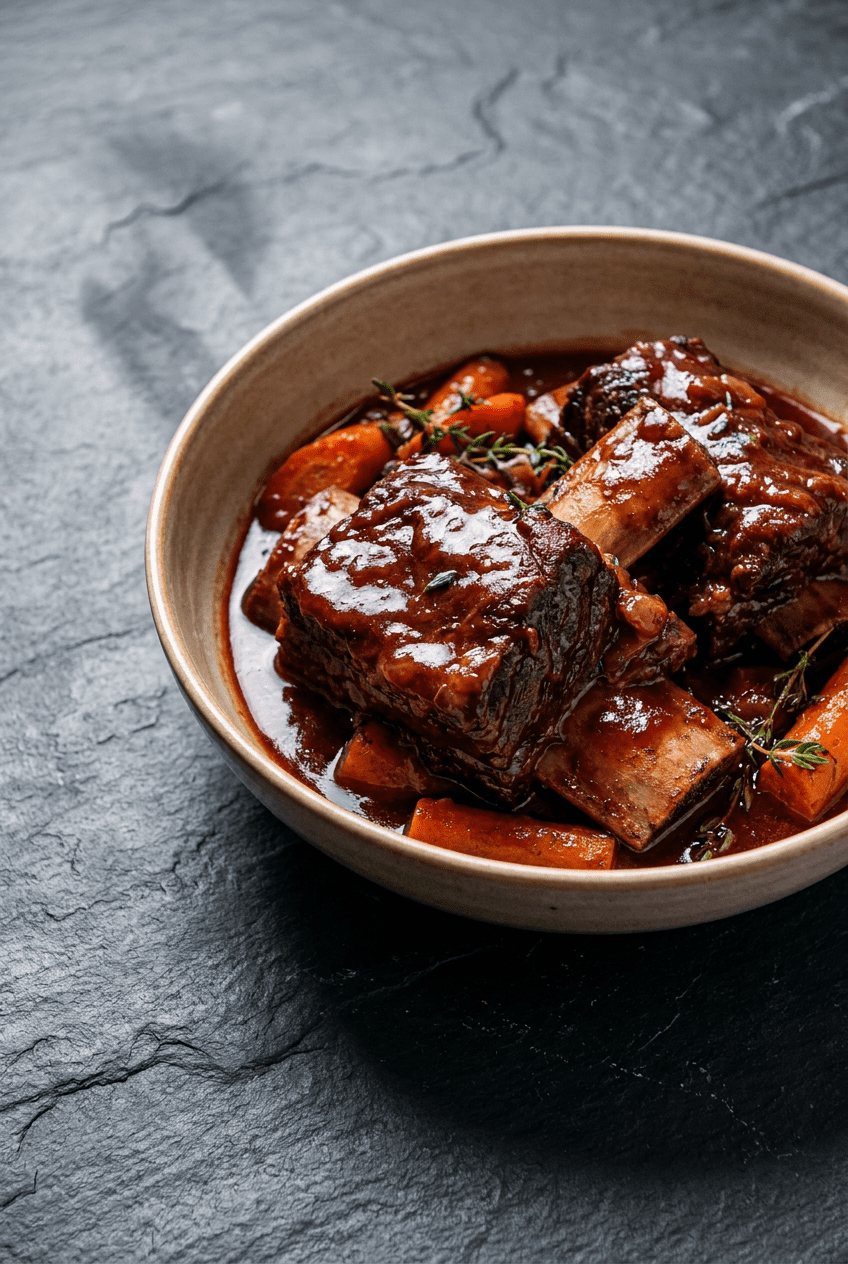
Table of Contents
- Red Wine–Braised Beef Short Ribs: melt-in-your-mouth beef short ribs braised in a rich red wine and herb sauce — pure comfort on a plate.
- Why You Will Love This Red Wine–Braised Beef Short Ribs Recipe
- Your Simple Ingredients for the Perfect Red Wine–Braised Beef Short Ribs
- How to Make Perfect Red Wine–Braised Beef Short Ribs
- Pro Tips and Easy Variations for Your Red Wine–Braised Beef Short Ribs
- Serving Suggestions for a Perfect Dinner
- Nutrition Information
- Storage and Make-Ahead Instructions
- Your Red Wine–Braised Beef Short Ribs Questions Answered
- More Incredible American Recipes to Try
- The Story Behind This Recipe
- Pin This Recipe for Later
Red Wine–Braised Beef Short Ribs: Melt-in-Your-Mouth Beef Short Ribs Braised in a Rich Red Wine and Herb Sauce — Pure Comfort on a Plate
I still remember the first time I truly understood what braising meant. It was a chilly Sunday afternoon years ago, and my tiny apartment kitchen filled with the scent of red wine, garlic, and thyme slowly working their magic on a humble cut of beef. I had invited friends over for dinner, and as the hours ticked by, the short ribs transformed from something stubborn and tough into the most luxurious, spoon-tender meat I had ever tasted. We barely made it to the table before pulling apart those glossy, wine-darkened pieces with just a fork. That meal became a tradition, a reminder that the very best cooking often asks for nothing more than patience and a few simple ingredients. This red wine–braised beef short ribs recipe is exactly that kind of dish — deeply comforting, surprisingly straightforward, and absolutely unforgettable.
What sets this recipe apart from others is the attention to building flavor in layers. We start with a careful, patient sear that creates a deep mahogany crust on every rib, then we slowly coax out sweetness from the aromatic vegetables until they are golden and softened. The red wine is reduced by half until its raw alcohol edge vanishes, leaving only a concentrated, fruity richness. From there, a low and gentle oven braise does the heavy lifting, melting the connective tissue into a velvety sauce that you will want to spoon over everything. I have tested this method more times than I can count, and it never fails to produce meat that falls apart with the slightest pressure. There are no shortcuts here, but each step is simple and worth every minute.
This dish is for anyone who craves a meal that feels like a warm hug at the end of a long day. It is perfect for a slow weekend dinner when the house can fill with that intoxicating, savory aroma, but it is also a wonderful make-ahead option for entertaining. Because the flavor actually improves overnight, you can do all the work the day before and simply reheat when your guests arrive. Serve it over creamy mashed potatoes alongside a bright, simple salad, and you have a meal that belongs in a restaurant yet feels entirely at home on your own table. If you love recipes that transform humble ingredients into something extraordinary, you might also enjoy my Moroccan chicken tagine, which uses a similar low-and-slow philosophy with completely different spices.
Why You Will Love This Red Wine–Braised Beef Short Ribs Recipe
- Incredibly tender, fall-apart meat. The long, gentle braise melts collagen into gelatin, giving the beef a buttery texture that requires no knife. The flavor is so rich and deep you will feel like a professional chef.
- Simple ingredients, extraordinary result. You do not need a long list of exotic items. The magic comes from the technique, just searing, sautéing, deglazing, and braising with everyday aromatics and a good bottle of red wine.
- A forgiving, almost foolproof method. Even if your timing is slightly off or you peek into the oven a few too many times, this dish forgives almost everything. The moist environment keeps the meat safe as long as you check for tenderness.
- Perfect for making ahead. This is the ideal weekend project that rewards you with an even better meal on Monday. The flavors marry and deepen, and chilling the sauce makes removing excess fat effortless.
- Versatile serving possibilities. Spoon it over buttery polenta, whipped potatoes, egg noodles, or even toasted sourdough. The glossy sauce elevates anything it touches.
- Feels like a special occasion without leaving home. The aroma alone transforms your kitchen into the coziest bistro. You get all the elegance of a dinner party dish with zero of the stress.
Your Simple Ingredients for the Perfect Red Wine–Braised Beef Short Ribs
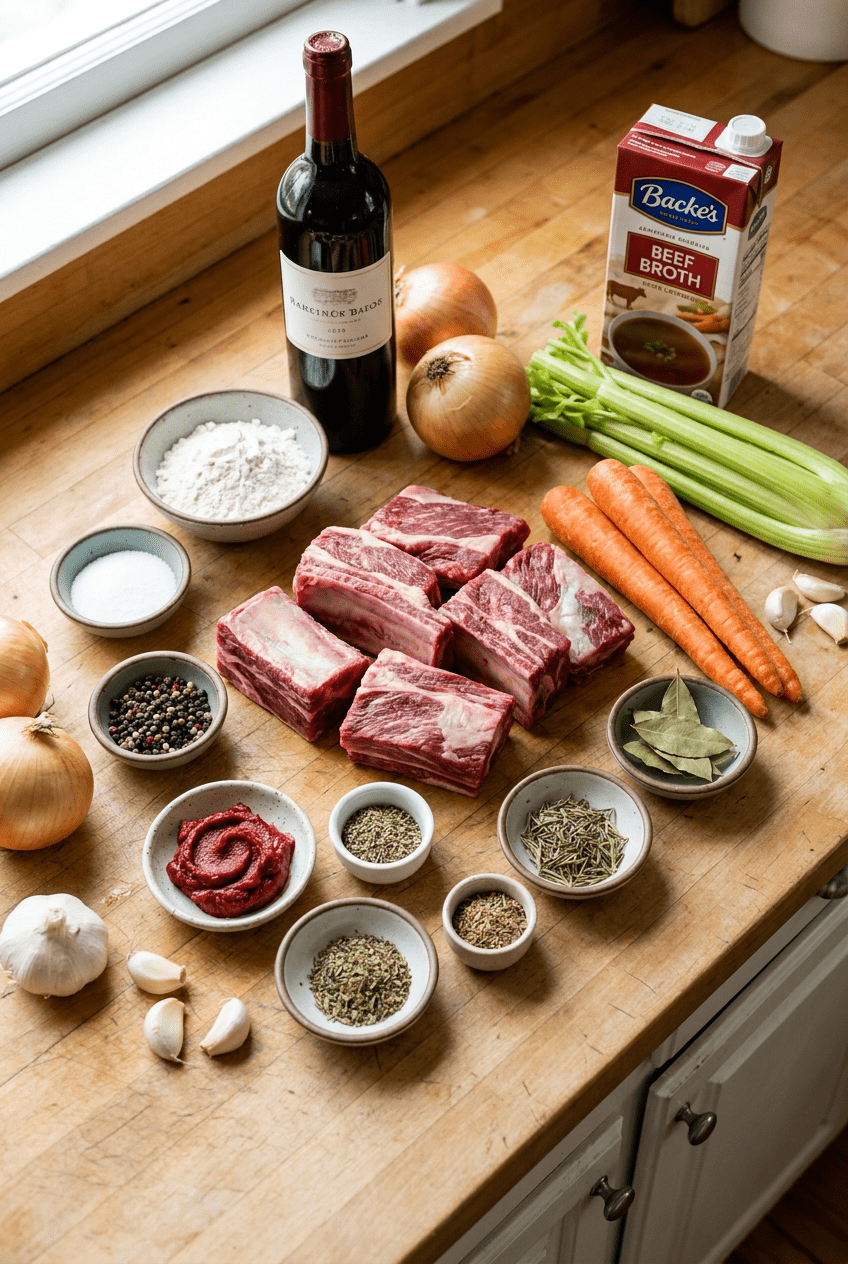
Main
- 5–6 lbs bone-in beef short ribs, English-cut, 3–4 inches long, patted dry
- 2 tbsp olive oil or avocado oil
- 1 tbsp kosher salt, plus more to taste
- 1 tsp freshly ground black pepper
Aromatics and Vegetables
- 1 large yellow onion, diced
- 2 medium carrots, peeled and cut into 1-inch chunks
- 2 stalks celery, cut into 1-inch chunks
- 6 cloves garlic, smashed
- 2 tbsp tomato paste
Braising Liquid
- 2 cups dry red wine, like Cabernet Sauvignon or Merlot
- 2 cups low-sodium beef broth
- 1 sprig fresh rosemary
- 3 sprigs fresh thyme
- 2 bay leaves
Garnish
- 2 tbsp fresh flat-leaf parsley, chopped
- 1 tsp lemon zest, optional, for gremolata
- 1 clove garlic, minced, for gremolata
Ingredient Notes
Bone-in beef short ribs. The bones are essential for flavor and body. As they cook, they release marrow and gelatin into the sauce, giving it a silky, lip-smacking quality. Look for English-cut ribs with generous marbling; leaner cuts can turn dry and stringy. If you cannot find bone-in, you can use boneless short ribs, but you will miss some of that depth. In a pinch, a well-marbled chuck roast cut into large chunks works beautifully.
Dry red wine. Choose a wine you would happily drink. The fruit and acidity of Cabernet Sauvignon or Merlot hold up beautifully to long cooking, but any full-bodied dry red will do. Avoid anything labeled “cooking wine,” which often contains added salt and preservatives. The reduction step concentrates the wine’s essence and removes harsh raw alcohol notes, leaving behind a round, complex backbone for the sauce.
Tomato paste. This small addition brings umami and a gentle sweetness that balances the richness of the beef and wine. Cooking it briefly with the garlic blooms its flavor and deepens the color of the final sauce. If you are out, you can substitute 1 tablespoon of tomato sauce, but the paste is preferred for its concentrated intensity.
Fresh herbs. Rosemary and thyme infuse the braising liquid with an earthy, aromatic layer that dried herbs simply cannot replicate. Tying them together with kitchen twine makes removal easy. In a pinch, you can use 1 teaspoon dried rosemary and 1 teaspoon dried thyme, but the fresh version gives a brighter, cleaner finish.
Low-sodium beef broth. Starting with unsalted or low-sodium broth gives you full control over the seasoning. As the liquid reduces, the salt concentrates, so it is always better to adjust at the end. If you have homemade stock, this is the moment to use it, but a good store-bought brand is perfectly fine.
How to Make Perfect Red Wine–Braised Beef Short Ribs
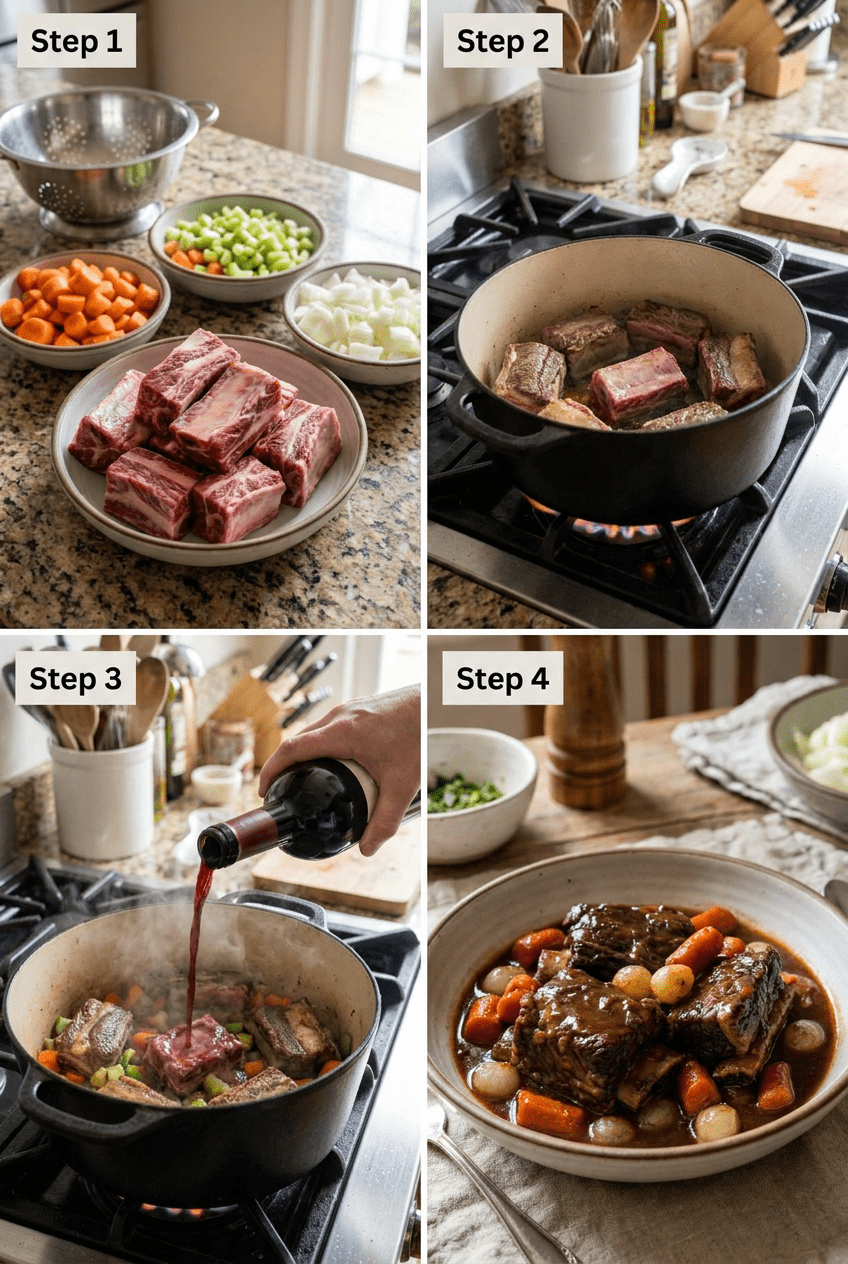
Step 1: Sear the short ribs
Preheat your oven to 300°F (150°C). While the oven heats, season the short ribs generously on all sides with the salt and pepper. Get your heaviest Dutch oven hot over medium-high heat and add the oil. When it shimmers, carefully place the ribs in the pot, being sure not to crowd them. If you pile them in, they will steam instead of sear, and you will miss that deep, caramelized crust that builds the foundation of flavor. Sear each batch for about 4 minutes per side, turning only when the meat releases easily from the pot. You are looking for a dark, rich brown, almost the color of dark chocolate in some spots. Transfer the seared ribs to a plate and pour off all but 2 tablespoons of the rendered fat. This small amount of fat will become the vehicle for sautéing your aromatics. While the ribs rest, you might start dreaming about the tenderness to come, a feeling I know well from making these ribs many times and also from my fluffy Japanese souffle pancakes, where patience rewards you with something impossibly airy.
Step 2: Sauté the aromatics
Reduce the heat to medium and add the diced onion, carrot chunks, and celery to the rendered fat. Stir them gently with a wooden spoon, scraping up any browned bits that cling to the bottom. Those bits, known as fond, are packed with savory flavor and will dissolve into the vegetables as they soften. Cook until the onion turns translucent and the carrots start to pick up a little golden color, about 6 to 8 minutes. Stir frequently, and don’t walk away because the sugars in the vegetables can burn. Add the smashed garlic and tomato paste and cook for just 1 minute more, until the garlic becomes highly fragrant and the tomato paste darkens to a brick-red hue. This step is small but mighty; it blooms the paste and removes any raw metallic taste.
Step 3: Deglaze and build the braising liquid
Pour the red wine into the pot and crank the heat to high. As the wine bubbles, use your spoon to scrape every last bit of fond from the bottom and sides of the Dutch oven. Let the wine boil until it reduces by half, which should take roughly 8 minutes. You will notice the sharp, boozy smell disappear, replaced by a concentrated, fruity aroma. This is exactly what you want. Now add the beef broth, rosemary, thyme, and bay leaves. Bring the liquid to a full rolling boil, then taste it. The sauce will taste a little sharp right now, but trust the process, it will mellow beautifully in the oven. This is the moment when your kitchen starts to smell like home.
Step 4: Braise the ribs
Nestle the seared short ribs back into the pot, this time with the bone side facing up. You want the meat partially submerged but not drowning, just about halfway up the sides. The exposed tops will develop a gorgeous glaze as they braise. Put the lid on tightly, slide the pot into the oven, and let time work its miracle. Braise for 3.5 to 4 hours. At the 2-hour mark, it is okay to peek and check the liquid level; if more than half has evaporated, splash in a little extra beef broth. The beef reaches a safe internal temperature early on, but you are looking for much more than food safety. You want the internal temperature to climb well above 200°F (93°C) so the collagen melts completely. The true test is tenderness: insert a fork into the meat, and it should slide in with zero resistance, almost like sliding into warm butter. If there is any spring-back, give it another 30 minutes.
Step 5: Rest and skim fat
When the ribs are perfectly tender, lift them gently from the pot with a slotted spoon and transfer them to a serving platter. Tent loosely with foil to keep them warm. Pour the braising liquid through a fine-mesh strainer into a fat separator or a bowl. Press on the solids to extract every last drop of goodness, then discard them. If you have time, let the strained liquid sit for 10 minutes so the fat rises to the top. Skim off that layer of fat or pour the liquid into a saucepan. Bring the sauce to a boil and let it reduce until it thickens enough to coat the back of a spoon with a silky, glossy shine. For an extra restaurant-style finish, you can whisk in a tablespoon of cold butter at the end, though the sauce is already luxurious without it.
Step 6: Serve
Arrange the short ribs on your chosen bed of mashed potatoes, polenta, or tender egg noodles. Spoon the glistening sauce generously over the top, letting it pool around the sides. Sprinkle with the fresh parsley. For a bright finishing touch, quickly mix the optional gremolata — chopped parsley, lemon zest, and minced garlic — and scatter it over everything. The lemon zest cuts through the richness and wakes up every bite. Serve immediately while the sauce is still hot and glossy, and watch the faces around your table light up.
Pro Tips and Easy Variations for Your Red Wine–Braised Beef Short Ribs
Pro Tips
- Choose well-marbled English-cut ribs. The thin ribbons of fat running through the meat melt during the long braise, basting the beef from the inside. Leaner cuts simply do not have enough internal moisture and can become dry even in a bath of liquid.
- Make the dish a full day ahead. Overnight refrigeration deepens the savory flavors and allows the fat to solidify on the surface, making removal incredibly easy. Simply lift off the hardened fat cap, reheat, and serve an even more delicious meal.
- Always deglaze with wine before adding broth. The acidity and alcohol in the wine loosen the fond and cook off, leaving concentrated fruit. If you add broth too early, you dilute the ability to scrape up browned bits and risk a flatter, less complex sauce.
- Check for tenderness, not just time. Ovens vary, and so do batches of short ribs. Rely on the fork test described in step 4. When the meat slides easily off the bone and a fork pierces with no effort, it is ready. If you encounter any resistance, keep braising.
- To thicken the sauce without flour, simply reduce it. After straining, boil the liquid vigorously for 10 to 15 minutes. It will naturally concentrate into a syrupy, clingy consistency that glazes the meat beautifully. This technique preserves the pure, clean flavor.
- Skim the fat properly. Use a fat separator for the quickest method, or if you are making the dish ahead, chill the whole pot and lift the solidified fat off in one piece. This small effort transforms a greasy sauce into a velvety one.
Delicious Variations
- Boneless short ribs. Substitute 4 lbs boneless chuck roast or boneless short ribs and reduce the oven braising time to 2.5 to 3 hours. Check for tenderness early, as boneless cuts cook faster. The result is still deeply satisfying.
- Mushroom and pearl onion. Add 8 ounces of halved cremini mushrooms and 1 cup of frozen pearl onions during the last 45 minutes of braising. They soak up the sauce and add an earthy, sweet note that complements the beef perfectly.
- Beer-braised version. Replace the red wine with a good dark ale or stout and swap the beef broth for a rich veal stock. The malty, slightly bitter undertones create a completely different but equally comforting dish.
- Spicy chipotle twist. Stir 2 tablespoons of finely chopped chipotle peppers in adobo sauce into the braising liquid along with the tomato paste. The smoky heat pairs surprisingly well with the richness of the beef and red wine.
- Root vegetable heavy. Toss in parsnips, turnips, and extra carrots cut into large chunks right from the start. They become meltingly tender and turn the dish into a complete one-pot feast.
If you are in the mood for a completely different style of braise, my Moroccan chicken tagine uses fragrant spices and preserved lemon for a lighter but equally soul-warming meal. For something sweeter to follow, consider blueberry lemon ricotta pancakes as a delightful brunch finish.
Serving Suggestions for a Perfect Dinner
The short ribs themselves are the undeniable star, but choosing the right base makes the meal feel complete. Creamy whipped potatoes are a classic partner, their buttery softness catching every drop of the glossy wine sauce. If you want to add a touch of luxury, Parmesan polenta offers a nutty, golden landing that absorbs the juices beautifully. Egg noodles, buttery and wide, provide a gentler canvas that never competes. For a vegetable side, roasted carrots and parsnips tossed with olive oil and a pinch of salt echo the aromatics already in the dish, while a handful of fresh arugula dressed simply with lemon juice and olive oil cuts through the richness with a peppery bite. As for drinks, pour the same wine you used for braising. Its familiar fruitiness bridges the flavors and makes each sip feel intentional.
This recipe is tailor-made for gatherings. I love serving it on Christmas Eve, for a cozy birthday dinner, or anytime the weather turns cool and I want to gather people around a warm table. It scales up easily as long as you have a large enough pot; simply double the ingredients and use a bigger Dutch oven or a heavy roasting pan covered tightly with foil. For a complete dinner party menu, start with a light salad of bitter greens, serve the short ribs over polenta, and finish with a simple dessert like poached pears. The oven does almost all the work, leaving you free to set a beautiful table and enjoy your company.
Nutrition Information
(Approximate per serving, 6 servings total) Calories: 680, Fat: 52g, Carbohydrates: 15g, Protein: 48g, Fiber: 2g, Sodium: 820mg. Nutritional values are estimates only and will vary based on exact ingredients and portion sizes.
Storage and Make-Ahead Instructions
- Refrigerator. Store any leftover short ribs and sauce together in an airtight container. The meat will stay moist in the sauce for up to 4 days. The sauce may thicken as it chills, but it will loosen back up when reheated.
- Freezer. Place the cooled ribs and plenty of cooking liquid in a freezer-safe container or heavy-duty zip-top bag, pressing out excess air. Freeze for up to 3 months. Thaw overnight in the refrigerator, then reheat as directed.
- Reheating. The gentlest method is to place the ribs and sauce in an oven-safe dish, add a splash of beef broth to loosen the sauce, cover, and warm in a 300°F oven for about 20 minutes. For single portions, use the microwave in 1-minute bursts, covered, stirring in between. Always add a little liquid to keep the meat from drying out.
- Make-ahead. The entire dish tastes even better when made a day in advance. Prepare the recipe through step 5, skim the fat after chilling, and reheat the ribs in the sauce on the stovetop over low heat until heated through. You can also braise the ribs completely, cool them, and refrigerate them for up to 2 days before the big meal.
Your Red Wine–Braised Beef Short Ribs Questions Answered
Can I make this in a slow cooker?
Yes, absolutely. Complete steps 1 through 3 on the stovetop to build the flavor base, then transfer everything to a slow cooker. Cook on LOW for 7 to 8 hours or on HIGH for 4 to 5 hours until the meat is fork-tender. The results are very similar, though the sauce may be slightly thinner so you might want to reduce it on the stovetop after cooking.
What if I do not drink alcohol?
You can replace the red wine with an equal amount of unsalted beef broth plus 1 tablespoon of balsamic vinegar. The vinegar mimics the acidity that wine usually provides. The flavor will be slightly less complex but still deeply savory and delicious.
How do I know when the ribs are done?
Rely on the fork test rather than a timer. The meat should pull away from the bone easily and a fork inserted into the thickest part should meet no resistance. An internal temperature reading of around 200°F (93°C) is a good indicator that the collagen has fully melted, but tenderness is the final word.
Can I use boneless short ribs instead?
Yes, you can. Use about 4 pounds of boneless short ribs or a well-marbled chuck roast cut into large chunks. Reduce the braising time to 2.5 to 3 hours and check tenderness early. The dish will be equally comforting but with slightly less gelatin from the bones.
How can I make the sauce thicker without flour?
After straining the braising liquid, boil it rapidly in a wide saucepan until it reduces by about half. The natural gelatin and dissolved collagen will create a glossy, syrupy consistency that coats the meat beautifully. No flour is needed.
Why did my short ribs come out tough?
Tough short ribs are usually undercooked, not overcooked. The meat needs to reach a high enough internal temperature for the collagen to break down into gelatin. If they are still firm, simply return them to the oven and continue braising, adding a bit more liquid if necessary, until they yield easily to a fork.
Can I double this recipe for a crowd?
Yes, as long as your Dutch oven is large enough to hold everything without overcrowding. You may need to sear the ribs in more batches and increase the braising time by 30 to 45 minutes to ensure even cooking. Alternatively, use two pots or a large roasting pan tightly covered with foil.
What is the best red wine for braising?
A dry, full-bodied red like Cabernet Sauvignon, Merlot, or Syrah works wonderfully. You want a wine with enough structure and fruit to stand up to the long cooking time, but it does not need to be expensive. Choose one you would enjoy drinking because its flavor concentrates in the sauce.
Can I skip the overnight fat separation step?
Yes, after braising you can pour the liquid through a fine-mesh strainer and immediately use a fat separator to remove the excess oil. This method is fast and effective if you are serving the dish the same day. The overnight chill simply makes the process effortless because the fat hardens on top.
What equipment do I need?
A large, heavy Dutch oven with a tight-fitting lid is ideal because it distributes heat evenly and traps steam. A 5.5- to 7-quart pot works perfectly for this quantity. If you do not have one, a heavy roasting pan covered very tightly with heavy-duty aluminum foil can work in a pinch.
More Incredible American Recipes to Try
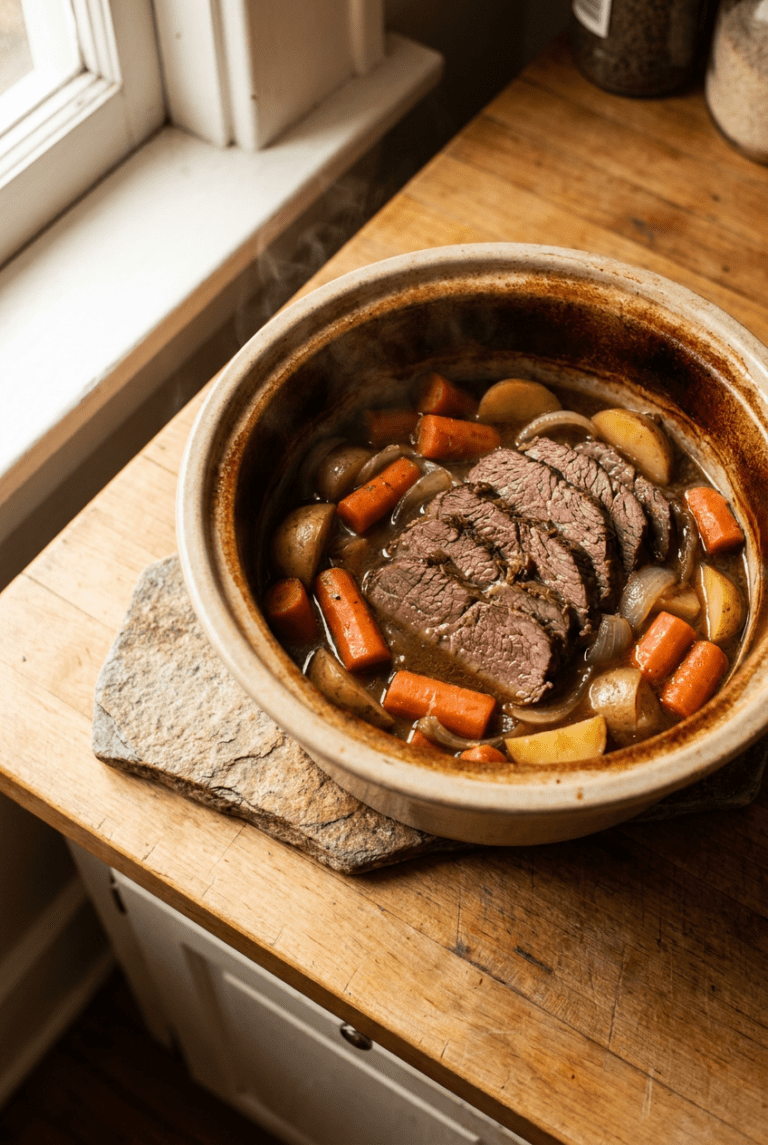
If the deep, slow-cooked comfort of these short ribs speaks to your soul, you will love exploring other hearty American dinner favorites. A classic pot roast follows a similar route but with larger cuts of beef and root vegetables that become meltingly tender in the same pot. For something with a little more spice and vibrancy, a Southern-style smothered pork chop uses a rich, oniony gravy that shares the same spoonable, saucy character. Brisket, whether braised in the oven or smoked low and slow outdoors, uses similar principles of patience and long cooking to turn a tough cut into something unforgettable.
Of course, not every comfort meal requires hours in the kitchen. When you want that same satisfying tenderness in a fraction of the time, a Moroccan chicken tagine braises quickly on the stovetop while still delivering incredible depth. And for morning moments that feel just as indulgent, blueberry lemon ricotta pancakes offer a light and fluffy treat with bright, fresh flavors. There is a world of warming, welcoming food waiting for you, and this short ribs recipe is just the beginning.
The Story Behind This Red Wine–Braised Beef Short Ribs
Braising tough cuts of meat in wine is a technique as old as cooking itself. For centuries, cooks across Europe and the Americas have understood that the combination of time, moisture, and gentle heat could turn the most inexpensive, sinewy cuts into the most luxurious meals. Beef short ribs in particular gained popularity in French bistro cooking, where they were often served luxuriously over buttered noodles, and in American home kitchens, where they became a Sunday supper staple. The magic lies not in fancy ingredients but in the patient, loving transformation that happens behind a closed oven door.
This recipe carries that timeless tradition into the modern kitchen. I have tinkered with wine varietals, tested different aromatics, and learned from both my successes and my mistakes — like the time I threw everything into the pot without searing and ended up with gray, uninspired meat. Over the years, I developed the layered steps that make this version so reliable and deeply flavored. The gremolata garnish is a nod to classic Italian osso buco, a little borrowed brightness that lifts the entire dish. Every time I make it, I think of the first cold evening I truly nailed it, and I hope that same feeling of contentment finds its way to your table.
Pin This Red Wine–Braised Beef Short Ribs Recipe for Later
Love this recipe? Save it to your favorite Pinterest board so you can find it again easily. Share it with friends and family who would enjoy making it too.
I hope this recipe brings as much warmth
Red Wine–Braised Beef Short Ribs
Ingredients
Method
- Preheat oven to 300°F (150°C). Season short ribs generously all over with salt and pepper. In a large Dutch oven over medium-high heat, heat oil until shimmering. Working in batches, sear ribs on all sides until deeply browned, about 4 minutes per side. Transfer to a plate; pour off all but 2 tablespoons of fat.
- Reduce heat to medium. Add onion, carrots, and celery to the same pot and cook, stirring occasionally, until softened and lightly browned, 6–8 minutes. Stir in garlic and tomato paste and cook 1 minute more until fragrant.
- Pour in the red wine, increase heat to high, and simmer until reduced by half, about 8 minutes, scraping the bottom to release fond. Add beef broth, rosemary, thyme, and bay leaves; bring to a boil.
- Nestle the short ribs, bone side up, into the liquid. The ribs should be partially submerged but not drowned. Cover the Dutch oven with a tight-fitting lid and transfer to the preheated oven. Braise for 3.5 to 4 hours, until the meat is fork-tender and reaches a safe minimum internal temperature of 145°F (63°C) for beef. (Note: for the signature fall-apart texture, the internal temperature will likely be higher — around 200°F/93°C — as collagen melts.)
- Carefully remove ribs to a serving platter and tent with foil. Pour braising liquid through a fine-mesh strainer into a fat separator or bowl; discard solids. Let sit a few minutes, then skim excess fat. If desired, boil the sauce in a saucepan until thickened to a silky consistency.
- Arrange short ribs over mashed potatoes, polenta, or egg noodles. Spoon the rich sauce over the top and sprinkle with parsley and optional gremolata (mix parsley, lemon zest, and minced garlic).
Disclosure: This post may contain affiliate links. If you purchase through our links we may earn a small commission at no extra cost to you.
If you made this Red Wine–Braised Beef Short Ribs, please leave a comment below and let me know how it turned out.