Classic Hungarian Beef Goulash (Gulyás) Recipe, Easy Hungarian Dinner in 2 Hours
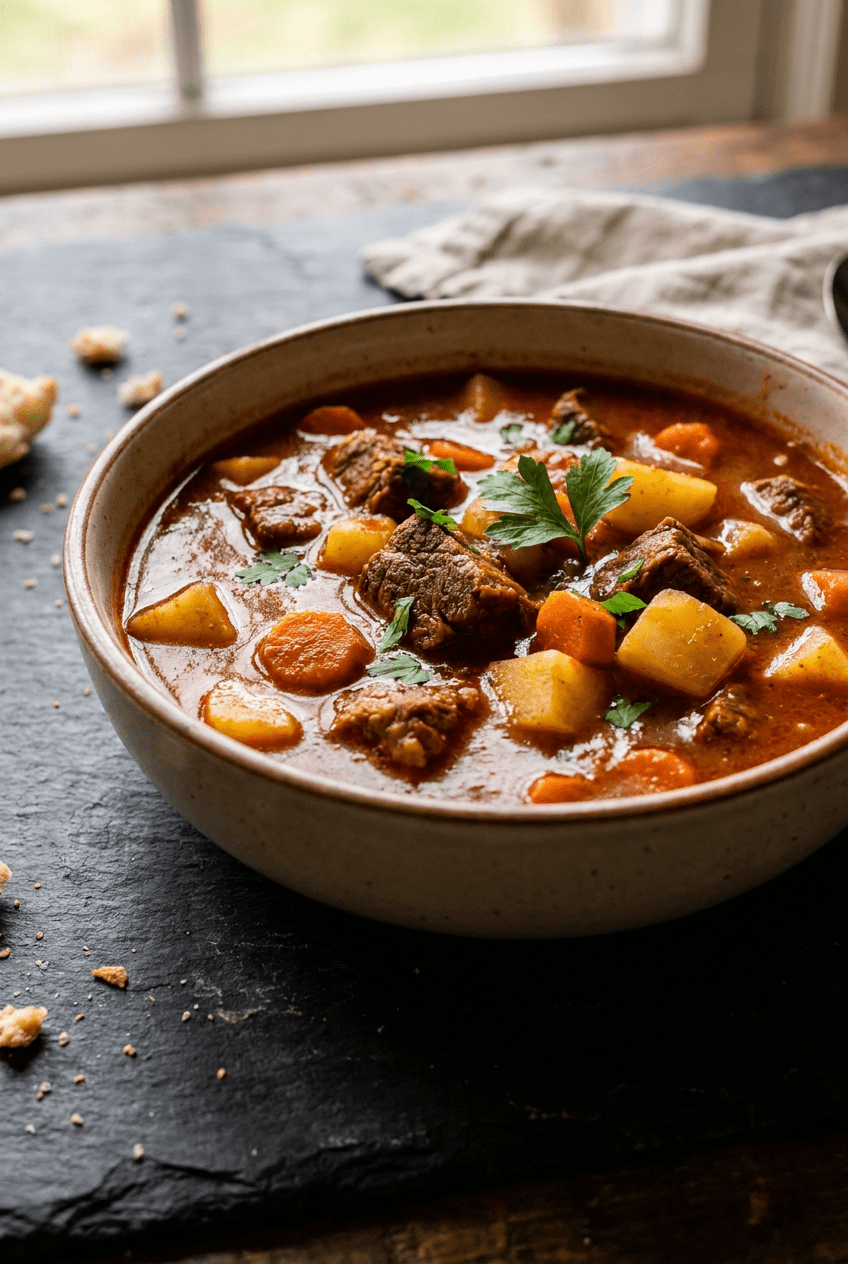
Table of Contents
- Classic Hungarian Beef Goulash (Gulyás) Recipe: A Rich and Hearty Hungarian Stew
- Why You Will Love This Hungarian Beef Stew
- Your Simple Ingredients for the Perfect Hungarian Goulash
- How to Make the Perfect Hungarian Beef Goulash
- Pro Tips and Easy Variations for Your Goulash
- Serving Suggestions for a Perfect Hungarian Dinner
- Nutrition Information
- Storage and Make-Ahead Instructions
- Your Classic Hungarian Beef Goulash (Gulyás) Recipe Questions Answered
- More Incredible Hungarian Recipes to Try
- The Story Behind This Hungarian Goulash
- Pin This Recipe for Later
Classic Hungarian Beef Goulash (Gulyás) Recipe: A Rich and Hearty Hungarian Stew
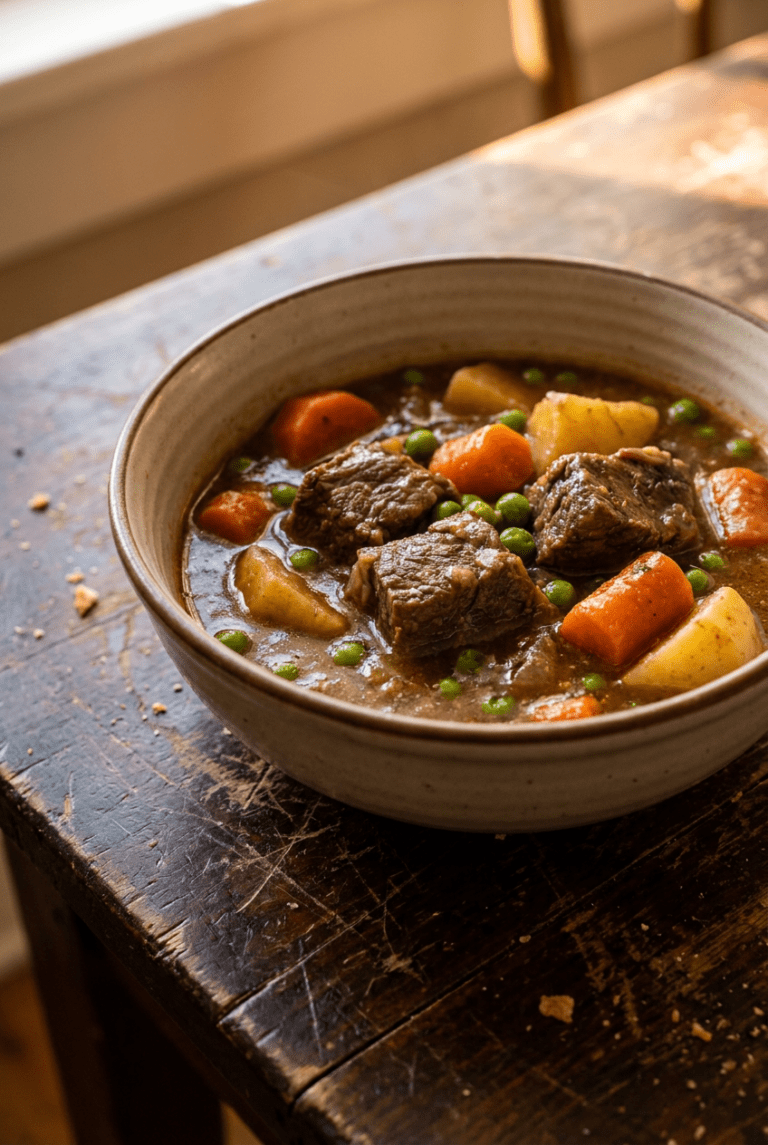
There is nothing quite like a classic Hungarian beef goulash (gulyás) recipe to warm your home and soul on a chilly evening. I still remember my first real bowl of it in a tiny Budapest restaurant, the kind with worn wooden tables and the permanent perfume of simmering paprika. The stew arrived steaming and impossibly deep red, with chunks of beef that fell apart under the lightest pressure of my spoon. One taste and I understood why Hungary holds this dish so close to its heart. It tasted like comfort, like tradition, like something made with patience and pride. That moment launched my own quest to recreate the bowl that had left such a mark on my memory.
This version stays fiercely authentic where it matters most. It relies on genuine Hungarian sweet paprika, which brings a gentle, fruity warmth and that iconic brick red hue you simply cannot get from the standard supermarket spice. The technique of blooming the paprika off the heat prevents even a hint of bitterness, a detail that changes everything. And the long, lazy simmer coaxes out a richness from humble beef chuck that transforms it into tender, spice soaked morsels. Much like the deeply comforting Moroccan chicken tagine that simmers slowly with aromatic spices, this goulash proves that time and simple ingredients can create something truly extraordinary. Every spoonful carries layers of oniony sweetness, the gentle pop of caraway, and a bright finish from a splash of vinegar.
This recipe is for anyone who craves a meal that feels like a warm embrace. It is the perfect centerpiece for a slow Sunday supper, a meal to feed a crowd on game day, or the dinner you want bubbling on the stove when the first snow dusts the windowsills. Hungarian goulash straddles the line between stew and soup, so it fills the table with an inviting, generous spirit. Serve it in deep bowls over buttered noodles with crusty bread for soaking, and you have a complete dinner that demands very little fuss. Even if you have never cooked a Hungarian dish before, I promise this recipe guides you gently through every step, making a spectacular result feel wonderfully achievable.
Why You Will Love This Hungarian Beef Stew
- Unbelievably rich and comforting. The combination of sweet Hungarian paprika, slowly softened onions, and fork tender beef creates a deep, savory stew that feels like a hug in a bowl. Every spoonful delivers a velvety sauce that clings beautifully to noodles or bread.
- Minimal hands on time. After a short burst of browning and sautéing, the goulash does all the work for you in a gentle simmer. You can walk away for an hour and a half, returning only to stir and breathe in the incredible aroma.
- Authentic flavors from simple ingredients. You do not need a long list of exotic items. A handful of everyday vegetables, a good quality paprika, and well marbled beef come together in a way that feels far more complex than the ingredient list suggests.
- Perfect for feeding a crowd. This recipe makes six generous portions and scales up beautifully if you have guests. It tastes even better the next day, so you can cook it ahead and relax when company arrives.
- Gentle on the budget. Beef chuck is an economical cut that becomes luxuriously tender with slow cooking. Combined with affordable peppers, onions, and pantry staples, this stew delivers big flavor without a big price tag.
- A versatile one pot wonder. The Dutch oven goes from stovetop sear to slow oven or simmer with ease. Whether you keep it classic or toss in potatoes and carrots near the end, this recipe welcomes adaptations without losing its soul.
Your Simple Ingredients for the Perfect Hungarian Goulash
For the Stew
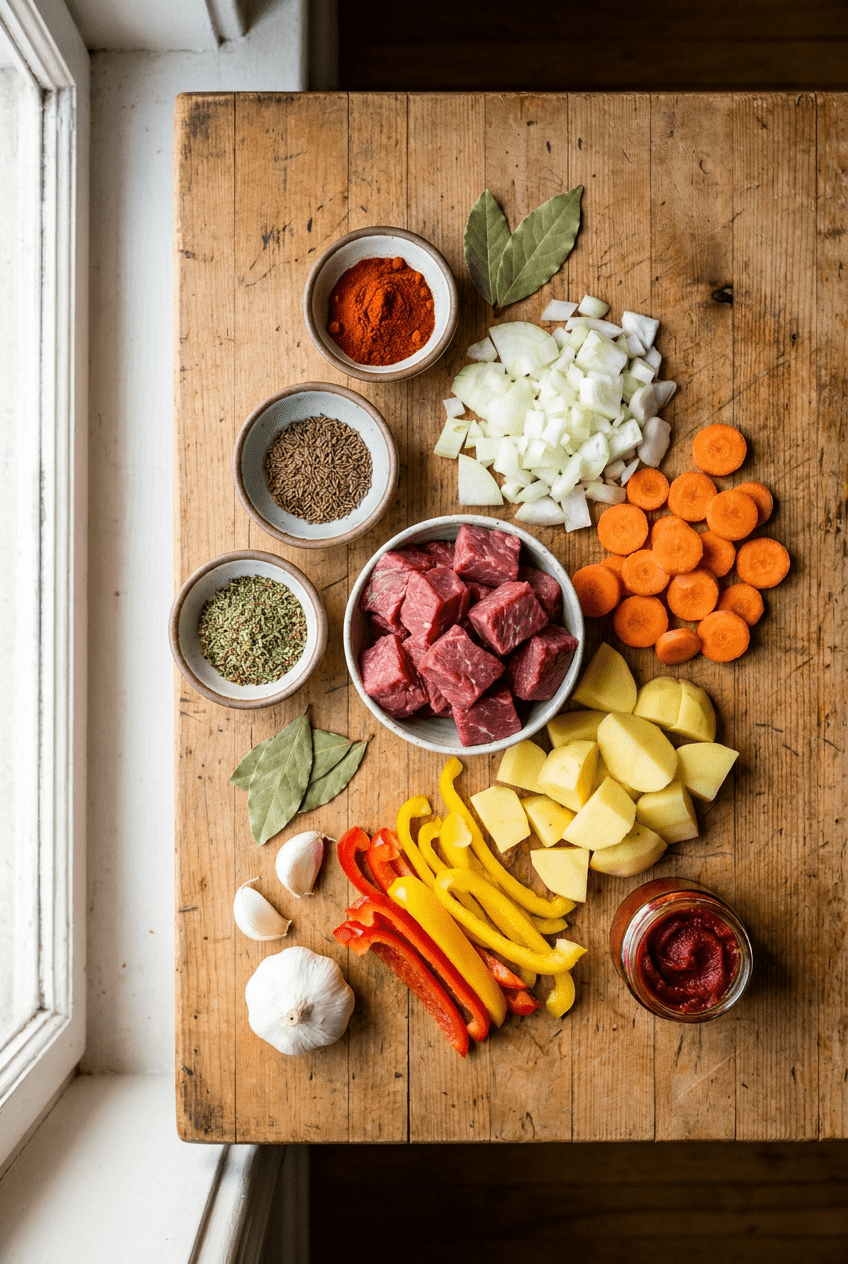
- 2 lbs beef chuck, cut into 1-inch cubes
- 2 tbsp lard or vegetable oil, divided
- 2 large yellow onions, finely diced
- 1 large red bell pepper, seeded and diced
- 1 large green bell pepper, seeded and diced
- 4 cloves garlic, minced
- 1/4 cup Hungarian sweet paprika (preferably Szegedi)
- 1 tsp caraway seeds, lightly crushed
- 1 can (14.5 oz) diced tomatoes, undrained
- 4 cups beef broth, low sodium
- 2 bay leaves
- 1 tbsp red wine vinegar or apple cider vinegar
- Salt and black pepper to taste
For Garnish
- 1/4 cup fresh flat-leaf parsley, chopped
- Optional sour cream for serving
Ingredient Notes
Beef chuck. This well marbled cut from the shoulder is the hero of long, slow braises. During the 2 hour simmer, its connective tissue breaks down into gelatin, giving you meat that is both tender and deeply flavorful. Look for chuck that has plenty of creamy white fat running through the lean. You can also use beef shank or short ribs cut into chunks. Avoid pre cut stew meat unless you know it comes from chuck or a similar cut, as mystery pieces can turn out dry and chewy.
Hungarian sweet paprika. There is simply no substitute for the real thing. Hungarian paprika, particularly Szegedi, carries a mellow sweetness with a whisper of pepper behind it. It gives the goulash that signature crimson color and rounds out the savory notes. Smoked paprika will push the dish in a different direction entirely. If you must, use a high quality sweet Spanish paprika, but do seek out the Hungarian import for the most authentic flavor.
Lard or vegetable oil. Lard is the traditional fat, adding a subtle richness and helping create a beautiful brown crust on the beef. Rendered bacon fat works too. For a lighter option, a neutral vegetable oil like sunflower or canola delivers excellent browning without altering the flavor.
Caraway seeds. These tiny crescent shaped seeds bring an earthy, slightly anise like aroma that is a hallmark of Hungarian cooking. Lightly crushing them with a mortar and pestle or the side of a knife releases their oils without turning them into powder. If you have only ground caraway, use half a teaspoon and add it alongside the paprika.
Beef broth. Low sodium broth gives you control over the final saltiness. The stew reduces slightly as it simmers, so starting with a broth that is not overly salty prevents a harsh finish. Homemade bone broth is a wonderful upgrade if you have it.
Red wine vinegar. That small splash at the end brightens the entire dish, cutting through the richness and lifting the paprika’s fruity notes. Apple cider vinegar works beautifully too, offering a slightly mellower tang.
How to Make the Perfect Hungarian Beef Goulash
Phase 1: Sear the Beef for a Flavorful Foundation
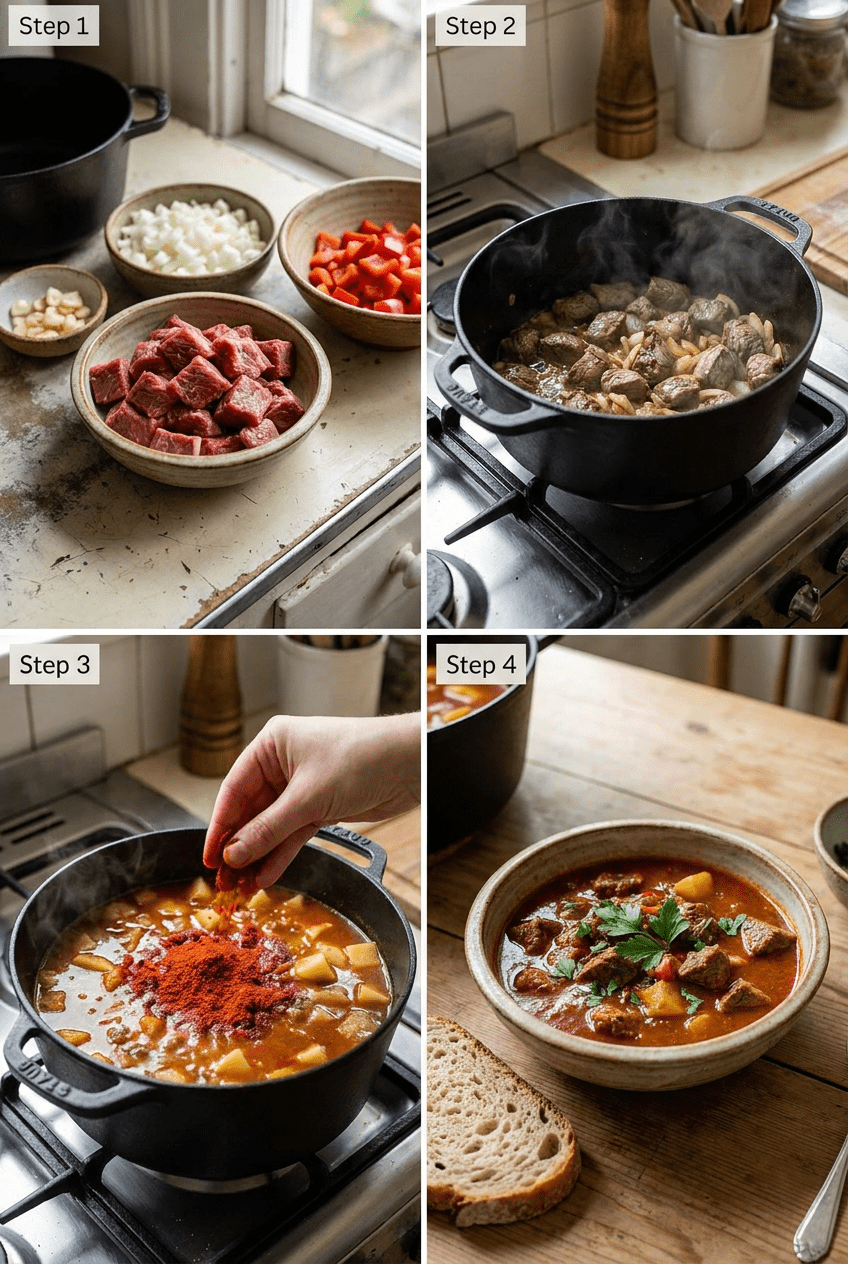
Pat the beef cubes completely dry with paper towels. Any surface moisture will sabotage the browning, so take your time here. Season the meat generously with salt and black pepper. Heat 1 tablespoon of the lard in a large, heavy bottomed Dutch oven over medium high heat until it shimmers. Add the beef in a single layer, working in two or three batches to avoid overcrowding. Let the cubes sit undisturbed for 3 to 4 minutes, then turn them to sear the other sides. You are looking for a deep brown crust on at least two or three surfaces of each piece. That crust is where the stew’s flavor foundation lives. As each batch finishes, transfer the beef to a plate and set aside. If the pot threatens to burn, lower the heat slightly between batches. You will feel a sense of satisfaction as those browned bits build up on the bottom of the pot, they will all be released later to enrich the sauce.
Phase 2: Build the Aromatic Base with Vegetables and Paprika
Reduce the heat to medium and add the remaining 1 tablespoon of lard. Drop in the finely diced onions, red bell pepper, and green bell pepper. Cook, stirring often, for 8 to 10 minutes. The vegetables should soften and turn translucent, and the onions will begin to color faintly at the edges. As they sweat, scrape up every bit of browned fond from the bottom of the pot with your wooden spoon. The peppers will release a gentle sweetness while the onions become almost silky. Stir in the minced garlic and let it cook for exactly 1 minute, just until its fragrance rises up. At this point, pull the pot off the heat entirely. Immediately add the Hungarian sweet paprika and the lightly crushed caraway seeds. Stir everything together until the vegetables are cloaked in that vivid red. Return the pot to the lowest possible heat and cook for 30 seconds, stirring constantly. This quick off heat bloom unlocks the paprika’s flavor without crossing into bitterness. The mixture will turn slightly darker and smell intoxicatingly warm.
Phase 3: Simmer Slowly Until Fall Apart Tender
Pour in the can of diced tomatoes with all their juices and the beef broth. Give the bottom of the pot one more scrape to loosen anything still clinging. Tuck the bay leaves into the liquid, then return the seared beef and any accumulated juices resting on the plate back to the pot. Bring the goulash to a gentle boil, then immediately reduce the heat so it settles into a low, steady simmer. You should see occasional bubbles lazily breaking the surface, not a furious boil that will toughen the meat. Cover the pot with a lid and cook for an hour and a half. After that time, check the tenderness by piercing a chunk of beef with a fork. It should yield with little resistance. If it does, you are ready to move on. If it still feels firm, let it simmer another 20 to 30 minutes, adding a splash of water if the liquid level dips below the meat. The beef must reach an internal temperature of at least 145°F (63°C). While the stew bubbles gently, you can prepare a simple side like a cucumber salad or even whip up a batch of blueberry lemon ricotta pancakes for a special weekend breakfast the next morning.
Phase 4: Finish with Vinegar and Serve
Remove the pot from the heat and fish out the bay leaves. Stir in the red wine vinegar, then season with additional
Classic Hungarian Beef Goulash (Gulyás)
Ingredients
Method
- Pat beef cubes dry and season with salt and pepper. Heat 1 tbsp lard in a large Dutch oven over medium-high heat. Brown beef in batches without crowding, turning to sear all sides, about 3-4 minutes per batch. Transfer to a plate.
- Reduce heat to medium. Add remaining lard, then onions and bell peppers. Cook, stirring often, until soft and translucent, about 8-10 minutes. Stir in garlic and cook until fragrant, 1 minute.
- Remove pot from heat. Immediately stir in paprika and caraway seeds until vegetables are well coated. Return to low heat and cook for 30 seconds, stirring constantly. Be careful not to burn the paprika.
- Stir in diced tomatoes with their juices, beef broth, and bay leaves. Return beef and any accumulated juices to the pot. Bring to a boil, then reduce heat to a low simmer. Cover and cook for 1.5 to 2 hours, until beef is fork-tender and reaches an internal temperature of at least 145°F (63°C).
- Remove bay leaves. Stir in vinegar, then season with salt and pepper to taste. Ladle into bowls, sprinkle with parsley, and serve with a dollop of sour cream if desired.
Disclosure: This post may contain affiliate links. If you purchase through our links we may earn a small commission at no extra cost to you.
If you made this Classic Hungarian Beef Goulash (Gulyás), please leave a comment below and let me know how it turned out.