Crispy Beijing Beef Recipe, Easy Chinese-American Dinner in 35 Minutes
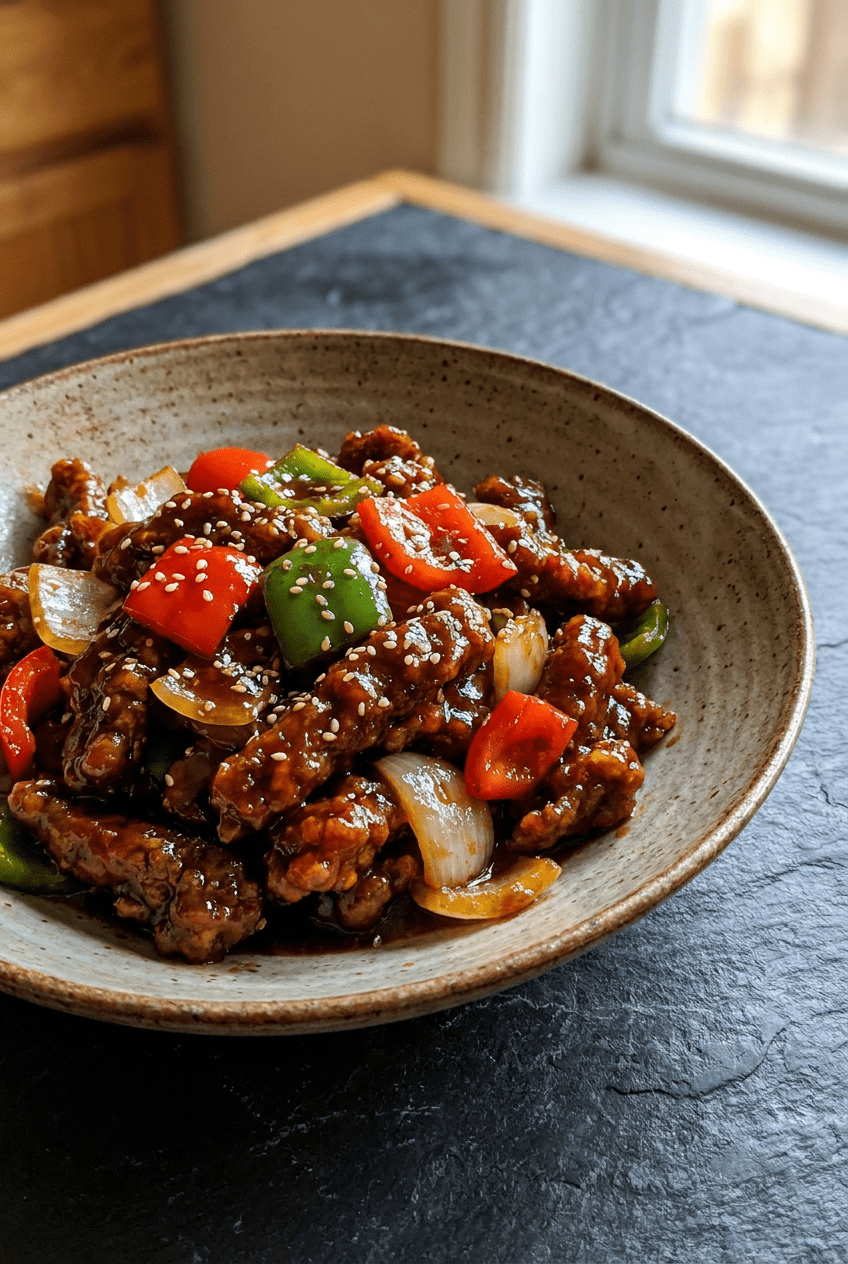
Table of Contents
- Crispy Beijing Beef: Tender strips of crispy beef tossed in a sweet, tangy, and slightly spicy sauce with vibrant bell peppers and onions – better than takeout!
- Why You Will Love This Crispy Beijing Beef Recipe
- Your Simple Ingredients for the Perfect Crispy Beijing Beef
- How to Make Perfect Crispy Beijing Beef
- Pro Tips and Easy Variations for Your Crispy Beijing Beef
- Serving Suggestions
- Nutrition Information
- Storage and Make-Ahead Instructions
- Your Crispy Beijing Beef Questions Answered
- More Incredible Chinese-American Recipes to Try
- The Story Behind This Recipe
- Pin This Recipe for Later
Crispy Beijing Beef: Tender strips of crispy beef tossed in a sweet, tangy, and slightly spicy sauce with vibrant bell peppers and onions – better than takeout!
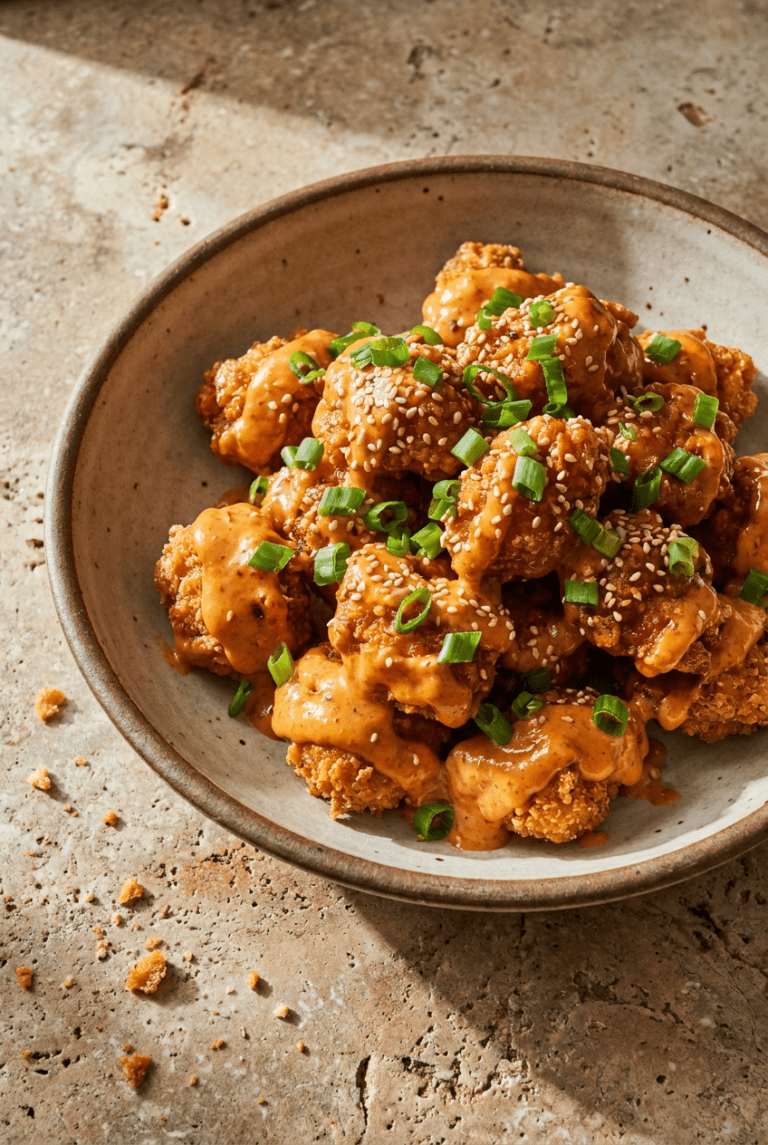
If you have ever craved a crispy beijing beef recipe that delivers that same shatteringly crisp coating and addictive sticky sauce you get from your favorite Chinese American restaurant, you have landed in exactly the right place. I remember the first time I ordered Beijing beef from a little takeout spot tucked between a laundromat and a bakery. The glossy, deep amber sauce clung to each strip of beef, and the contrast between the crunch of the coating and the tender meat inside was something I could not stop thinking about. For years I assumed achieving that texture at home was impossible, that it required a commercial deep fryer or some secret ingredient I would never find. But after plenty of trial and error in my own kitchen, I learned that a few simple techniques can transform a humble flank steak into restaurant-quality crispy beef that tastes even fresher and more vibrant than what you get in a takeout container.
What sets this particular crispy beijing beef recipe apart is the attention to those tiny details that make a huge difference. We pat the beef completely dry before tossing it in cornstarch so every strip gets an even, ultra-crisp shell. We fry at a carefully maintained temperature so the coating seals instantly, locking in the juices while the outside turns golden. Then we rely on a sauce that balances soy sauce, rice vinegar, brown sugar, and just a whisper of hoisin to create that signature sweet tangy flavor with a gentle back-of-the-throat heat from red pepper flakes. Instead of a heavy, cloying glaze, the cornstarch slurry in the sauce creates a light, glossy coating that hugs each piece without weighing it down. This is the kind of meal that makes you feel like you pulled off something truly special, yet it comes together in about thirty-five minutes from start to finish. If you have ever enjoyed making fluffy Japanese souffle pancakes at home and felt that sense of accomplishment when they turned out just right, you will understand the joy this crispy beef brings.
This dish is perfect for anyone who loves the bold flavors of Chinese American cooking but wants to control exactly what goes into their meal. It is beautiful enough to set in the center of the table when friends come over, yet straightforward enough for a busy weeknight when you need something that feels comforting and celebratory at the same time. The vibrant strips of red and green bell pepper alongside sweet onion add color and a little fresh crunch that cuts through the richness of the beef. Serve it over steamed rice and you have a complete dinner that will have everyone asking for the recipe. Whether you are a confident home cook looking to expand your takeout-style repertoire or someone just beginning to explore the wonderful world of crispy fried beef, I promise this will become one of your most requested meals.
Why You Will Love This Crispy Beijing Beef Recipe
- Faster and fresher than takeout. From slicing the beef to setting the finished dish on the table, you will spend roughly thirty-five minutes total. You skip the wait for delivery and get to enjoy the beef at peak crispiness while everything is piping hot straight from your own pan.
- Achieves that elusive crispy coating. The cornstarch dredge and careful frying create a shatteringly crisp exterior that stays crunchy even after tossing with the sauce. The secret is keeping the beef completely dry before coating and frying in small batches so the oil temperature never drops.
- Sauce that balances every note perfectly. You get a sauce that is simultaneously sweet from brown sugar, tangy from rice vinegar, savory from soy sauce and hoisin, and gently spicy from red pepper flakes. It thickens to a light glaze that clings to each piece without becoming gummy.
- Customizable spice and vegetables. You can easily dial the heat up or down by adjusting the red pepper flakes, and the stir-fried bell peppers and onions add color, crunch, and a touch of natural sweetness. Feel free to throw in snap peas or thinly sliced carrots if you want even more vegetables.
- Ingredients you likely already have. The sauce relies on pantry staples like soy sauce, rice vinegar, brown sugar, and cornstarch, while the beef uses flank steak which is widely available and easy to work with. There is nothing obscure to hunt down.
- A meal that feels like a celebration. The glossy, jewel-toned beef piled over a bed of fluffy rice makes any weeknight dinner feel special. It is the kind of dish that makes people slow down and really taste each bite.
Your Simple Ingredients for the Perfect Crispy Beijing Beef
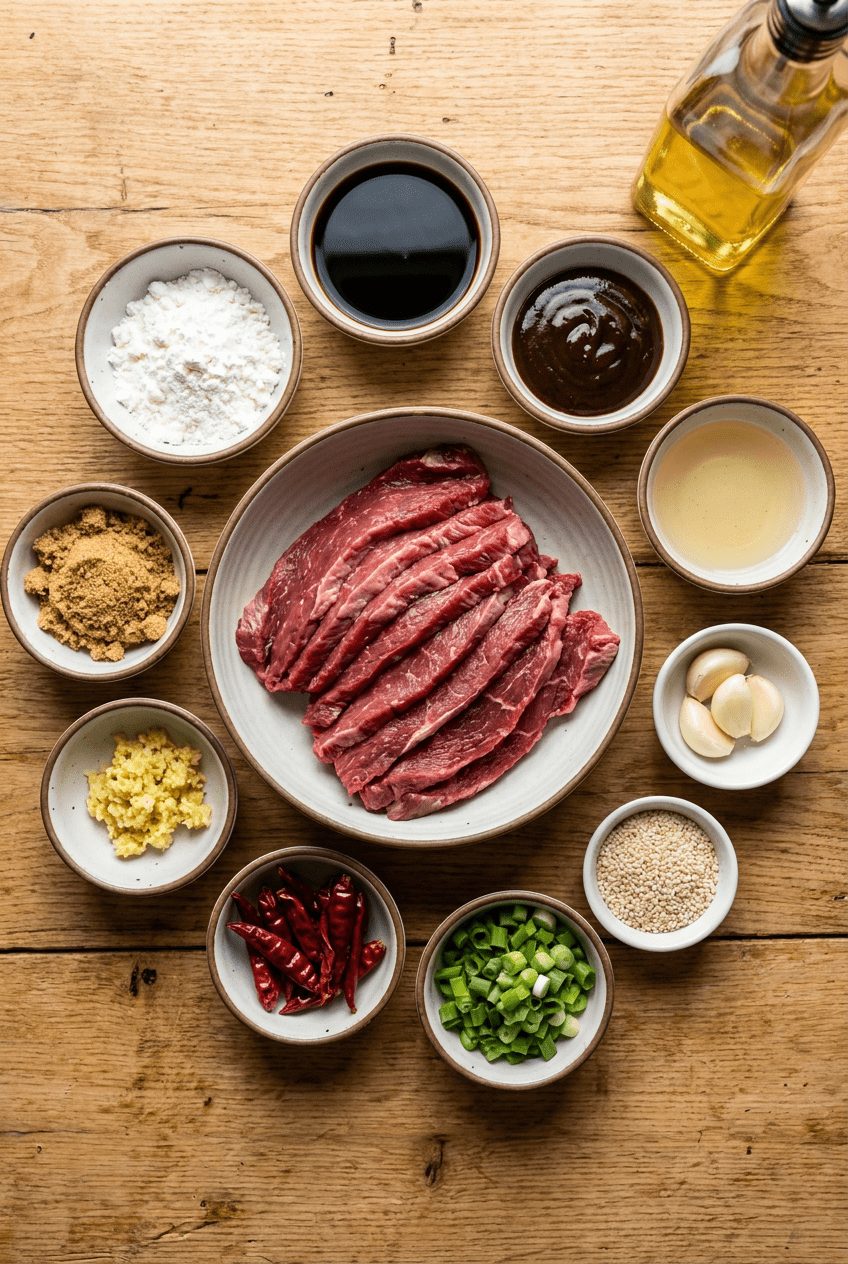
For the Beef
- 1 lb flank steak, thinly sliced against the grain
- 1/2 cup cornstarch
- 1 tsp salt
- 1/2 tsp black pepper
- 2 cups vegetable oil, for frying
For the Sauce
- 1/4 cup soy sauce (low sodium)
- 1/4 cup rice vinegar
- 1/4 cup brown sugar, packed
- 2 tbsp hoisin sauce
- 1 tbsp cornstarch
- 1/2 tsp red pepper flakes (adjust to taste)
- 1/4 cup water
For Stir-Fry
- 1 red bell pepper, sliced into strips
- 1 green bell pepper, sliced into strips
- 1 medium onion, sliced
- 3 cloves garlic, minced
- 1 tbsp ginger, grated
For Garnish
- 1 tbsp sesame seeds
- 2 green onions, sliced
Ingredient Notes
Flank steak is the star of this crispy beijing beef recipe because it is lean, full of beefy flavor, and becomes wonderfully tender when sliced thinly against the grain. Look for a piece with even thickness and a deep red color with fine marbling. If you cannot find flank steak, sirloin or top round are excellent substitutes that also slice cleanly. Always chill the meat for fifteen minutes in the freezer to make slicing easier and more precise.
Cornstarch is the key to that light, crispy coating. Unlike flour, cornstarch fries up incredibly crunchy and stays crisp longer because it absorbs less oil. Make sure your beef strips are completely dry before tossing them in the cornstarch; any moisture will create a gummy layer instead of a delicate shell.
Low sodium soy sauce gives the sauce its deep umami backbone without making the dish overwhelmingly salty. Using low sodium allows you to control the salt level more precisely. If you only have regular soy sauce, reduce the added salt elsewhere and taste before adjusting.
Rice vinegar provides the bright tanginess that balances the sweetness of the brown sugar and the richness of the fried beef. Its clean, mild acidity is essential. In a pinch, you can use apple cider vinegar, but the flavor will be slightly fruitier.
Brown sugar melts into the sauce adding a rich, molasses-like sweetness that clings to the beef. Be sure to pack it firmly into the measuring cup. You can substitute coconut sugar or even honey, but the caramel notes of brown sugar are part of what makes this sauce so irresistible.
Hoisin sauce adds depth, a touch of savory sweetness, and that distinctive Chinese American flavor. A little goes a long way. Look for a brand without too many additives. If you need a gluten-free option, there are gluten-free hoisin sauces available.
Red pepper flakes bring a gentle, warming heat that sits in the background rather than overwhelming the dish. Start with half a teaspoon for a mild kick, or increase to a full teaspoon if you enjoy more noticeable spice.
Vegetable oil for frying needs a high smoke point. Peanut, canola, or sunflower oil all work beautifully. You need enough oil to submerge the beef strips partially, about an inch and a half deep in your skillet or wok.
How to Make Perfect Crispy Beijing Beef
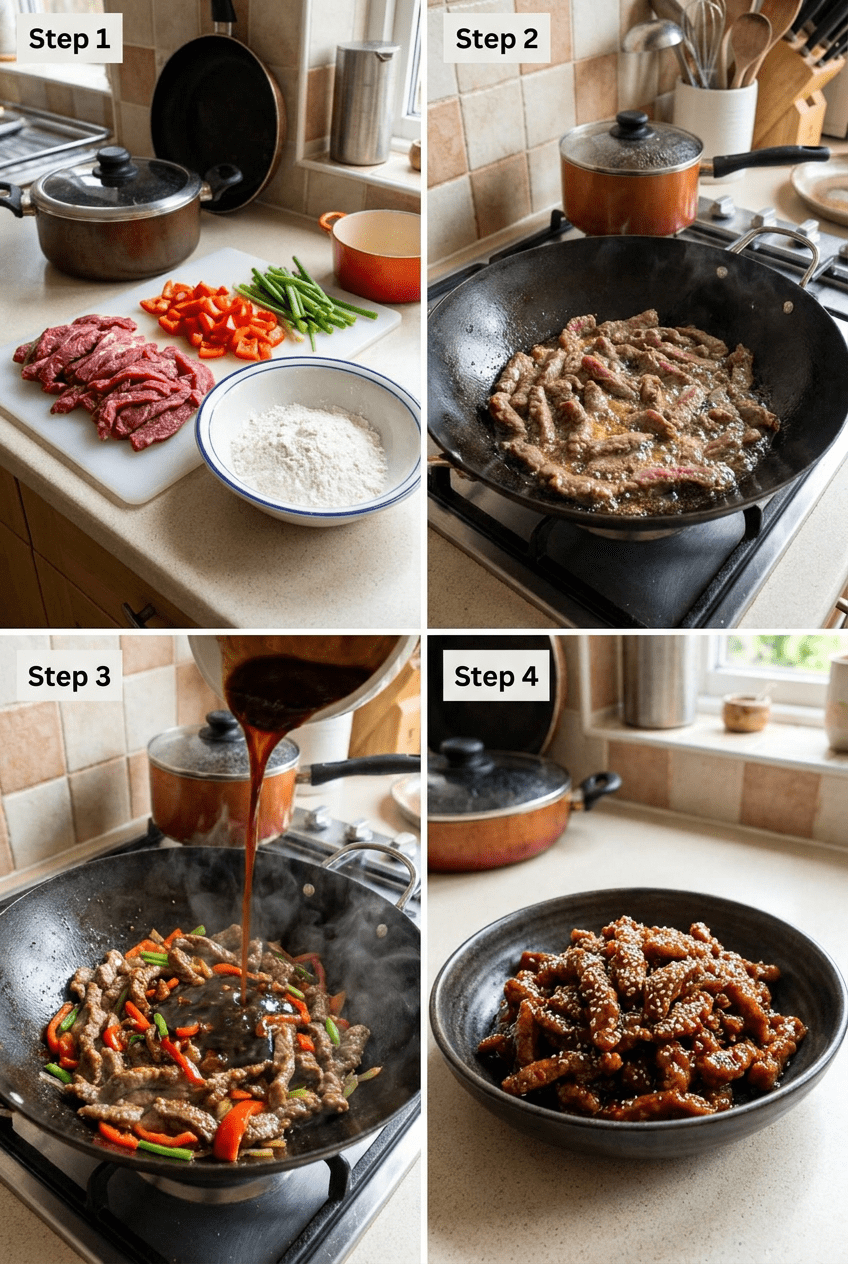
Phase 1: Prepare the Beef
Begin by slicing your flank steak against the grain into thin, bite-sized strips about a quarter inch thick. Against the grain means cutting perpendicular to the long muscle fibers so each piece is tender and easy to chew. If you look closely at the meat, you will see lines running in one direction; slice across those lines. Place the strips in a large bowl and pat them completely dry with paper towels; any moisture left on the surface will prevent the cornstarch from adhering properly. Toss the beef with the salt and black pepper first, then sprinkle the cornstarch over the top and use your hands to mix vigorously until every strip is coated with a dry, powdery layer. Shake off any excess cornstarch before frying. This step takes just a few minutes but makes all the difference in achieving that signature crunch.
Pro tip: For the crispest results, let the coated beef sit on a wire rack for five minutes while you heat the oil. This allows the cornstarch to hydrate slightly from the natural moisture of the meat, forming a thin paste that will fry up even crunchier.
Phase 2: Fry the Beef to Golden Perfection
Pour the vegetable oil into a deep skillet, wok, or Dutch oven and clip on a thermometer. Heat the oil to 350 degrees Fahrenheit (175 Celsius). If you do not have a thermometer, drop a small pinch of cornstarch into the oil; it should sizzle immediately and float to the top. Working in small batches so you never crowd the pan, carefully add the beef strips one by one. Fry for two to three minutes, using a spider strainer or slotted spoon to gently move the pieces around so they cook evenly. You will see the coating turn pale golden at first, then deepen to a beautiful honey brown. You will hear a steady sizzling sound and smell a toasty, savory aroma. The internal temperature of the beef should reach 145 degrees Fahrenheit. Remove the beef and drain on a paper towel lined plate. Allow the oil to return to 350 degrees between batches.
Pro tip: Keep the fried beef warm in a 200 degree oven on a wire rack set over a baking sheet while you finish the remaining batches. This maintains crispiness without steaming.
Phase 3: Build the Sauce
While the last batch of beef fries, whisk together the soy sauce, rice vinegar, brown sugar, hoisin sauce, cornstarch, red pepper flakes, and water in a small bowl until the cornstarch dissolves completely and the sugar is incorporated. Give it a quick taste. You are looking for a harmonious blend where the sweet, tangy, and savory notes all stand out, with the heat just barely flickering in the background. Adjust with an extra pinch of sugar or a few more pepper flakes as your palate prefers. Setting the sauce aside lets the cornstarch hydrate fully, which prevents lumps later.
Pro tip: For a deeper, more complex sauce, add a half teaspoon of toasted sesame oil to the mixture. It rounds out the flavors beautifully.
Phase 4: Stir-Fry the Vegetables
After frying, carefully pour off all but about one tablespoon of the oil from the pan, or heat a fresh tablespoon in a clean skillet over high heat. When the oil shimmers and you can feel the heat radiating when you hold your hand a few inches above the surface, toss in the sliced bell peppers and onion. Stir-fry for two minutes, keeping the vegetables moving constantly. You want them to soften just slightly while retaining a pleasant crispness. They should still look bright and vivid. Add the minced garlic and grated ginger and stir for thirty seconds until incredibly fragrant. The raw pungency of the garlic will mellow into a sweet, aromatic note, and the ginger will smell warm and spicy. Do not let the garlic burn; if the pan gets too hot, briefly lift it off the heat.
Pro tip: Have all your vegetables prepped and waiting beside the stove because this step moves very fast. The same organization that makes Moroccan chicken tagine a relaxed, layered experience is helpful here for swift wok cooking.
Phase 5: Combine and Serve Immediately
Give the sauce mixture another quick stir to reincorporate any settled cornstarch, then pour it into the pan with the vegetables. Stir continuously as the sauce comes to a simmer. Within thirty seconds to a minute, you will see it transform from a thin liquid into a glossy, translucent glaze that coats the back of a spoon. As soon as it thickens, add all the crispy beef and toss quickly with a spatula for just ten to fifteen seconds, no longer. You are aiming to coat every strip while keeping the coating crisp. Immediately remove the pan from the heat. Sprinkle with sesame seeds and sliced green onions and serve right away over steamed jasmine rice.
Pro tip: Serve the dish immediately; Beijing beef waits for no one. The longer it sits, the more the sauce will soften the coating. For the best texture, bring the serving platter to the table already warmed.
Pro Tips and Easy Variations for Your Crispy Beijing Beef
Pro Tips
- Chill the steak for easier slicing. Pop the flank steak in the freezer for fifteen to twenty minutes before cutting. Slightly firm meat is far easier to slice thinly and evenly against the grain, giving you consistent strips that cook at the same rate.
- Double fry for maximum crunch. After the first fry, let the beef drain and cool for a few minutes, then increase the oil temperature to 375 degrees Fahrenheit and fry again for one minute. This second fry drives out any remaining surface moisture and creates a crackling crust that stays crisp under the sauce.
- Dry the beef thoroughly before coating. Even a small amount of surface moisture causes the cornstarch to clump and form a thick, doughy layer instead of a light, crispy shell. Use fresh paper towels and pat each side.
- Stir the sauce just before adding to the pan. Cornstarch settles quickly, so a quick whisk re-suspends it and guarantees a smooth, lump-free sauce that thickens perfectly.
- Add the beef at the very last moment. Toss the crispy beef with the sauce and remove the pan from the heat in under twenty seconds. Prolonged simmering will turn the coating soft and chewy rather than shatteringly crisp.
- Taste the sauce before cooking. The sauce should have a balanced sweet tangy punch with a subtle heat. Adjusting now is simple; once it is combined with the beef and vegetables, it is much harder to correct.
Delicious Variations
- Gluten-free crispy Beijing beef. Replace soy sauce with tamari or coconut aminos and ensure your hoisin sauce is certified gluten-free. The cornstarch is naturally gluten-free, so the coating remains perfectly crunchy and safe for those avoiding gluten.
- Crispy chicken version. Swap the flank steak for boneless, skinless chicken thighs cut into strips. The frying time stays nearly the same, and the juicy dark meat holds up beautifully to the crunchy coating. It becomes a fantastic poultry take on this classic.
- Vegetarian cauliflower twist. Cut a small head of cauliflower into florets, blanch them briefly, then coat and fry exactly as you would the beef. The florets turn golden and crisp while staying tender inside, making a wonderful plant-based alternative.
- Extra spicy Sichuan-inspired beef. Increase the red pepper flakes to a full teaspoon and add a teaspoon of Sichuan peppercorns when you stir-fry the garlic and ginger. The numbing, tingly sensation adds a whole new dimension.
- Sweet and tangy orange variation. Add the zest of one orange and two tablespoons of fresh orange juice to the sauce mixture for a citrusy brightness that reminds me of lazy weekend mornings with blueberry lemon ricotta pancakes, but in a savory, crispy beef form.
Serving Suggestions for a Perfect Dinner
This crispy Beijing beef shines brightest when piled high over a bed of steamed jasmine rice, its light floral aroma balancing the richness of the sauce. For a complete meal, add a side of garlicky green beans blistered in a hot wok, or a simple cucumber salad dressed with a splash of rice vinegar and a sprinkle of salt to refresh the palate between bites. If you enjoy contrast, serve the beef as a filling for crisp lettuce cups, spooning extra sauce over the top and letting everyone assemble their own wraps at the table. A chilled glass of sparkling water with a squeeze of lime or a light lager beer cuts through the richness beautifully and makes the meal feel festive.
This is a dinner that works wonderfully for casual weeknights when you need something fast and satisfying, but it also holds its own at small gatherings. To scale the recipe for a crowd, simply fry the beef in a few extra batches and double the sauce ingredients. Keep the fried beef warm in a low oven and toss with the sauce just before serving. Presenting it on a large platter with scattered sesame seeds and fresh green onion makes it look as impressive as it tastes. Whether you are cooking for two or feeding a hungry family, it always feels like a special occasion.
Nutrition Information
(Approximate per serving, 4 servings total) Calories: 480, Fat: 25g, Carbohydrates: 32g, Protein: 30g, Fiber: 2g, Sodium: 720mg. Nutritional values are estimates only and will vary based on specific ingredients and frying absorption.
Storage and Make-Ahead Instructions
- Refrigerator: Store any leftovers in an airtight container for up to three days. The beef will lose its initial crispness and soften, but the flavors remain delicious. Layer the beef and sauce together; do not worry about keeping them separate.
- Freezer: Freezing is not recommended for this crispy beijing beef recipe because the crisp coating turns mushy upon thawing and reheating. The texture does not recover well even with careful methods.
- Reheating: Reheat in a hot skillet over medium-high heat with a tiny splash of oil, tossing frequently for three to four minutes. This helps recrisp the exterior somewhat. An air fryer set to 375 degrees Fahrenheit for three to four minutes also works well. Avoid the microwave, which will steam the beef and make it chewy.
- Make-Ahead: The sauce can be whisked together up to a week in advance and stored in the refrigerator in a sealed jar. You can also slice the beef and vegetables and keep them covered in the fridge a day ahead, making the final cooking process even faster. Fry the beef and stir-fry the vegetables just before serving for the best texture.
Your Crispy Beijing Beef Questions Answered
Can I make this crispy Beijing beef without deep frying?
Absolutely. You can pan-fry the cornstarch-coated beef in two tablespoons of oil in a nonstick skillet over medium-high heat, turning the strips to brown all sides until crispy, about three to four minutes per side. An air fryer at 400 degrees Fahrenheit for eight to ten minutes, shaking halfway, also yields a crunchy result with less oil.
What is the best cut of beef for this recipe?
Flank steak is my top choice because it is lean, easy to slice thinly, and becomes tender when cut against the grain. Sirloin and top round are also excellent alternatives that slice cleanly and fry up wonderfully.
Is this dish very spicy?
Traditional Beijing beef has a gentle, warming kick from red pepper flakes, not an intense heat. You can omit them entirely for a mild version or increase to a full teaspoon if you love spicy food. The heat level is easily adjustable.
Why did my beef turn out chewy?
The most common reason is slicing the beef with the grain instead of against it, resulting in long muscle fibers that are tough to chew. Also, overcooking the beef in the sauce can make it rubbery. Always slice against the grain and toss with the sauce very briefly.
Can I make the sauce less sweet?
Reduce the brown sugar to three tablespoons and add an extra tablespoon of rice vinegar for more tang. The sauce will still be sticky and glossy but less sweet overall. Taste it before adding it to the pan and adjust to your preference.
How do I keep the beef crispy after tossing with sauce?
The key is to add the beef only after the sauce has thickened, toss quickly, and serve immediately. Do not let it simmer in the sauce. Serving right away preserves that just-fried crunch.
What can I use instead of cornstarch for the coating?
Potato starch or tapioca starch can be substituted one for one and produce a similarly light, crispy crust. Avoid flour, which yields a heavier, less crisp coating that soaks up more oil.
Can I add other vegetables?
Yes, snap peas, thinly sliced carrots, or broccoli florets work beautifully. Add them along with the bell peppers and onion and stir-fry until crisp-tender. Just be sure not to overcrowd the pan so the vegetables stay vibrant and slightly crunchy.
How do I prevent the oil from splattering when frying?
Patting the beef completely dry before coating it in cornstarch reduces moisture and minimizes splattering. Use a deep enough pot and avoid dropping the beef from a height. A splatter screen also helps keep your stovetop clean.
Can I double this recipe?
Yes, but fry the beef in several smaller batches to maintain the oil temperature. Doubling the sauce ingredients is straightforward. For stir-frying, use a larger wok or work in two batches so the vegetables sear rather than steam.
More Incredible Chinese-American Recipes to Try
If the bold, satisfying flavors of this crispy beijing beef recipe captured your heart, you will adore exploring more homemade Chinese American dishes that deliver all the takeout magic from your own kitchen. Dishes like sweet and sour chicken, sesame chicken, and General Tso’s chicken share that same addictive contrast of crispy fried protein and glossy, flavor-packed sauces. Each one brings its own unique personality: sweet and sour chicken leans fruity and tangy, sesame chicken offers a toasty nuttiness, and General Tso’s packs a deeper, darker heat. Mastering one gives you the confidence to tackle them all, and soon you will have a whole collection of favorites ready for any night of the week.
For mornings when you want something just as special but in a completely different direction, think about my recipe for Moroccan chicken tagine, which layers warm spices and tender meat in a slow-cooked masterpiece. And when a sweet breakfast craving hits, those same pillowy fluffy Japanese souffle pancakes or bright, berry-studded blueberry lemon ricotta pancakes bring a little weekend joy. Exploring these recipes makes cooking at home feel endlessly exciting and deeply satisfying.
The Story Behind This Crispy Beijing Beef
Beijing beef, as it appears on countless Chinese American restaurant menus, is not a dish you will find in the kitchens of Beijing itself. It is a brilliant creation of Chinese immigrant chefs who adapted traditional cooking techniques to suit American tastes, blending the crisp frying methods of Sichuan and Hunan cuisines with a sweet, tangy sauce that appeals to a wide audience. The name likely evokes the capital city to suggest authenticity and prestige, but the dish truly belongs to the vibrant Chinese American culinary tradition. Over decades, it has become a beloved staple, often listed alongside orange chicken and beef with broccoli as one of the most ordered items.
I love making this version because it honors that legacy while letting me use simple, whole ingredients I feel good about serving. It connects me to those early chefs who improvised and innovated, creating something brand new that still feels familiar and comforting. Every time I hear the sizzle of beef hitting hot oil, I think about how recipes travel and evolve, and how a dish born in restaurant kitchens can find a permanent, cherished place on my own dinner table.
Pin This Crispy Beijing Beef Recipe for Later
Love this recipe? Save it to your favorite Pinterest board so you can find it again easily. Share it with friends and family who would enjoy making it too.
I hope this crispy beijing beef recipe brings you as much joy in your kitchen as it has in mine. The first time you lift a glossy, crunchy strip onto your plate and hear that soft crunch, you will know exactly why this dish has such a loyal following. If you give it a try, I would genuinely love to hear how it turned out for you. Drop a comment below and let me know if you kept it classic, kicked up the spice, or tried a fun variation. Your kitchen stories always make my day brighter.
Crispy Beijing Beef
Ingredients
Method
- Slice the flank steak thinly against the grain into bite-sized strips. In a large bowl, toss the beef with salt, pepper, and 1/2 cup cornstarch until evenly coated. Shake off excess.
- Heat the vegetable oil in a deep skillet or wok to 350°F (175°C). Working in batches, fry the beef strips for 2-3 minutes until golden and crispy, ensuring the internal temperature reaches 145°F (63°C). Drain on a paper towel-lined plate.
- In a small bowl, whisk together soy sauce, rice vinegar, brown sugar, hoisin sauce, cornstarch, red pepper flakes, and water until smooth. Set aside.
- In a large skillet or wok over high heat, add 1 tablespoon of the frying oil. Sauté the bell peppers and onion for 2 minutes until slightly softened. Add the garlic and ginger, cooking for another 30 seconds until fragrant.
- Pour the sauce mixture into the pan with the vegetables. Bring to a simmer and cook for 1 minute until thickened. Add the crispy beef and toss quickly to coat evenly. Remove from heat immediately and serve over rice, garnished with sesame seeds and green onions.
Disclosure: This post may contain affiliate links. If you purchase through our links we may earn a small commission at no extra cost to you.
If you made this Crispy Beijing Beef, please leave a comment below and let me know how it turned out.