Classic Hearty Beef Stew Recipe, Easy American Dinner in 2 Hours
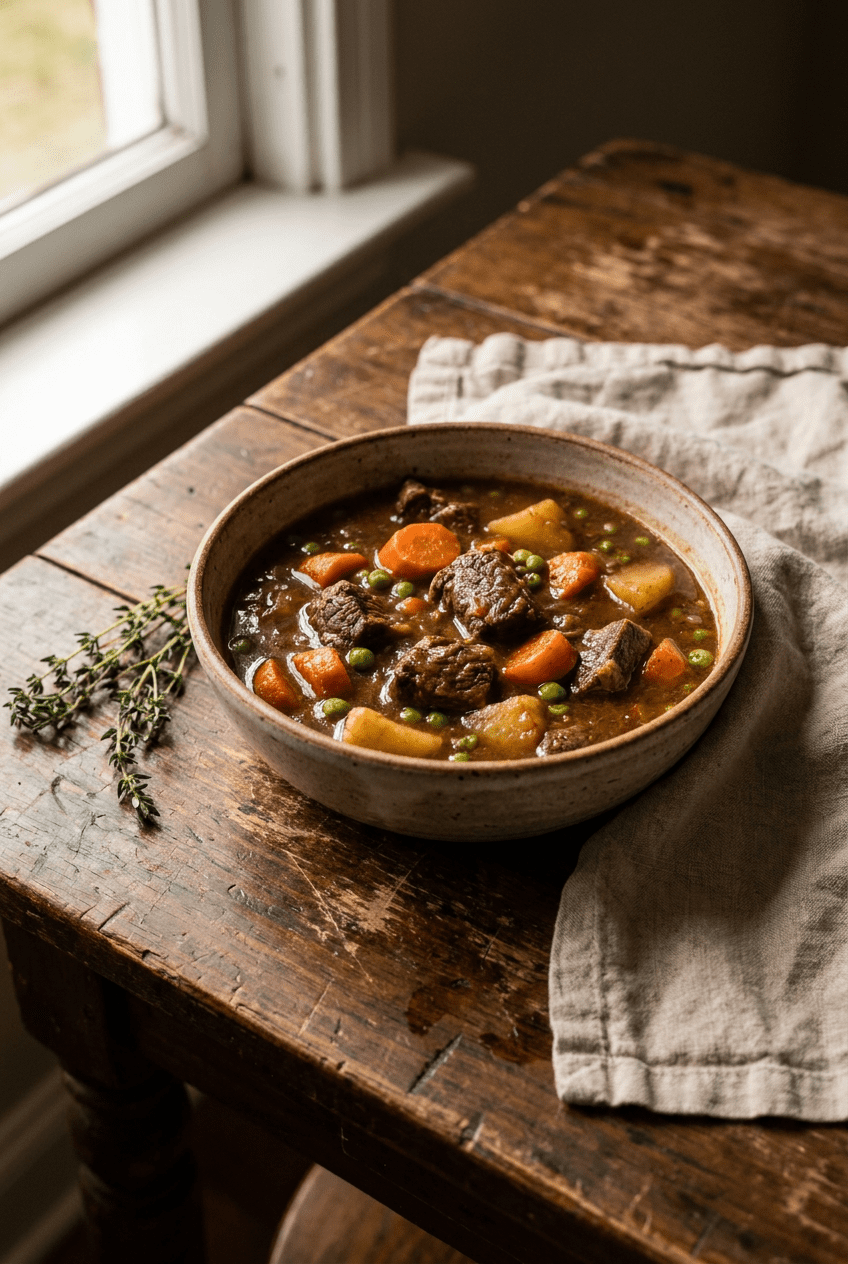
Table of Contents
- Classic Hearty Beef Stew Recipe: Tender chunks of beef simmered in a rich, savory broth with hearty root vegetables
- Why You Will Love This Classic Hearty Beef Stew Recipe
- Your Simple Ingredients for the Perfect Classic Hearty Beef Stew
- How to Make Perfect Classic Hearty Beef Stew
- Pro Tips and Easy Variations for Your Classic Hearty Beef Stew
- Serving Suggestions
- Nutrition Information
- Storage and Make-Ahead Instructions
- Your Classic Hearty Beef Stew Questions Answered
- More Incredible American Recipes to Try
- The Story Behind This Recipe
- Pin This Recipe for Later
Classic Hearty Beef Stew Recipe: Tender chunks of beef simmered in a rich, savory broth with hearty root vegetables
Nothing beats the comfort of a classic hearty beef stew recipe on a cold evening. I can still remember standing on my toes to peer over the kitchen counter while my grandmother patiently stirred a pot of deep mahogany stew, the aroma of slow cooked beef and herbs wrapping around the room like a wool blanket. She never measured a thing, just let her instincts and decades of practice guide her hands. Every spoonful tasted like a warm hug, and to this day that memory is what I chase whenever I lift the lid on my own Dutch oven. This recipe is not about fussy restaurant techniques or hard to find ingredients. It is about simple, honest cooking that fills your belly and your soul at the same time.
What sets this version apart is the depth of flavor we build before the stew even begins to simmer. We pat the beef completely dry and sear it in batches until a dark, almost crusty exterior forms. That fond left on the bottom of the pot is pure gold. Then we slowly coax the sweetness from the onions, bloom the tomato paste until it turns a shade darker, and deglaze with a splash of red wine that lifts every last bit of browned goodness. It is the kind of methodical, low and slow cooking that asks for very little effort but rewards you with fork tender meat and a glossy, full bodied broth. And the vegetables are not an afterthought. Carrots, potatoes, and celery go in at just the right moment so they hold their shape but yield to a spoon. If you enjoy dishes that take their time, you might also find comfort in the gently spiced layers of a Moroccan chicken tagine, another recipe where patience pays off in flavor.
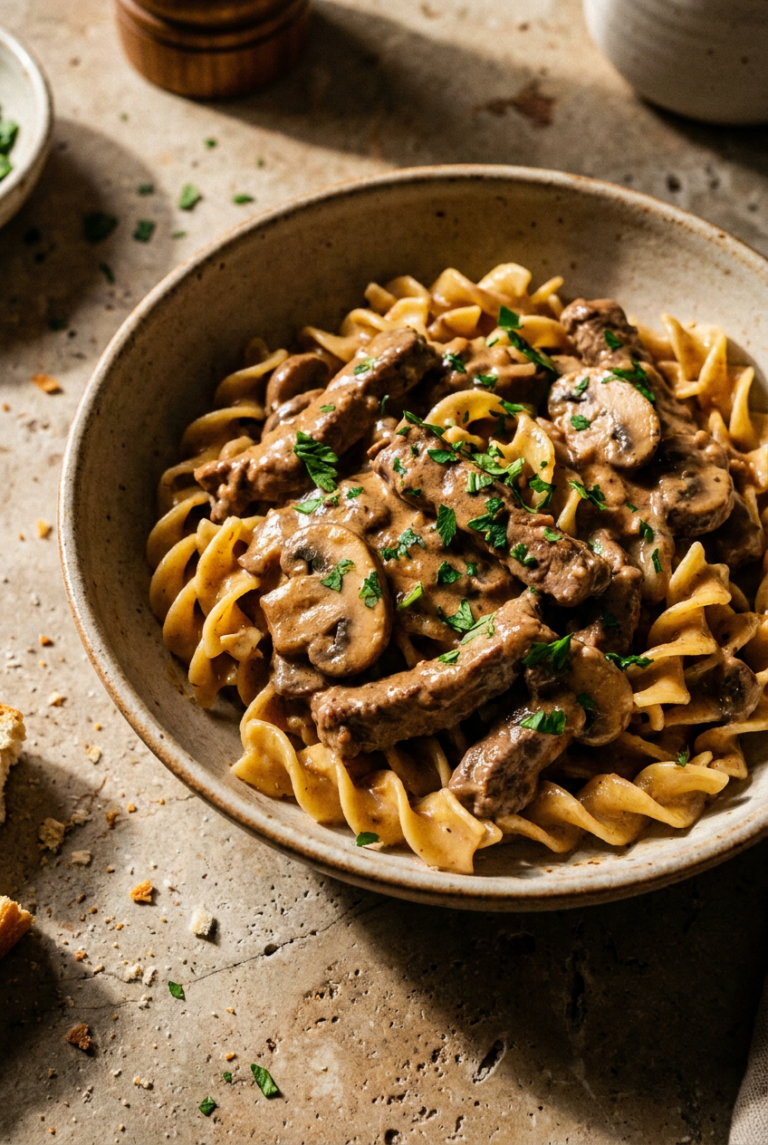
This classic hearty beef stew recipe is for anyone who craves a meal that feels like home, whether you grew up eating it or you are starting your own tradition. It is perfect for a slow Sunday afternoon when the house needs to smell like something wonderful, for a weeknight dinner that you can mostly ignore while it simmers, or for feeding a crowd at a casual gathering. The finished stew is adaptable, too. Serve it over buttered egg noodles tonight, then spoon leftovers onto a baked potato tomorrow. It is forgiving, endlessly nourishing, and the kind of recipe you will scribble on a stained index card and pass down to someone you love.
Why You Will Love This Classic Hearty Beef Stew Recipe
- Truly hands off cooking after the first 20 minutes. Once the beef is browned and the broth is simmering, your main job is to occasionally lift the lid and inhale deeply. The oven or stovetop does all the work while you read a book or help with homework.
- Built on deep, layered flavor from simple techniques. Every step here has a purpose. Browning the meat creates savory richness, deglazing captures all those caramelized bits, and the gentle simmer melds everything into a broth that tastes like it cooked all day, not just two hours.
- Tender meat that practically falls apart under your fork. Using beef chuck, with its generous marbling and connective tissue, means the long braise transforms tough collagen into silky gelatin. The result is beef so soft you barely need a knife.
- Hearty vegetables that soak up every drop of goodness. Carrots, potatoes, and celery become velvety and infused with the broth. They make the stew feel like a complete meal in a single bowl.
- Incredibly forgiving and adaptable to what you have on hand. Forgot the wine? Use extra broth. Out of rosemary? Add a pinch of dried sage. The base recipe is sturdy enough to welcome swaps without losing its identity.
- Even better the next day, so it is a meal prep dream. The flavors deepen and round out as it rests, meaning Monday’s dinner tastes even richer than Sunday’s. A big batch sets you up for easy lunches all week.
Your Simple Ingredients for the Perfect Classic Hearty Beef Stew
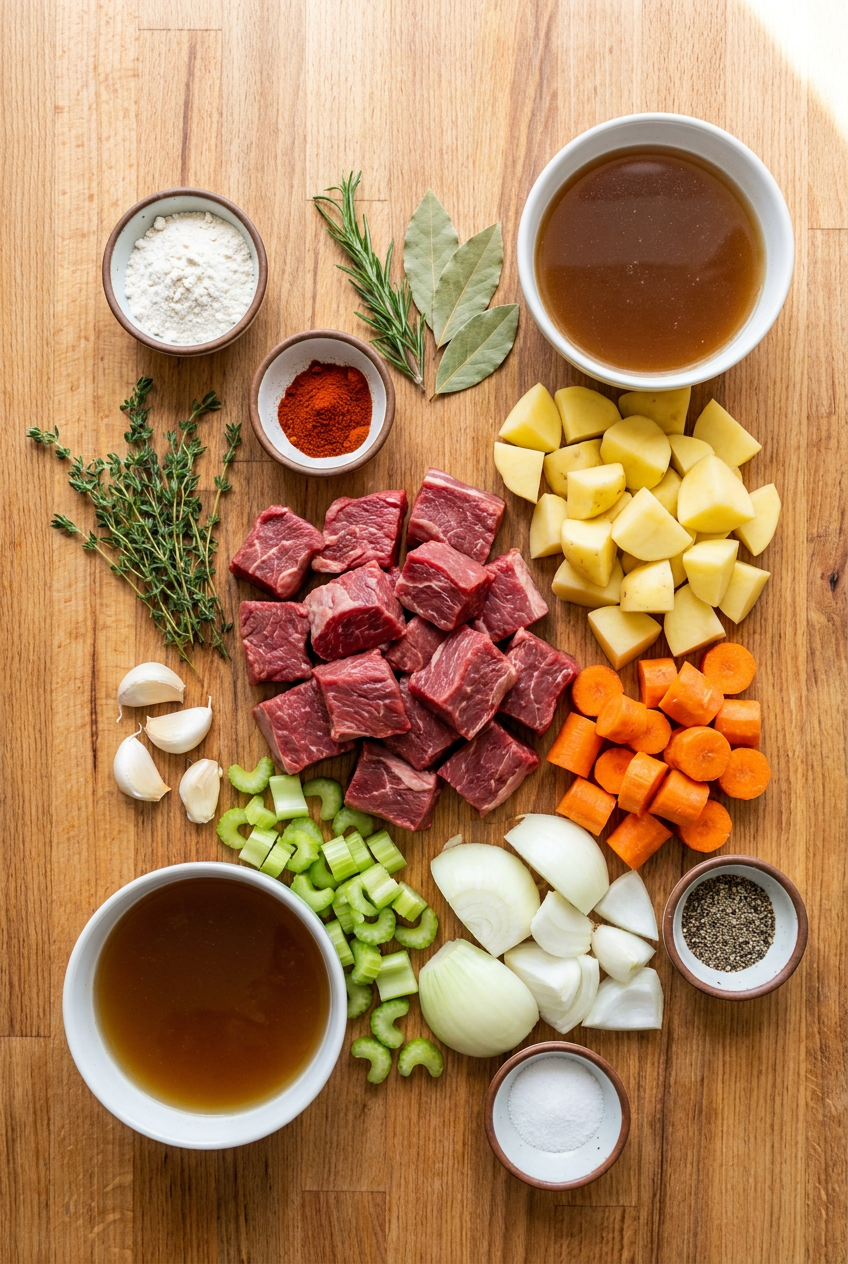
Stew Base
- 2 lbs beef chuck, cut into 1.5-inch cubes
- 2 tbsp olive oil, for browning
- 1 large yellow onion, chopped
- 4 cloves garlic, minced
- 3 tbsp tomato paste
- 4 cups low-sodium beef broth
- 1 cup dry red wine, optional, or additional broth
- 2 bay leaves
- 1 tsp dried thyme
- 1 tsp dried rosemary
- 1 tsp salt, adjust to taste
- 1/2 tsp black pepper, freshly ground
Vegetables
- 3 medium carrots, peeled and cut into 1-inch chunks
- 1 lb Yukon Gold potatoes, cut into 1-inch chunks, no need to peel
- 3 stalks celery, cut into 1-inch pieces
- 1 cup frozen peas, thawed, added at the end
Thickener
- 2 tbsp cornstarch, mixed with 2 tbsp cold water
Ingredient Notes
Beef chuck is the star of this classic hearty beef stew recipe. Look for a well marbled piece with visible threads of fat running through the muscle. That fat and connective tissue slowly melt during the long simmer, keeping the meat juicy and infusing the broth with body. If your butcher offers it, the chuck eye or a chuck roast labeled “pot roast” works beautifully. In a pinch, brisket or round can substitute, but they are a bit leaner so you may lose some of that velvety tenderness. Avoid pre cut “stew meat” which often mixes random lean trimmings that will never soften properly.
Yukon Gold potatoes are my first choice because their creamy texture and thin skins mean you can skip peeling entirely. They hold their shape well but also release a little starch into the broth, contributing to a natural thickness. Red potatoes also work nicely. Russets will fall apart more quickly, which is fine if you do not mind a thicker, more broken down stew.
Dry red wine adds a subtle acidity and backbone to the broth. You do not need anything expensive, just a wine you would enjoy sipping. A cabernet sauvignon, merlot, or pinot noir all bring nice depth. If you prefer not to cook with wine, simply replace it with an equal amount of low-sodium beef broth. The stew will still be rich and satisfying.
Tomato paste is a small but mighty ingredient. Cooking it for a minute with the onions and garlic caramelizes its natural sugars and deepens its savory punch. Do not skip this step, it adds a richness that you can taste but not identify, the sign of a well built broth.
Cornstarch slurry gives the finished liquid a glossy, just thick enough consistency that coats every piece of beef and vegetable. You can also use arrowroot powder in exactly the same way. If you prefer a thicker, more rustic texture, simply mash a few potato chunks right into the pot before serving, no slurry needed.
How to Make Perfect Classic Hearty Beef Stew
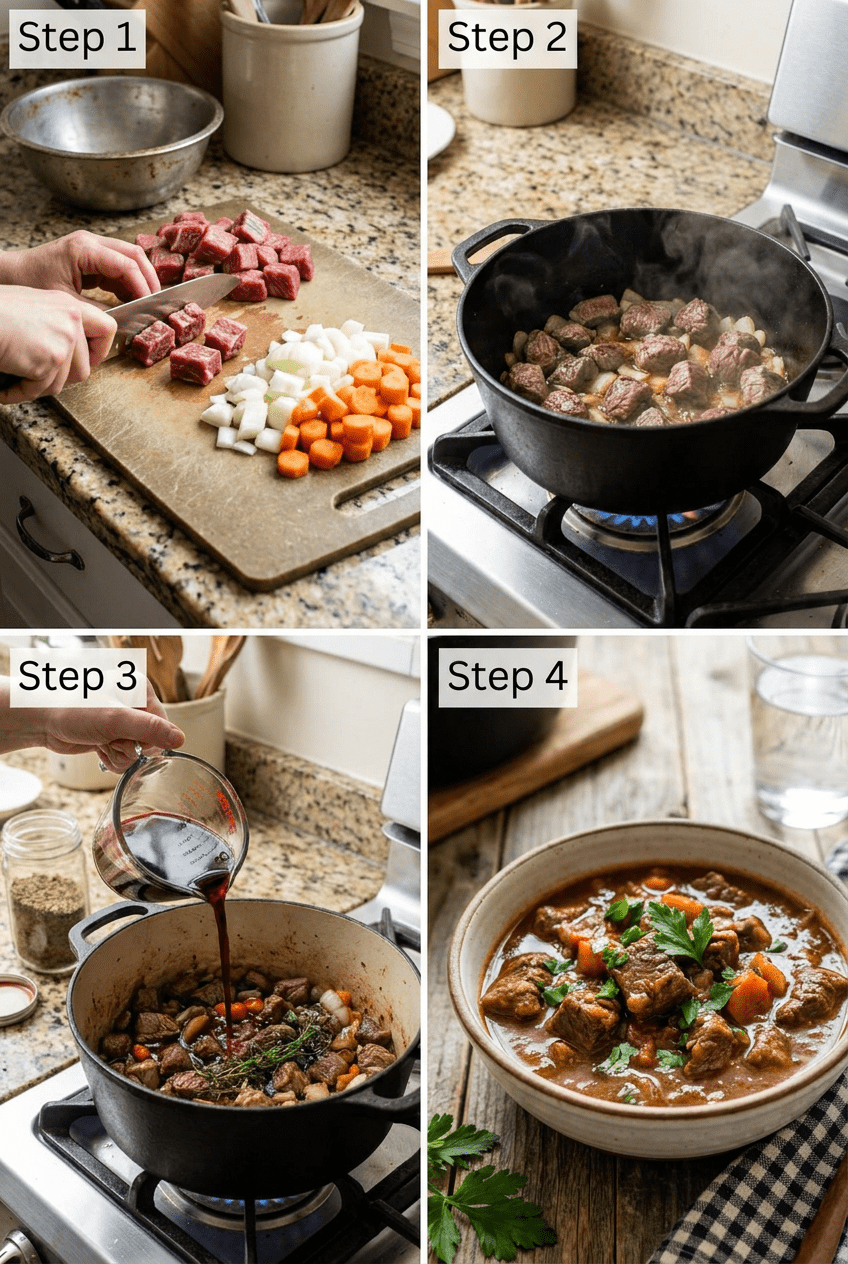
Phase 1: Brown the Beef
Step 1: Brown the Beef. Pat the beef cubes dry with paper towels until they feel almost tacky to the touch. Any surface moisture will steam the meat instead of searing it. Heat 1 tablespoon of olive oil in a large Dutch oven over medium-high heat until it shimmers but does not smoke. Place a single layer of beef in the pot, leaving a finger width of space between pieces. Let them sit completely undisturbed for a full 3 minutes, then peek underneath. When the beef releases easily from the pot bottom and sports a deep, dark brown crust, flip each piece and sear the remaining sides. This takes about 4 minutes per batch. Transfer the browned beef to a plate and repeat with remaining oil and meat. The deep caramelization that happens here is the single most important flavor builder for your entire stew.
Pro tip: If your pot looks dry between batches, add another small drizzle of oil rather than letting the fond burn. Those brown specks on the bottom are flavor gold, but they cross into bitter territory quickly if left unattended.
Phase 2: Sauté Aromatics and Build Broth
Step 2: Sauté Aromatics. Reduce the heat to medium. Add the remaining tablespoon of oil and the chopped onion. Cook, stirring often and scraping the bottom with a wooden spoon to lift up every bit of browned fond. In about 5 minutes the onion will turn translucent and soft. Toss in the minced garlic and tomato paste, and cook for exactly one minute while you stir constantly. The paste should darken slightly and the garlic will smell sweet and nutty. Do not let the garlic burn because burnt garlic turns acrid fast.
Pro tip: If the fond is stubborn and threatens to scorch before the onion softens, add a tablespoon of water or broth to loosen it. That little bit of liquid will steam and release the stuck bits without killing your sear.
Step 3: Deglaze and Build Broth. Pour in the red wine, if using, and stir vigorously while it bubbles up. Use your spoon to scrape any remaining browned bits free. Let the wine cook for about a minute to reduce slightly, then pour in the beef broth. Add the bay leaves, dried thyme, dried rosemary, salt, and pepper. Return the beef to the pot along with any juices that collected on the plate. Bring the liquid to a boil, then immediately reduce the heat to low. You want a gentle simmer, just a few lazy bubbles breaking the surface. Cover the pot and cook for 1 hour. This is when the meat begins its slow, beautiful transformation. The house will start to smell incredible, like a Sunday dinner from your childhood. I often take this moment to make a quick batch of fluffy Japanese souffle pancakes for a weekend breakfast treat later, because they share that feeling of comfort and care.
Pro tip: Keep the simmer truly gentle. A rapid, rolling boil will force moisture out of the meat rather than breaking it down, leaving you with dry shreds instead of lush, tender chunks. Check the pot a few times to make sure the broth is barely moving.
Phase 3: Add Vegetables and Finish
Step 4: Add Root Vegetables. After that first hour of simmering, add the carrots, potatoes, and celery to the pot. Stir everything together so the vegetables nestle into the liquid. Cover again and simmer for another 45 to 50 minutes. The vegetables should be fork tender, meaning a knife slips in with zero resistance, and the beef should be so soft it threatens to fall apart when you nudge it with a spoon. An instant read thermometer inserted into a beef cube will read at least 145°F (63°C), though after this long braise it will easily be far higher and still incredibly tender.
Pro tip: Try to cut your carrots, potatoes, and celery into roughly the same size chunks so they all finish at the same moment. If some pieces are half the size of others, the smaller ones will turn to mush while the larger ones stay firm.
Step 5: Thicken and Finish. Fish out the bay leaves and discard them. In a small bowl, stir the cornstarch into the cold water until completely smooth, no lumps. A fork works better than a spoon for this. Drizzle the slurry into the simmering stew while stirring gently. Let the stew bubble for 5 minutes and you will see it transform from a thin broth to a nappe consistency that lightly coats the back of a spoon. Stir in the thawed peas and let them warm through for 2 minutes. Taste the broth and add a pinch more salt or a crack of pepper if it needs it. The stew is done when the broth has a glossy sheen and the peas are bright green and tender.
Pro tip: If you like a heartier, stew like texture, use the back of your spoon to smash a few potato pieces against the side of the pot before adding the slurry. The released starch acts as a natural thickener while keeping the stew completely gluten-free.
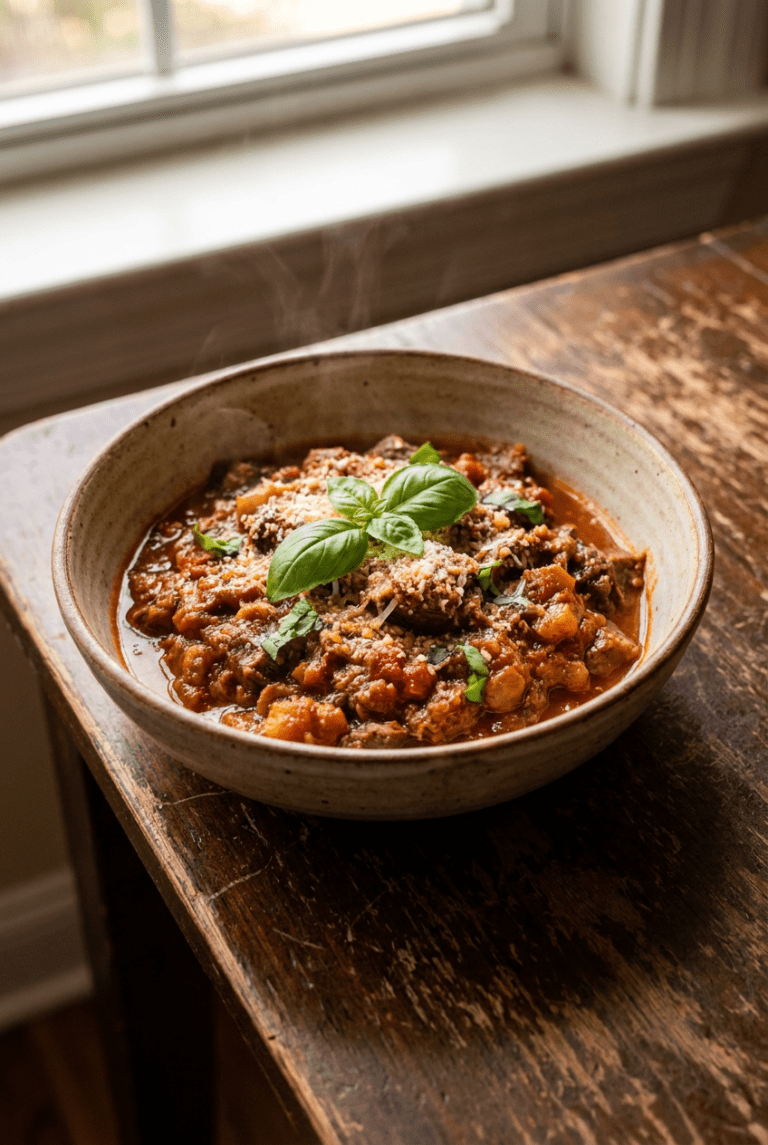
Step 6: Serve. Ladle generous mounds of beef, vegetables, and that deep, savory broth into wide bowls. Chop a handful of fresh parsley and scatter it over the top for a hit of brightness. The stew is ready to serve immediately, but if you can let it sit off the heat for 10 minutes, the flavors will settle and meld even more. Grab some crusty bread for dipping and pull up a chair. This is the moment why you make a homemade classic hearty beef stew from scratch.
Pro Tips and Easy Variations for Your Classic Hearty Beef Stew
Pro Tips
- Pat the beef dry every single time. Even a small amount of surface moisture creates steam rather than a sear, leaving you with grayish meat. Take the extra two minutes to blot with paper towels, and the difference in color and flavor will be immediate.
- Do not crowd the pot when browning. The beef needs room to breathe. Overlapping pieces trap steam and lower the pan temperature. Work in smaller batches even if it feels tedious, you will be rewarded with a rich, beefy fond that defines the whole dish.
- Use low-sodium broth and season gradually. Full sodium broth can easily push the salt level over the edge once the liquid reduces. Start with less, taste at the end, and adjust. You can always add more, but you can not take it out.
- Let the stew rest before serving. Those 10 minutes off the heat allow the fibers in the meat to relax and reabsorb some of the cooking liquid. The result is even juicier beef, and the broth cools to a sippable, not scalding, temperature.
- Save the wine for the pot, not the pantry. If you do not cook with wine often, buy a small four pack of mini bottles. You get exactly the right amount without having a mostly full bottle languishing in the fridge. Or, use the same volume of extra beef broth plus a teaspoon of red wine vinegar for a similar acid lift.
- A splash of Worcestershire or balsamic at the end adds a final round of umami. Just a teaspoon, stirred in right before serving, brightens the stew and deepens the savory layers almost imperceptibly. Taste first and add a little at a time.
Delicious Variations
- Beer Beef Stew. Swap the red wine for a dark stout or porter. Add 1 tablespoon of brown sugar along with the broth, and toss in a few chunks of parsnip along with the other root vegetables. The result is slightly malty, rich, and wonderful served with a thick slice of soda bread.
- Spicy Southwest Stew. Sauté 1 diced jalapeño with the onion, add 1 teaspoon of ground cumin, and replace Yukon Gold potatoes with sweet potatoes. At the very end, squeeze fresh lime juice over each bowl and finish with a handful of chopped cilantro for a vibrant, smoky twist.
- Mushroom and Herb Stew. After browning the beef, sauté 8 ounces of quartered cremini mushrooms until golden. Proceed with the recipe, using vegetable broth instead of beef broth for a slightly lighter flavor. Stir in fresh thyme leaves at the finish.
- Hearty Barley Stew. Reduce the potato amount by half and add 1/2 cup of pearled barley along with the vegetables. The barley will absorb some broth and give the stew a wonderfully chewy, nutty texture. You may need an extra half cup of broth to account for absorption.
These variations let you make this easy classic hearty beef stew your own, while still preserving that irreplaceable slow cooked soul. For another recipe that embraces warm, slow building flavors, you might love the bright burst of lemon and tender crumb of blueberry lemon ricotta pancakes for a contrasting but equally comforting morning treat.
Serving Suggestions for a Perfect Dinner
This stew stands beautifully on its own, but the right accompaniments turn it into the kind of meal that makes everyone linger at the table. A slice of toasted sourdough or a warm, crusty baguette is my go to for sopping up every last drop of the savory broth. If you want something a bit more substantial, spoon the stew over a pile of creamy polenta or buttered egg noodles. The starch catches the liquid perfectly. For drinks, a medium bodied red wine like a Côtes du Rhône or a malbec echoes the stew’s richness without overpowering it. If you prefer non alcoholic, a mug of strong black tea or a lightly sweet apple cider is unexpectedly good alongside the savory beef. A simple green salad with a sharp vinaigrette cuts through the richness and adds a fresh, crunchy contrast, and it takes two minutes to toss together.
This best classic hearty beef stew recipe is also perfect for feeding a crowd. Double the ingredients and use your largest pot, adjusting only the initial browning time (you will need to work in more batches). For a festive holiday gathering, set up a stew bar with bowls of toppings: sour cream, chopped fresh herbs, crispy fried onions, and a little horseradish cream. Each person can customize their bowl, and the presentation feels special without any more work from you. The recipe is also easy to scale down to serve two, just halve everything and use a smaller pot, keeping the cooking times nearly the same because the stew will still need that full simmer to get the beef tender.
Nutrition Information
(Approximate per serving, 6 servings total) Calories: 420, Fat: 18g, Carbohydrates: 28g, Protein: 35g, Fiber: 5g, Sugar: 6g, Sodium: 620mg. Nutritional values are estimates only.
Storage and Make-Ahead Instructions
- Refrigerator: Cool the stew completely, then transfer it to an airtight container. It will keep beautifully in the fridge for up to 4 days. The broth will thicken as it chills, and the flavors will continue to meld, making leftover servings even more delicious.
- Freezer: This stew freezes well for up to 3 months. For best results, consider freezing without the potatoes, which can turn slightly grainy or mushy upon thawing. If you already cooked them, the stew will still taste great, but the texture may be softer. Let the stew cool fully, pour into freezer safe containers, and leave a little room for expansion.
- Reheating: For the best texture, warm the stew gently on the stovetop over medium-low heat, stirring occasionally. Add a splash of beef broth or water if it seems too thick. In the microwave, heat individual portions in 90 second bursts, stirring in between, until piping hot throughout, usually 2-3 minutes total.
- Make-Ahead: You can prep this entire classic hearty beef stew recipe a day in advance. The stew tastes even better after an overnight rest. Prepare it completely, let it cool, refrigerate, and then gently reheat on the stovetop when ready to serve. Alternatively, you can chop all the vegetables and trim the beef the night before, storing everything separately in the fridge to make assembly swift the next day.
Your Classic Hearty Beef Stew Questions Answered
Can I make this in a slow cooker? Absolutely, and it turns out wonderfully. Brown the beef and sauté the aromatics on the stovetop first, because the slow cooker cannot replicate that deep sear. Then transfer everything except the peas and cornstarch slurry to the slow cooker. Cook on low for 7 to 8 hours or high for 4 to 5 hours. Stir in the slurry and peas about 20 minutes before serving to thicken and brighten.
What is the best beef cut for stew? Beef chuck is the gold standard. It has enough marbling and connective tissue to become fork tender and juicy after a long braise. You can also use brisket or round, but avoid lean cuts like sirloin or tenderloin that will turn dry and stringy with prolonged cooking.
How do I know when the beef is done? The beef is ready when a fork slides in with almost no resistance and the meat begins to separate along its natural grain. It should feel soft, not springy. An internal temperature of at least 145°F (63°C) is the safe minimum, but with chuck you will likely be closer to 200°F for that melt in your mouth texture.
Can I thicken the stew without cornstarch? Yes. For a gluten-free option, use arrowroot powder or potato starch mixed with cold water in the same 1:1 ratio. You can also skip slurry entirely and simply mash a few of the cooked potato chunks against the side of the pot to release their starch. That gives a natural, rustic thickness.
Why is my beef tough even after simmering? Tough beef usually means it needed more time. The collagen in chuck takes a full two hours or more to break down into gelatin. If the simmer was too rapid rather than gentle, the meat can also seize up. Lower the heat and extend the cooking time by 20 to 30 minutes, checking until the fork test passes.
Can I use frozen vegetables? You can, but add them later in the cooking process to avoid mushiness. Frozen carrots and celery should go in during the last 20 minutes of simmering. Frozen peas are already a perfect addition at the very end, just as written.
How do I prevent the stew from tasting flat? Flat flavor often means insufficient seasoning or a lack of acid. At the very end, taste your stew and add a small pinch of salt, a twist of black pepper, and a tiny splash of red wine vinegar or Worcestershire sauce. That final brightening step elevates the entire pot.
Is this recipe gluten-free? As written, the stew is naturally gluten-free if you use a certified gluten-free beef broth. The cornstarch slurry is safe, and no flour is used. Just double check your broth label to be sure.
Can I double the recipe for a crowd? Without a doubt. Double all ingredients and use a large Dutch oven or an 8 quart stockpot. The only adjustment is browning the beef in additional batches to prevent overcrowding. The simmering time remains nearly the same, though you may need an extra 10 minutes for the larger volume of vegetables.
What if I don’t have a Dutch oven? A heavy bottomed stockpot with a tight lid works well. The important thing is even heat distribution and a snug cover to trap moisture. If your pot is thin, keep the heat very low and check occasionally to avoid scorching on the bottom.
More Incredible American Recipes to Try
If this classic hearty beef stew recipe has you in the mood for more soul warming American comfort food, there are a few other dishes that belong in your rotation. A classic meatloaf with a tangy glaze and creamy mashed potatoes on the side is the ultimate weeknight throwback. Pot roast with carrots and onions cooked until they are practically melting is basically this stew’s close cousin, and it fills the house with the same magical aroma. For mornings when your sweet tooth calls, the cloud like fluffiness of a fluffy Japanese souffle pancake stack brings that same sense of homemade care, just in a completely different form. And when you want a one pot meal with a little more spice, the warming notes of a Moroccan chicken tagine offer a similar slow cooked tenderness with a completely different personality.
Each of those recipes shares a philosophy with this stew: take your time, use good ingredients, and let the pot do the work. The blueberry lemon ricotta pancakes are a bright morning counterpart, and the tagine brings fragrant North African spices into your kitchen just as easily as this stew brings classic American heartiness. I think you will find that once you master this classic hearty beef stew from scratch, you will be reaching for these other comforting favorites again and again.
The Story Behind This Classic Hearty Beef Stew
Beef stew is one of those ancient dishes that feels woven into the fabric of American home cooking, but its roots stretch across centuries and continents. The idea of simmering tough cuts of meat in liquid until tender appears in nearly every culture, from French boeuf bourguignon to Hungarian goulash. In the United States, hearty beef stew became a staple of family tables and diner menus alike, especially during the colder months when a bubbling pot on the back of the stove meant comfort and survival in equal measure. The version I grew up with was unapologetically simple, carrots and potatoes and beef in a dark broth, seasoned with nothing more than salt, pepper, and a bay leaf if the spice cabinet felt generous.
Over the years I have kept that spirit but added just enough technique to make it something truly special. The deep sear, the deglazing, the careful balance of herbs, these small touches honor the generations of home cooks who knew that a good stew is built on patience, not complexity. Every time I make it, I think of my grandmother’s worn enamel pot and the way she never needed a recipe. That is the real classic hearty beef stew recipe for me: the one you make so many times it becomes part of your hands and your heart.
Pin This Classic Hearty Beef Stew Recipe for Later
Love this recipe? Save it to your favorite Pinterest board so you can find it again easily. Share it with friends and family who would enjoy making it too.
I hope you make this stew on a chilly day and let the warmth fill your kitchen. If you try the beer variation or add a spoonful of horseradish cream on top, I would love to hear about it. Leave a comment below and tell me how it turned out, or what twist you put on your own bowl. Happy cooking, and may every spoonful remind you of the people you love.
Classic Hearty Beef Stew
Ingredients
Method
- Pat beef cubes dry with paper towels. Heat 1 tbsp olive oil in a large Dutch oven over medium-high heat. Working in batches to avoid crowding, sear the beef on all sides until deeply browned, about 3-4 minutes per batch. Transfer to a plate and set aside.
- Reduce heat to medium. Add remaining 1 tbsp oil and onion; cook until softened, about 5 minutes. Stir in garlic and tomato paste, cook for 1 minute until fragrant.
- Pour in red wine (if using), scraping up any remaining bits. Simmer for 1 minute. Add beef broth, bay leaves, thyme, rosemary, salt, and pepper. Return beef and any accumulated juices to the pot. Bring to a boil, then reduce heat to low, cover, and simmer for 1 hour.
- Add carrots, potatoes, and celery to the pot. Stir to combine. Cover and continue simmering for another 45-50 minutes, or until vegetables are fork-tender and beef is melt-in-your-mouth soft and reaches an internal temperature of at least 145°F (63°C).
- Remove bay leaves. In a small bowl, mix cornstarch with cold water to create a slurry. Stir into the simmering stew and cook for 5 minutes, until slightly thickened. Stir in thawed peas and cook 2 more minutes. Taste and adjust seasoning.
- Ladle stew into deep bowls, garnish with chopped parsley, and serve immediately with crusty bread or over buttered egg noodles.
Disclosure: This post may contain affiliate links. If you purchase through our links we may earn a small commission at no extra cost to you.
If you made this Classic Hearty Beef Stew, please leave a comment below and let me know how it turned out.