Classic French Onion Soup Recipe, Easy French Dinner in 1 Hour
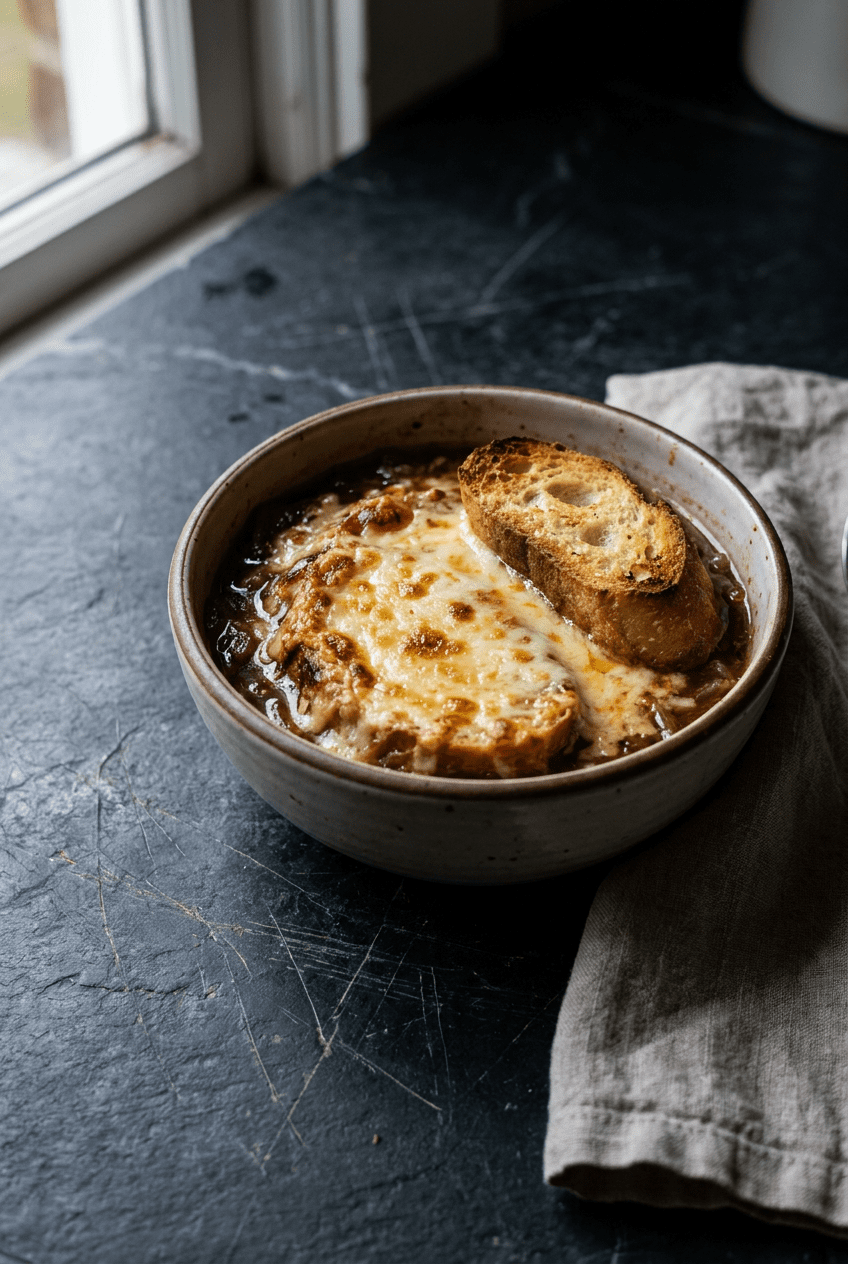
Table of Contents
- Classic French Onion Soup: A Soul-Warming Bowl of Caramelized Onion Broth Topped with a Golden, Bubbly Gruyère Crouton
- Why You Will Love This Classic French Onion Soup Recipe
- Your Simple Ingredients for the Perfect Classic French Onion Soup
- How to Make Perfect Classic French Onion Soup
- Pro Tips and Easy Variations for Your Classic French Onion Soup Recipe
- Serving Suggestions for a Perfect Dinner
- Nutrition Information
- Storage and Make-Ahead Instructions
- Your Classic French Onion Soup Questions Answered
- More Incredible French Recipes to Try
- The Story Behind This Recipe
- Pin This Recipe for Later
Classic French Onion Soup: A Soul-Warming Bowl of Caramelized Onion Broth Topped with a Golden, Bubbly Gruyère Crouton
There is nothing quite like a bowl of classic French onion soup recipe to warm you from the inside out, with its deeply caramelized onions, rich broth, and that glorious cap of melted Gruyère. I still remember the first time I had it in a tiny Parisian bistro just around the corner from Notre-Dame. The bowl arrived piping hot, cheese bubbling at the edges like molten gold, and the first spoonful tasted like comfort itself. It was a crisp autumn evening and I sat by the window watching the rain trace patterns on the glass, feeling completely at home in a city I was still just getting to know. That bowl of soup, humble as it was, felt like a quiet invitation to slow down. I came back years later to recreate it in my own kitchen, chasing that exact feeling of warmth and depth. This recipe is the result of dozens of careful attempts, stubbornly stirring onions until my arm ached, testing different broths, and learning exactly when the cheese is ready to pull from the broiler. It is the dish I make when someone I love needs a little extra care, or when I want to turn a simple dinner into something that feels like an occasion.
What sets this version apart is patience above all else. I do not rush the onions. While plenty of shortcuts exist, the beauty of this homemade Classic French Onion Soup comes from allowing the onions to slowly transform over nearly an hour, turning from sharp and pale to a burnished, jammy sweetness. I deglaze with a splash of dry white wine to capture every bit of caramelized fond on the bottom of the pot, and I use a combination of Gruyère and Parmesan on top for a cheese crust that is nutty, savory, and impossibly silky when it melts. This recipe also gives you plenty of guidance on what to watch for—how the onions should hiss gently, the way the broth should scent your entire kitchen, the exact moment the cheese top is ready to serve. It is the best Classic French Onion Soup recipe for home cooks who want restaurant-quality results without any fussy equipment, just a heavy pot and a reliable broiler.
This dish is for anyone who craves a bowl that feels like a hug. It is perfect for a slow Sunday afternoon when you have time to stir and sip a glass of wine while the onions do their work. It makes a wonderful first course for a dinner party, especially when you want to impress guests with something that looks dramatic but is surprisingly straightforward. And it is equally suited for a quiet weeknight meal when served with a crisp green salad and crusty bread on the side. If you have never made Classic French Onion Soup from scratch before, this recipe will walk you through each step so you feel confident and excited to pull those bubbling bowls from the oven. Once you taste that first spoonful, you will understand exactly why this French Dinner recipe has endured for generations.
Why You Will Love This Classic French Onion Soup Recipe
- Unbelievably rich and savory flavor. The slow caramelization brings out the onions’ natural sweetness while the beef broth and wine build a deep, complex base. Every spoonful tastes layered and satisfying, never thin or one-note.
- That irresistible cheesy crown. The combination of nutty Gruyère and savory Parmesan creates a blistered, golden crust that stretches and pulls just like the best bistro versions. It is the part everyone fights over.
- Made from simple, affordable ingredients. Onions, broth, cheese, and bread are all you truly need. This recipe transforms everyday staples into something that tastes luxurious without a single hard-to-find item.
- Comfort food with a touch of elegance. Whether you are curled up on the couch or hosting a dinner, this soup fits the moment perfectly. It feels both rustic and refined, which is a rare and wonderful combination.
- Gives you complete control over flavor. By making it yourself, you can adjust the salt, the level of sweetness, and even swap in a vegetarian broth if you prefer. You are never stuck with an overly salty canned version again.
- A recipe that teaches a lifelong skill. Learning to properly caramelize onions is a technique you will use again and again for pastas, tarts, and so many other dishes. This soup turns that skill into the main event.
Your Simple Ingredients for the Perfect Classic French Onion Soup
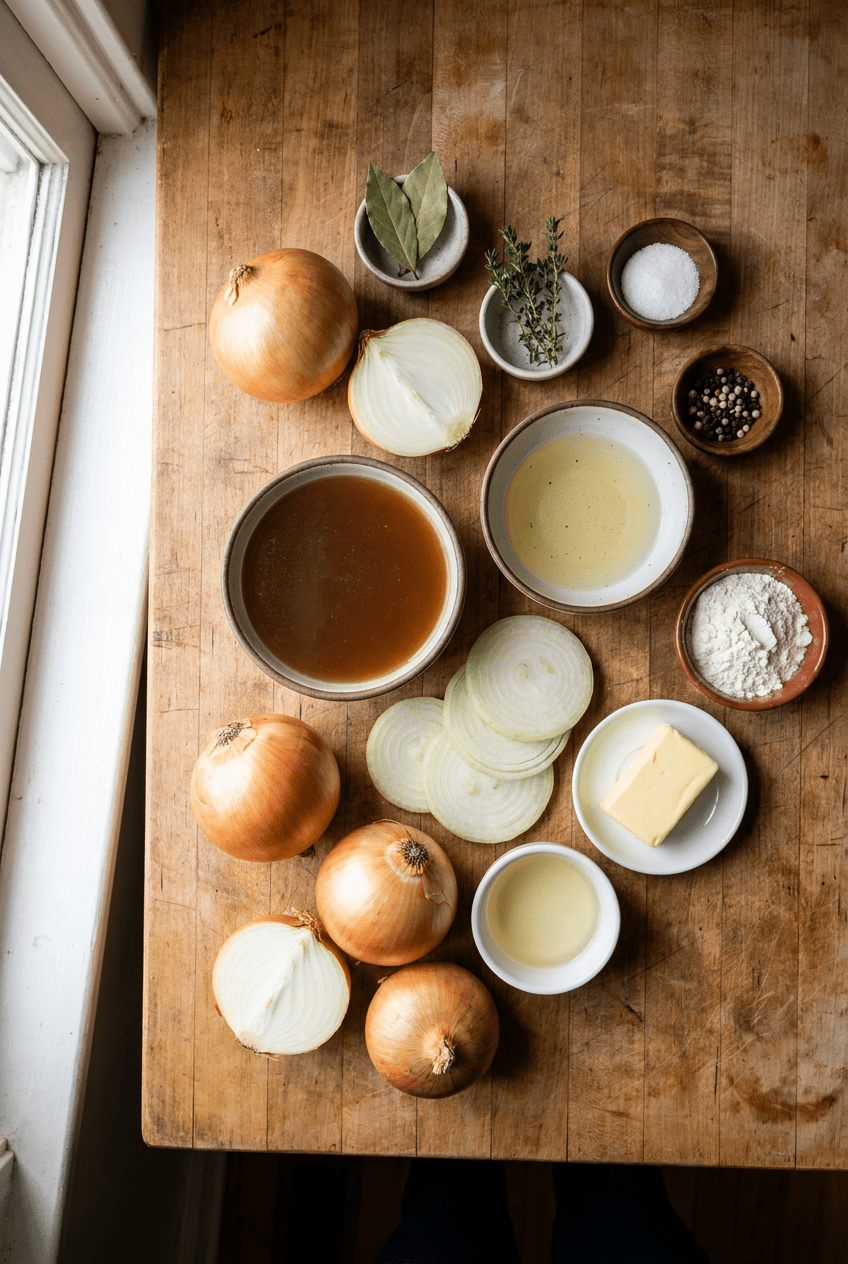
For the Soup
- 3 tablespoons unsalted butter
- 1 tablespoon olive oil
- 4 large yellow onions, halved and thinly sliced (about 6 cups)
- 2 cloves garlic, minced
- 1 teaspoon granulated sugar
- 1/2 teaspoon salt
- 1/4 cup dry white wine or dry vermouth
- 6 cups beef broth, preferably low-sodium
- 1 bay leaf
- 2 sprigs fresh thyme
- 1/4 teaspoon freshly ground black pepper
For the Topping
- 8 slices crusty baguette, cut 1-inch thick
- 1 1/2 cups Gruyère cheese, grated
- 2 tablespoons Parmesan cheese, grated
Ingredient Notes
Yellow onions are the backbone of this soup. They strike the ideal balance between sharpness and sugar content, breaking down into a sweet, soft tangle after long cooking. Look for firm onions with tight, papery skins and no soft spots. If you only have sweet onions like Vidalia, they work wonderfully and may need a tiny bit less sugar. Unsalted butter and olive oil work together to prevent the butter from burning over the long caramelization period. The oil raises the smoke point while the butter provides that unmistakable richness. If you do not have olive oil, a neutral oil like avocado works, but do not skip the butter entirely. Dry white wine or dry vermouth deglazes the pot and adds a bright, slightly acidic note that cuts through the richness. Choose a wine you would happily drink—a Sauvignon Blanc or Pinot Grigio is perfect. Vermouth is a brilliant pantry staple because it stays fresh longer than an opened bottle of wine, and its herbal notes add an extra layer. Beef broth provides the body and savory depth. Low-sodium is the best choice so you can control the salt as the soup reduces. For an even richer result, try a mix of beef and chicken broth, or use homemade stock. Oxtail or short rib stock makes this absolutely extraordinary. Gruyère cheese is famous for its exceptional melt and nutty, slightly sweet flavor. Always buy a block and grate it yourself—pre-shredded cheese often contains anti-caking agents that prevent that smooth, lava-like melt. For a different twist, you can blend in some Comté or Emmentaler, both of which have similar melting qualities. Parmesan may seem unexpected, but its salty, crystalline punch intensifies the cheese crust and gives you those irresistible darker spots under the broiler. Finally, baguette slices should be slightly stale or toasted so they hold their shape and soak up the broth without turning to mush. A day-old baguette from a good bakery is your best friend here.
How to Make Perfect Classic French Onion Soup
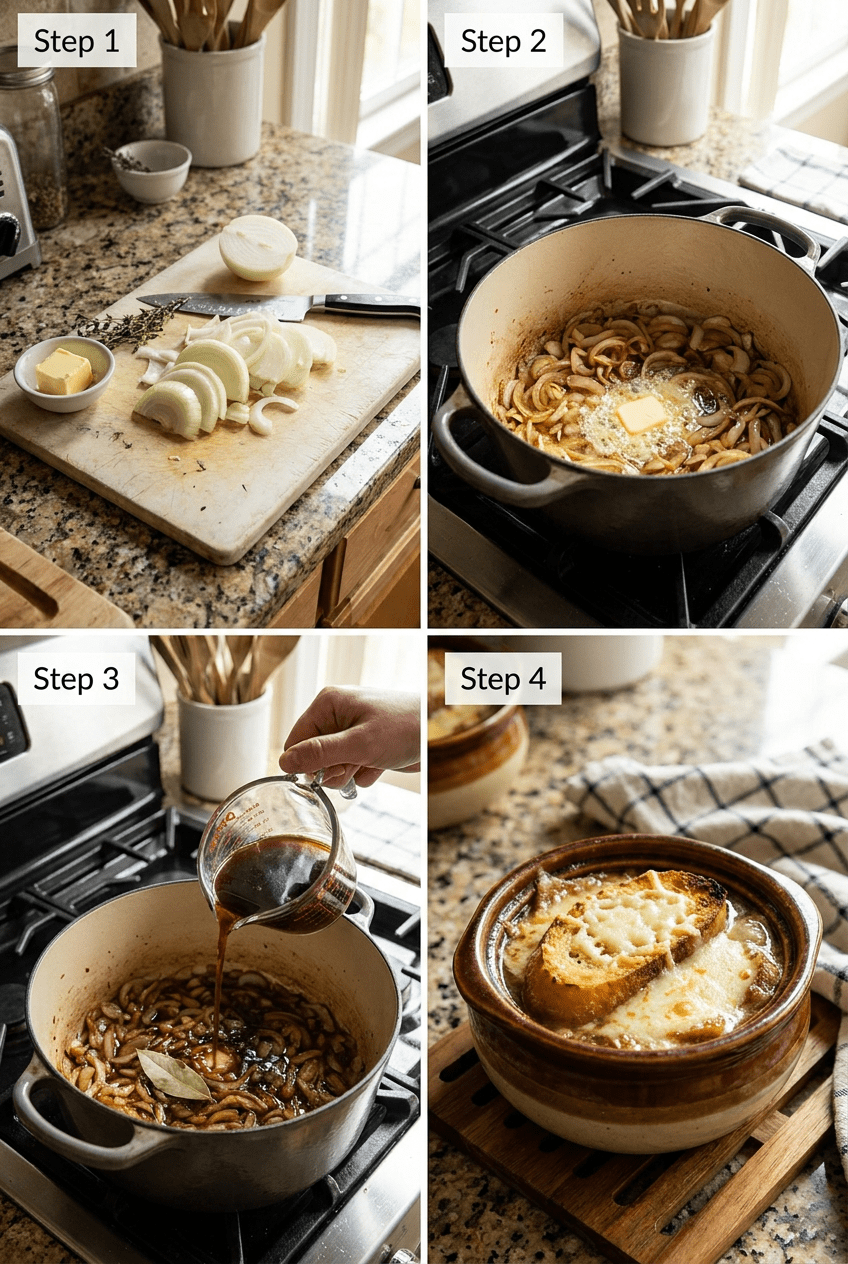
Step 1: Caramelize the Onions
Place a large Dutch oven or heavy-bottomed pot over medium heat. Add the butter and olive oil, letting the butter melt completely. Tip in all of the sliced onions, the sugar, and the salt. Stir until every strand is coated in fat. From here, you will cook the onions uncovered for 45 to 55 minutes, stirring every 5 to 10 minutes with a wooden spoon. In the first 15 minutes, the onions will sweat and soften, releasing a cloud of steam that smells sharp and slightly sweet. As the water evaporates, they will begin to turn pale gold. Around the 30-minute mark, you will notice golden brown fond forming on the bottom of the pot. This is exactly what you want. Use a wooden spoon to scrape it up and redistribute it. If at any point the fond darkens too quickly or smells acrid, lower the heat and add a splash of water—this will loosen the bits and cool the pot. By the end, the onions will have shrunk to about a quarter of their original volume and will be the color of dark amber honey. Your kitchen will smell warm, sweet, and savory all at once. The sugar is not strictly necessary, but it encourages even browning and helps build that signature deep color. This step is the heart of an easy Classic French Onion Soup; rushing it is the single biggest mistake you can make.
Step 2: Deglaze and Build the Broth
Once the onions are deeply caramelized, add the minced garlic and stir for one minute until it is fragrant and just beginning to soften. Pour in the white wine and immediately scrape the bottom of the pot with your spoon, lifting every last bit of dark fond. Let the wine bubble and reduce until it is nearly evaporated, about 2 minutes. You will smell the sharpness of the alcohol cook off, leaving behind a fruity, concentrated note. Now pour in the beef broth, add the bay leaf and thyme sprigs, and stir to combine. Bring the liquid to a boil, then reduce the heat to low. Partially cover the pot and let it simmer gently for 15 to 20 minutes. The broth will darken and the flavors will meld. After simmering, fish out the bay leaf and thyme stems and discard them. Stir in the black pepper and taste the broth. Depending on the saltiness of your broth, you may need an extra pinch of salt. This is the moment to adjust because the cheese topping will add salt later. For an even more luxurious broth, consider using homemade beef stock or blending in a cup of chicken broth for added roundness. This is the stage where the soup transforms from oniony liquid into a cohesive, full-bodied how to make Classic French Onion Soup moment you will want to remember.
Step 3: Toast the Baguette
While the broth simmers, position an oven rack about 6 inches from the broiler element and preheat the broiler. Arrange the baguette slices on a baking sheet in a single layer. Slide the sheet under the broiler and toast until the top is lightly golden, about 1 to 2 minutes. Flip each slice and toast the second side the same way. The bread should be dry and crisp with just a hint of color, not deeply browned. This creates a sturdy raft that will absorb broth without disintegrating. For extra flavor, rub one or both sides of the warm toasts with a cut garlic clove before setting them aside. This tiny step adds a subtle garlic hum that plays beautifully against the sweet onions and nutty cheese. This toasting method is much more reliable than trying to fry the bread, and it keeps the soup from becoming greasy.
Step 4: Assemble the Soup Bowls
Ladle the hot soup into 4 oven-safe crocks or bowls, filling each about three-quarters full. You want enough room for the bread and cheese without spilling over. Place one or two toasted baguette slices directly on top of the broth—they should float and cover most of the surface. Now pile a generous amount of Gruyère over the bread, letting some cheese cascade over the edges of the bowl. This overflow is what creates those coveted crispy cheese bits that stick to the side of the crock. Sprinkle the Parmesan evenly over the top of the Gruyère. Set the bowls on a rimmed baking sheet to catch any inevitable cheese drips. If you love dramatic presentation, position the cheese so it almost threatens to spill over the rim; it will bubble and brown into a magnificent crust. This is the moment that makes Classic French Onion Soup from scratch feel like a true restaurant experience at home.
Step 5: Broil and Serve
Carefully transfer the baking sheet with the filled bowls to the oven. Broil for 3 to 4 minutes, keeping a close eye through the oven window. You are looking for melted, bubbly cheese that turns golden brown with darker spots in places. The cheese should appear fluid and slightly blistered, not burnt. Ovens vary wildly, so check at the 2-minute mark. If the cheese is melting but not browning, move the bowls to a higher rack or increase the time by 30-second increments. Once the cheese reaches that perfect state, remove the baking sheet and let the bowls rest for exactly 2 minutes. The soup will be molten hot beneath that cheese blanket, and this short rest prevents burnt tongues. Serve immediately, reminding everyone that the bowls are scorching. Watching that first spoon plunge through the golden crust into the dark, rich broth below is one of the simplest pleasures I know.
Pro Tips and Easy Variations for Your Classic French Onion Soup Recipe
Pro Tips
- Slice onions uniformly with a mandoline. Even slices guarantee that all pieces caramelize at the same rate, avoiding some burning while others remain pale. A consistent 1/8-inch thickness is the sweet spot for soft, jammy onions that still hold some texture.
- Never rush the onions. The 45 to 55 minute window is non-negotiable if you want that unmistakable sweet, rich flavor. Turning up the heat to hurry the process creates bitter, scorched pieces and a one-dimensional broth.
- Deglaze thoroughly with wine. This step dissolves the concentrated fond and integrates every bit of caramelized goodness into the broth. Scrape the pot aggressively with a wooden spoon until the bottom feels clean.
- Always grate cheese yourself. Pre-shredded cheese is coated with starches that inhibit melting. Freshly grated Gruyère melts into a silky, cohesive blanket that browns beautifully.
- Position bowls close to the broiler. For that iconic bubbling, charred top, the cheese needs intense direct heat. Place the oven rack 5 to 6 inches from the element and make sure the broiler is fully preheated before the bowls go in.
- Let the soup rest after broiling. Two minutes of patience allow the cheese to set slightly and the temperature to become safe for eating. It also lets any splattered cheese cool so it pulls away cleanly from the bowl sides.
Delicious Variations
- Vegetarian version. Replace the beef broth with a rich mushroom or roasted vegetable broth, adding a teaspoon of soy sauce or tamari for umami depth. The onions still carry the day, and the result is surprisingly hearty without any meat.
- Bistro-style kick. After deglazing with wine, add a splash of cognac or brandy and let it cook off for 30 seconds before adding the broth. This adds a warm, slightly floral complexity reminiscent of classic Parisian bistros.
- Cheese blend upgrade. Use a mix of Gruyère, Comté, and a small amount of sharp white cheddar or Raclette. Each cheese brings a different note of nuttiness, fruitiness, or sheer meltability, making the top even more seductive.
- Herb-infused finish. Stir a teaspoon of fresh chopped chives or a few tarragon leaves into the soup just before ladling. The gentle anise note from tarragon, in particular, is an unexpected and lovely twist that pairs beautifully with the caramelized onions.
- Sweet onion switch. If Vidalia or Walla Walla onions are in season, use them instead of yellow onions and reduce the sugar to a pinch. The natural sweetness is so pronounced you may not need any extra sugar at all, yielding a slightly fruitier broth.
If you love this French Dinner recipe, you might also enjoy the pillowy, cloud-like texture of fluffy Japanese souffle pancakes for a sweet weekend breakfast. The same patience you learned caramelizing onions translates beautifully to the gentle folding needed for those impossibly airy pancakes.
Serving Suggestions for a Perfect Dinner
This soup is rich and satisfying on its own, but a few simple sides can turn it into a complete meal. A crisp green salad dressed with a sharp Dijon vinaigrette is my favorite partner because the acidity cuts through the cheese and broth beautifully. Arugula with lemon and olive oil, or a simple Boston lettuce salad with chopped herbs, both work wonders. For drinks, a dry white wine like Sancerre or an unoaked Chardonnay mirrors the wine in the soup and keeps the meal cohesive. If you prefer red, a light-bodied Beaujolais or a Pinot Noir with bright acidity stands up to the broth without overwhelming it. Present the soup in traditional lion-head bowls or any sturdy oven-safe crocks, right on a heatproof trivet at the table so guests can admire the bubbling cheese before it settles.
This is also an outstanding starter for a cozy dinner party. Scale the recipe up easily by increasing the onions, broth, and cheese proportionally. Keep the batch size reasonable for your pot so the onions still caramelize properly. I often prepare the soup base a day ahead, then simply reheat, ladle into crocks, and broil just before serving. The drama of pulling those molten bowls from the oven never fails to draw appreciative murmurs. For a larger gathering, you can even set up a DIY bar with pre-portioned crocks of hot soup, a tray of toasted bread slices, and bowls of grated cheese, letting guests assemble and broil their own under supervision. It becomes an interactive and memorable experience.
Nutrition Information
(Approximate per serving, 4 servings total) Calories: 380, Fat: 21g, Carbohydrates: 32g, Protein: 18g, Fiber: 4g, Sodium: 850mg. Nutritional values are estimates only.
Storage and Make-Ahead Instructions
- Refrigerator: Store the soup base (without bread and cheese) in an airtight container for up to 4 days. The flavors actually deepen as it sits. Let it cool completely before sealing and refrigerating.
- Freezer: Freeze the cooled soup base in a freezer-safe container or heavy-duty zip-top bag for up to 3 months. Leave a little headspace for expansion. Thaw overnight in the refrigerator before reheating.
- Reheating: Reheat the soup gently on the stovetop over medium heat, stirring occasionally, until steaming. Do not boil aggressively. Once hot, pour into crocks and assemble with fresh bread and cheese, then broil as directed. The bread must be toasted fresh each time for the best texture.
- Make-Ahead: You can caramelize the onions a day or two in advance and refrigerate them, then proceed with deglazing and broth when ready. The soup base can be fully prepared, cooled, and refrigerated. When ready to serve, simply reheat, pour, top, and broil. This makes dinner parties effortless.
Your Classic French Onion Soup Questions Answered
Can I use sweet onions instead of yellow?
Yes, Vidalia or Walla Walla onions work beautifully. Their higher natural sugar content may mean you can reduce or even omit the granulated sugar during caramelization. The result will be slightly sweeter and a touch softer, but still delicious.
Why didn’t my cheese brown properly?
Make sure your broiler is fully preheated and the bowls are positioned close to the element, about 5 to 6 inches away. Also, freshly grated cheese melts and browns much better than pre-shredded cheese, which often contains anti-caking powders that inhibit browning. Check frequently and do not step away.
Can I make this recipe ahead of time?
Absolutely. Prepare the entire soup base, cool it, and refrigerate for up to 4 days. When you are ready to eat, reheat it on the stovetop, then portion into bowls, top with toasted bread and cheese, and broil fresh. This is actually my preferred method for entertaining.
Can I use a different cheese?
Gruyère is traditional for its nutty flavor and superb melting quality, but you can substitute Comté, Emmentaler, or even a mild Swiss cheese. For an extra punch, a small amount of sharp provolone or fontina works well blended in. Avoid mozzarella alone as it lacks flavor depth.
What can I use instead of wine?
If you prefer not to use alcohol, substitute an equal amount of additional beef broth plus a teaspoon of white wine vinegar or lemon juice. This will mimic the acidity that wine provides for deglazing and flavor balance.
How do I know the onions are caramelized enough?
They should be deeply golden brown, reduced to about a quarter of their volume, and have a soft, jam-like consistency. Taste one—it should be sweet and rich, with no raw sharpness. The color of the fond on the pot bottom is a good indicator; it should be dark amber, not black.
My broth tastes flat; how can I fix it?
First, check your salt and pepper and adjust. A tiny splash of sherry vinegar or a squeeze of fresh lemon juice at the end can brighten the entire pot. Also, ensure you deglazed thoroughly to capture all the caramelized bits. If the broth lacks depth, you may have used a weak commercial stock; next time, try fortifying it with a spoonful of tomato paste while the onions cook or using a better-quality broth.
Can I make a larger batch for a crowd?
Yes, but be mindful of your pot size. Caramelizing a huge mound of onions requires a wider surface area to cook evenly. If doubling, you may need to caramelize the onions in two batches, then combine them in the pot with the broth. Keep the cheese and bread toppings proportional.
What bowl can I use for broiling?
Use oven-safe ceramic or stoneware crocks, lion-head bowls, or even small cast-iron cocottes. Avoid delicate pottery unless marked oven-safe. Place the bowls on a rimmed baking sheet to catch drips and make them easier to handle.
How do I prevent the bread from sinking?
Toasting the baguette slices until they are crisp and dry creates a sturdy raft that floats. Also, place the bread on top of the soup right before broiling so it does not sit and absorb liquid for too long before hitting the heat. Using day-old bread helps as well.
More Incredible French Recipes to Try
If this soup has you dreaming of cozy, deeply satisfying French cooking, you will find so much more to love right here. For another stunning centerpiece dish, consider a fragrant Moroccan chicken tagine that shares the same slow, gentle approach to building incredible flavor. The tender meat, aromatic spices, and silky sauce feel like a natural next step after mastering onion caramelization. It is the kind of meal that makes a weeknight feel like a celebration, much like this soup.
When your sweet tooth calls, the delicate, lemony notes of blueberry lemon ricotta pancakes provide a perfect counterpoint to the rich, savory onion broth. These pancakes are light, fluffy, and bursting with fresh fruit, making them an ideal weekend breakfast or dessert. And if you want to keep exploring classic French bistro fare, a simple quiche Lorraine or a rustic coq au vin would be wonderful companions to this recipe. All of these dishes share a common thread: they honor the ingredient, take a little time, and give back so much more than you put in.
The Story Behind This Classic French Onion Soup
French onion soup has a history that reaches back centuries, woven through the kitchens of Parisian market workers and grand brasseries alike. Legend points to King Louis XV, who supposedly created the dish late one night when the palace cupboards held only onions, butter, and champagne—though the bubbly was likely a later addition. The truth is more humble and perhaps more beautiful: the soup emerged from Les Halles, the bustling central market of Paris, where late-night workers and early-morning shoppers needed something cheap, hot, and fortifying. Vendors would ladle the broth over stale bread and, eventually, top it all with grated cheese from the cheese stalls.
The version we know today, with its iconic molten cap of Gruyère, became a fixture in French restaurants by the mid-20th century and soon traveled across the Atlantic. In my own kitchen, this soup has become a quiet ritual. I make it on cold afternoons when the light is fading early, and I stir the onions in near silence, filling the house with a fragrance that somehow smells like time itself. Each step is simple, but taken together they form a recipe that feels like a conversation with every cook who has ever stood over a pot and waited patiently for something wonderful to happen.
If you made this Classic French Onion Soup, please leave a comment below and let me know how it turned out.